Rohan I really appreciate you so regularly talking through your thought process with ideas like this. It really helps others learn from your experience. I know you must spend quite a bit of time doing this frequently. Thank you
1 Like
Did the needed grinding of the block to get greater than 1 mm clearance from the crank lugs on the No. 2 rod journal. I had to go and buy a new Dremel as I dropped my old one and bent its collet shaft which caused it to vibrate to much. It did a lot of work over more than 30 years so I cant complain.

Then cleaned the block again and gave it a coat of paint
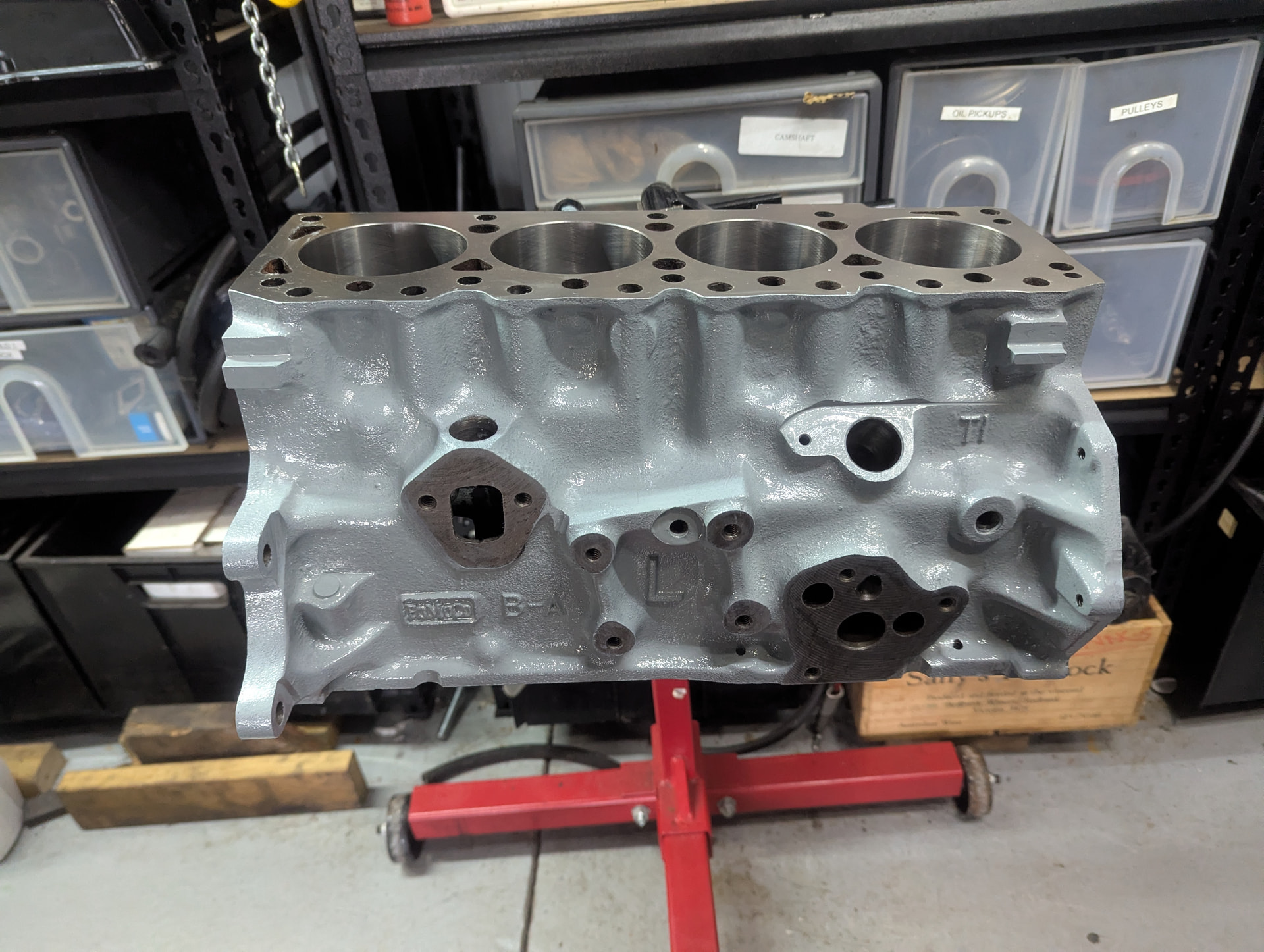
Now a question on the block details which are a bit unusual
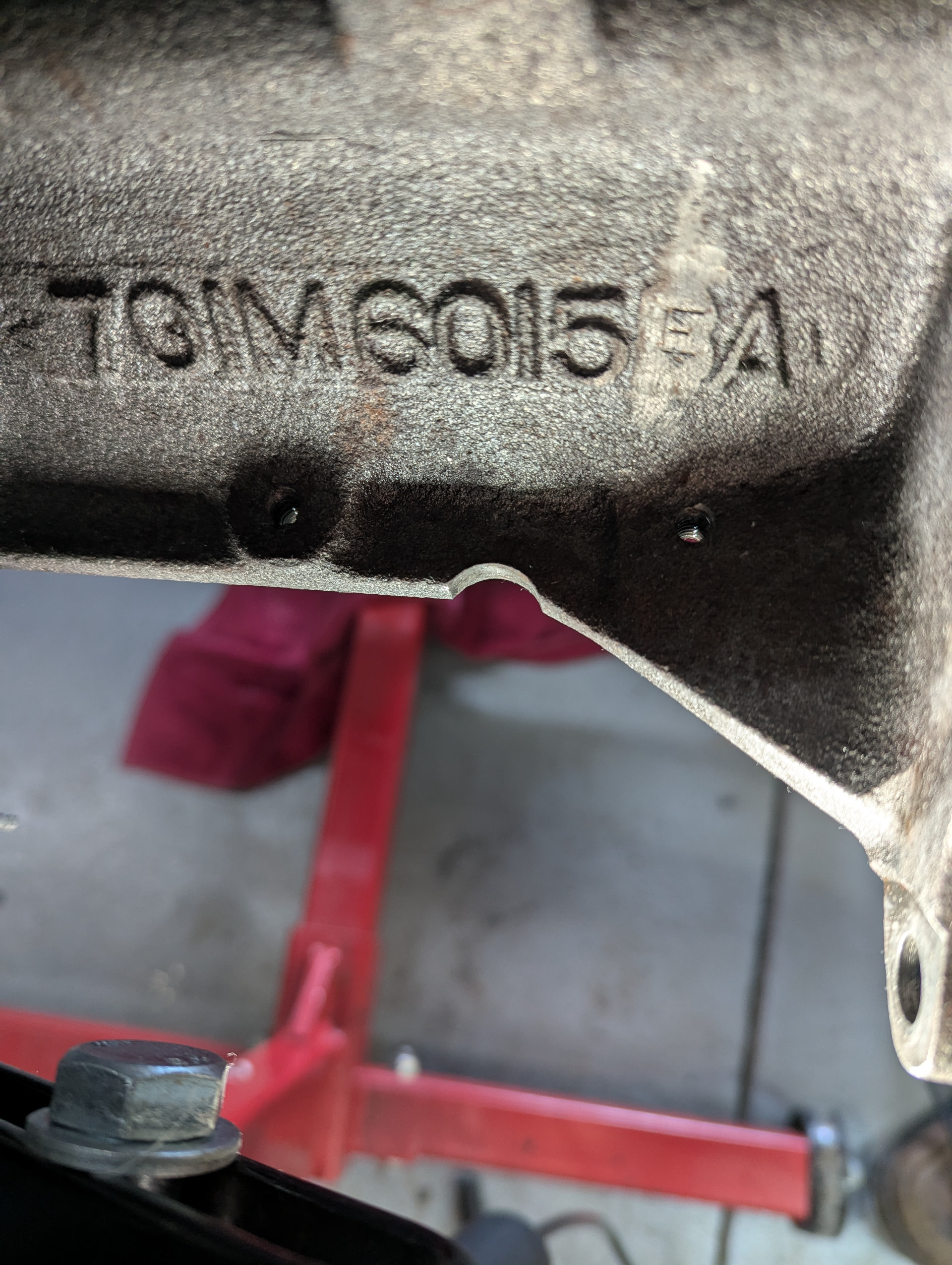
While cleaning the block I found that an E had been stamped where the B was ground off from the 701M 6015 BA casting type number. Has anyone ever seen this before? The block was a replacement block when the engine failed early in the cars life and is dated July 1974 so around a year after the car was built. The car is an English delivery car and I understand it was used for many continental business trips by the owner at that time before he bought it to Australia when he was assigned out here for his work for a couple of years. I don’t know any details of what actually happened and how it was repaired. Maybe the engine was replaced by Lotus under warranty.
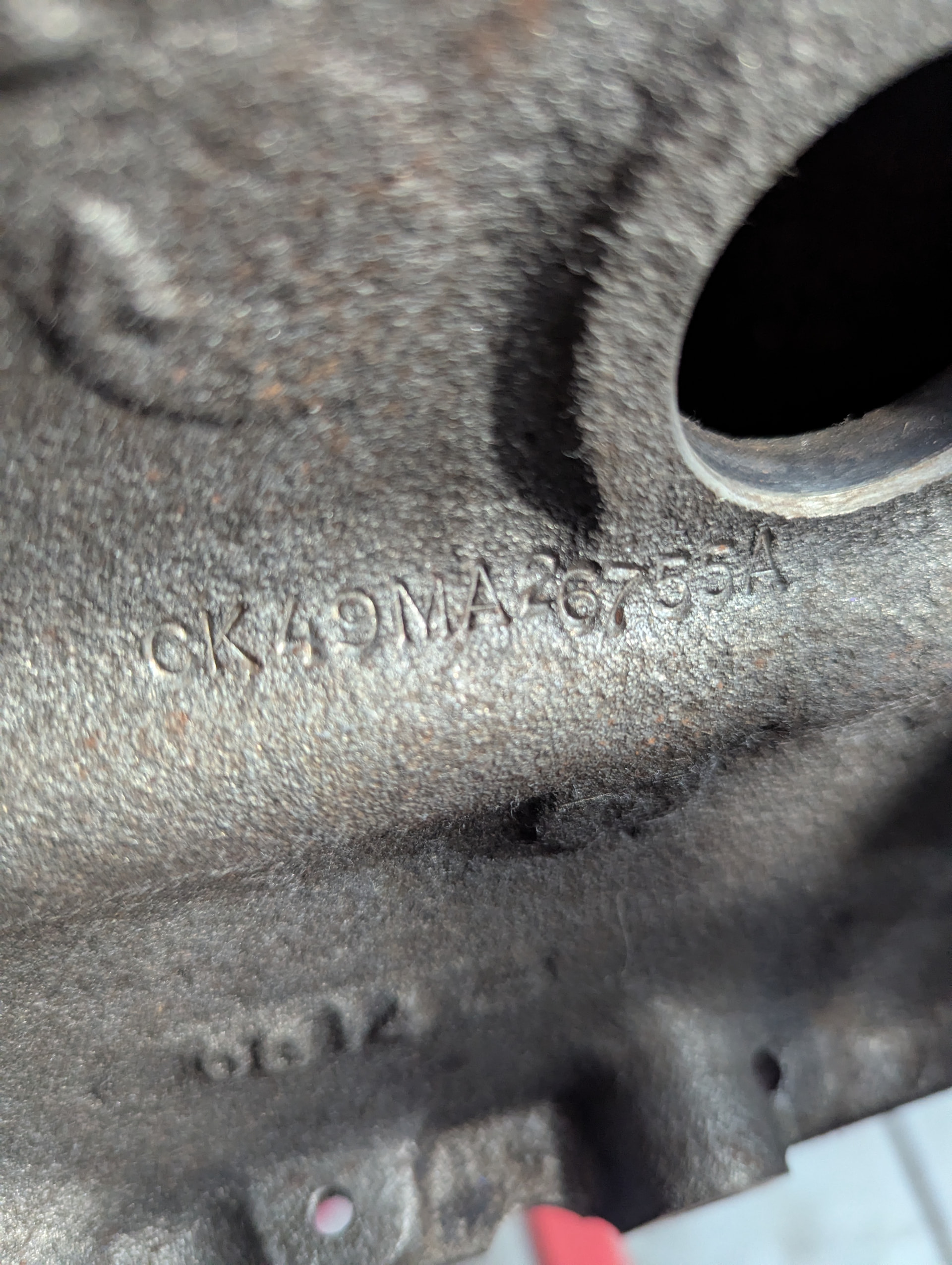
The block appears to maybe have come from or been intended for an Escort as it has the rear dipstick hole drilled out but plugged. It also has what looks like a Ford engine number stamped on the front left
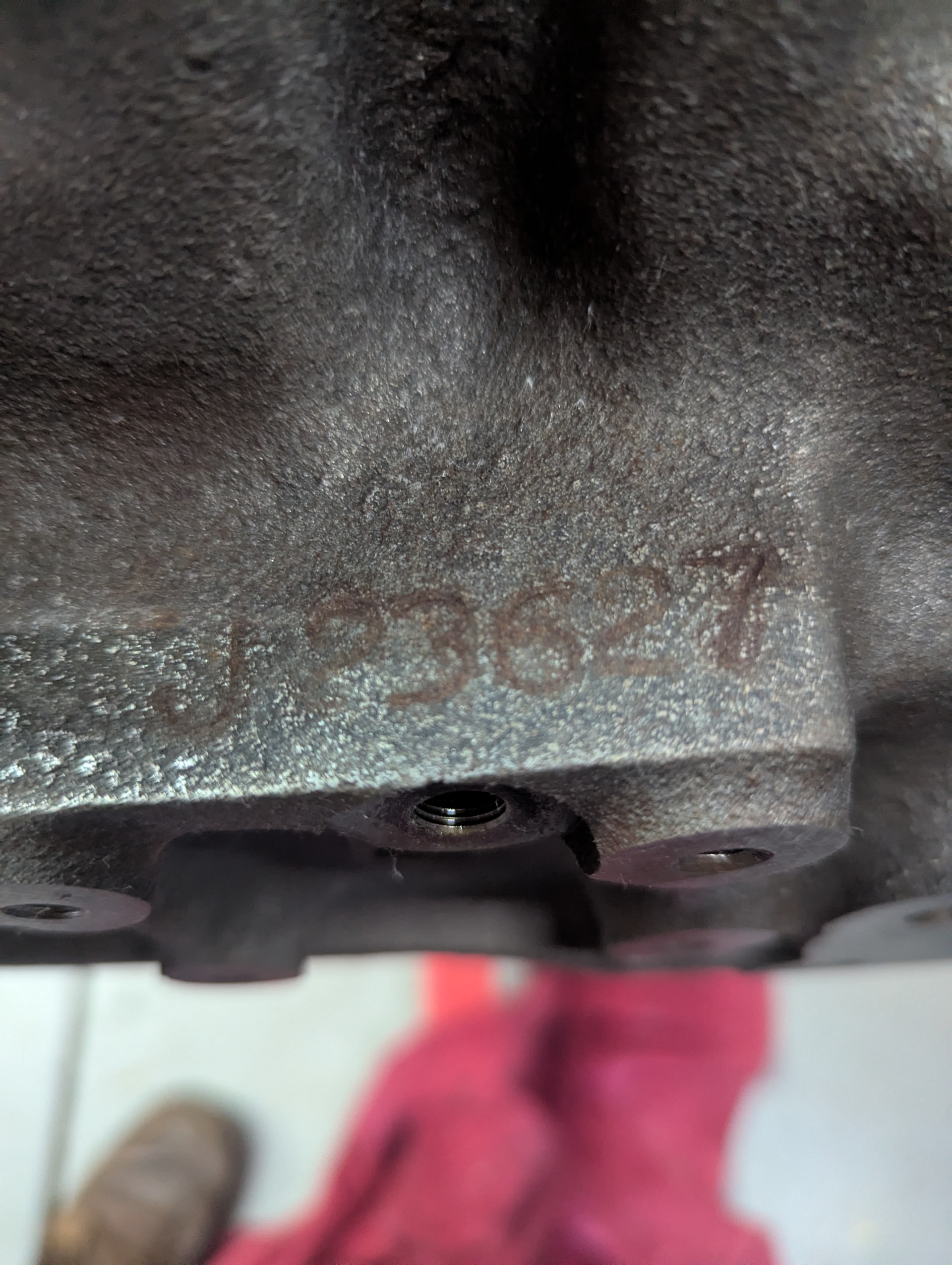
In addition to the following engine number in the normal Lotus position. This different to the oirginal engine number on the body plate
cheers
Rohan
A bit more research says the number starting with CK49 was a Vin number that Ford stamped on the engines for a 2 door Twincam Escort that was for assembly in Australia. The Engine number starting with J23627 was what Lotus used for Twincam Escort engines. Maybe Lotus diverted this engine from the production line to supply a replacement that was needed.
It looks like I have an original Twincam Escort engine. Maybe I can sell it to the owner of the Escort in Australia if it still exists for a fortune  I wonder what engine the intended Escort ended up with, maybe there are 2 engines with identical numbers
Still dont know why 701M6015BA was changed to 701M6015EA
cheers
Rohan
2 Likes
Rohan, by my reckoning the engine would have been produced in early 1970. Yes J type engines were SE, Weber TCs for the domestic & export markets and fitted to Ford Escort TC cars from 1968 on.
The E replacement of the B on the cast may relate to European specification, though I rather feel that 1970 would have been a little early for that. Lotus used the E prefix for engine types from late 1971 onwards, EV, ER, EN, EP all being Dellorto BV TCs on Sprints, Plus 2s and Europas for the European markets.
However, that was on Lotus Engine Nos, not Ford block castings, so I may be clutching at straws!
Tim
Not sure how a 1970 Australian delivered Escort engine ended up in a Plus 2 that came to Australia in the late 70s but supposedly had its engine replaced in the UK around 1974 according to the detailed history I have recorded from previous owners. It sounds like the engine was actually replaced after the car was imported to Australia in the late 70s or early 80s. I need to do some more research on the Twincam Escort Vin number recorded on the block to see if I can find out what happened to it.
As with all things Lotus the history is shrouded in a fog
cheers
Rohan
Reread the many pages of notes I got with the car and discovered that it had a second engine failure in Australia I was not aware off and had the engine rebuilt in 1981. So it looks like that second rebuild used the Escort block. The Escort was probably written off and the engine sold as while the VIN is listed on the Australian Twincam Escort register there are no other details.
Back to the engine build.
Rechecked the bore wall thicknesses to verify they were as expected after the boring to 83.75mm. They were what I expected with the minimum low down on the front back axis at 2.2mm which is just OK for a road engine not on the thrust face. The block will not take another rebore but it will probably last me out. If the block had been offset bored when it was first taken to 83.5mm you could have got some more reboring life out of it.
Also checked the block height at all 4 corners as identical at 197.80mm which verified it had been skimmed accurately
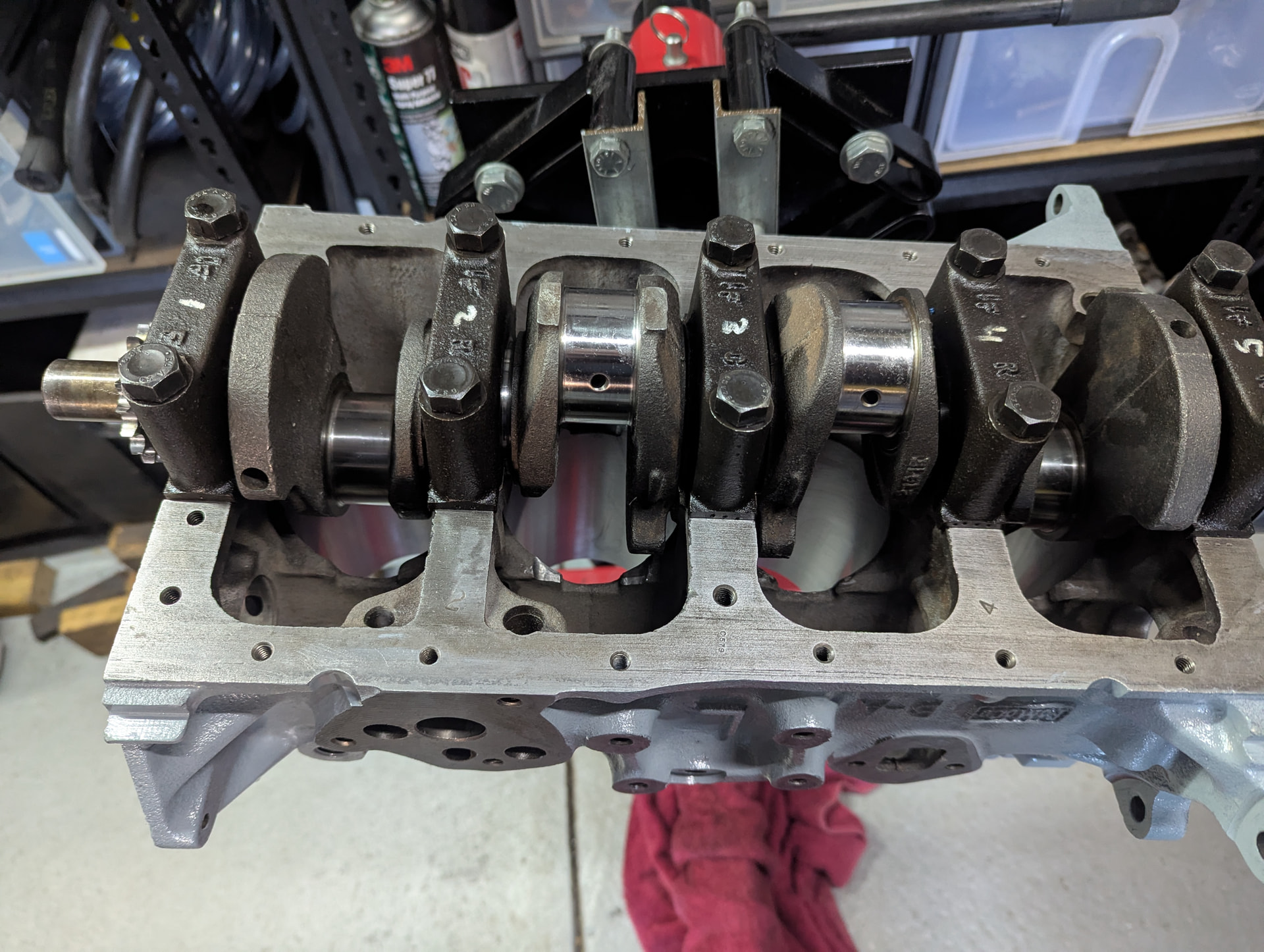
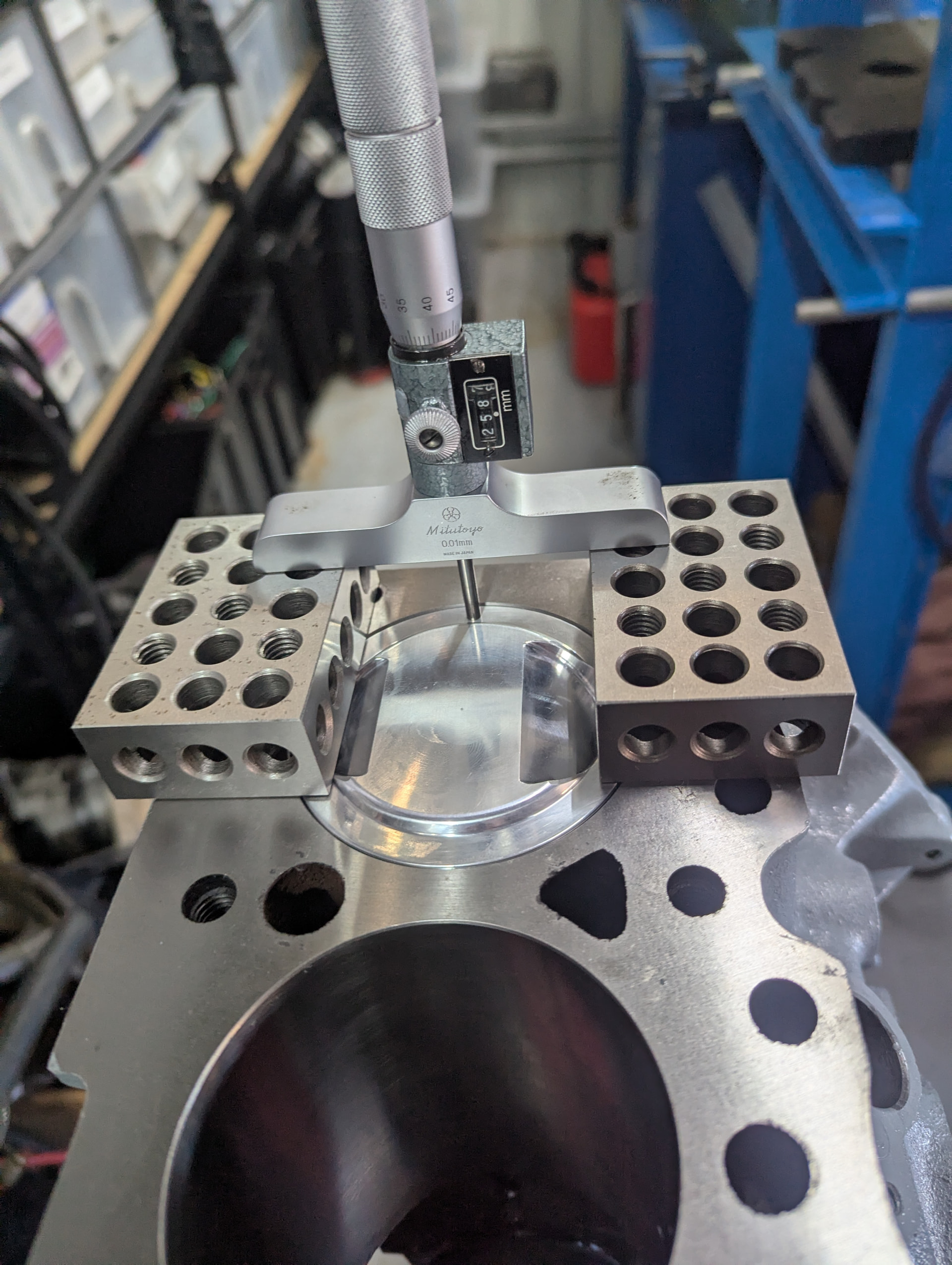
I did a dummy assembly of the crank and piston and rod to check rod clearance in the block with the long stroke crank and to check the piston to deck height to verify it was all as I intended with my calculations. It came out almost spot on at 18 thou / 0.45mm compared to my target of 20 thou / 0.5 mm and consistent across all 4 cylinders
Low compression height CP piston and rod being used in this build. Still need to decide if I used the spare set of used Carrillo rods I have or the new set of MaxSpeeding rods which are a bit heavier but dimensionally the same. Since this is a road engine being build for a 6500rpm max using a standard crank I may keep the lighter Carrillos for another race build in the future and use the MaxSpeeding rods
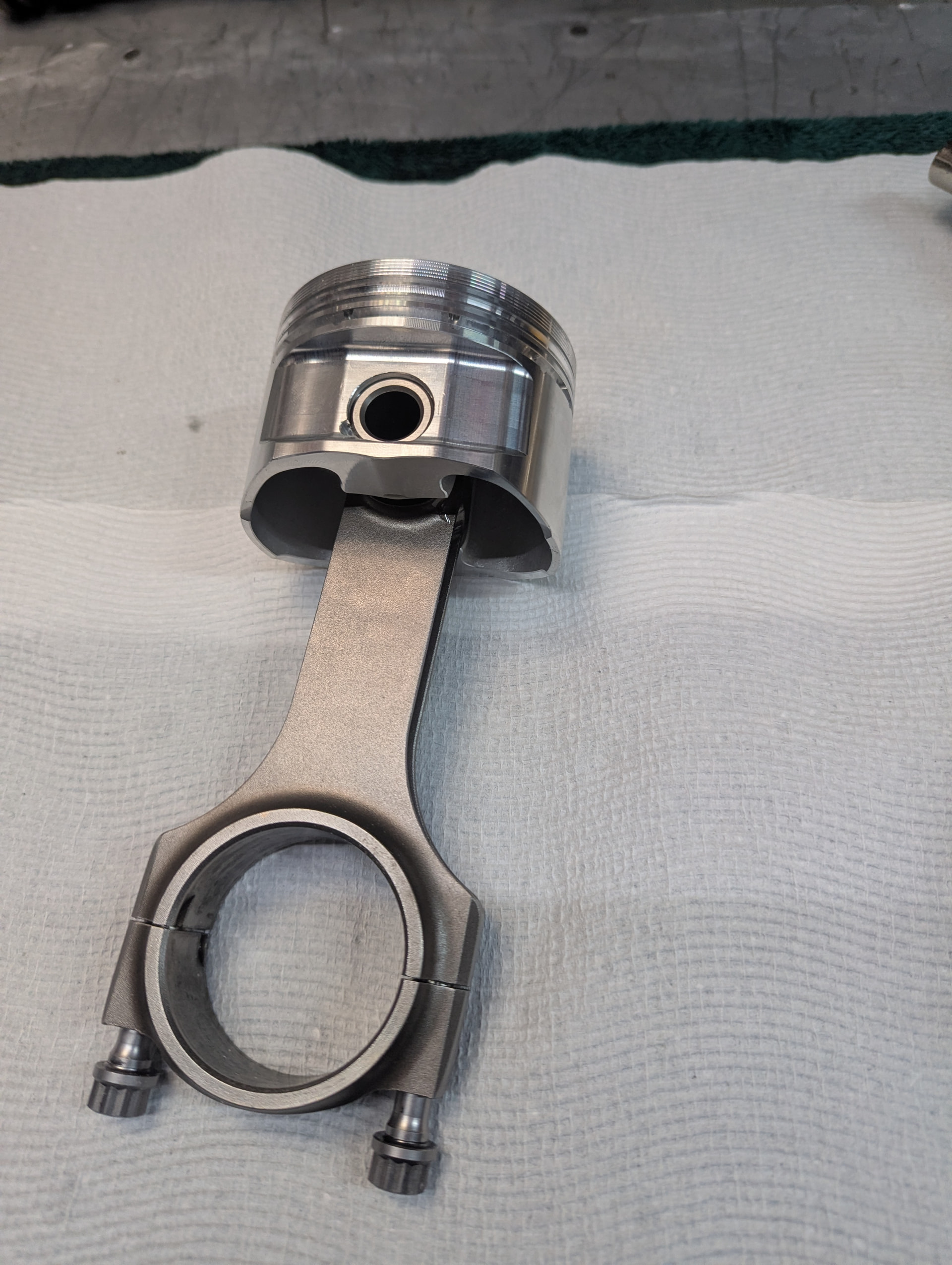
Crank in block. I have spare set of used 10 thou undersize bearings that I am using for the dummy build. The new 10 thou under bearings will go in on the final assembly
Using depth micrometer on 123 blocks to measure the difference in height between the block deck and the piston deck. You want to measure that on the front back axis as on the sides piston rock can affect the reading.
Finally checked the ring gaps which came out spot on from CP pistons with no need for grinding.
Also checked in bore the intruder volume of the piston to verify my compression ratio I am targeting. Volume came out at 4.5 cc versus the CP datasheet of 4.37 cc. So it all calculates as I intended at 10.6:1 which is what I wanted with the 285 degrees duration cams I am using
With all the final dummy build checks completed no ready to move onto final assembly.
cheers
Rohan
Going back in time I lost one of the valve retainer collets when assembly the head months ago and never found it.
I have actually found the missing retainer collet just now when I was cleaning up my parts boxes for this build. It had fired into one of the open boxes and been hidden under other bits for the last 6 months 
cheers
Rohan