I’ve had my Sprint for 7 years now. After a bit of a slow start given life, and all, I focused on reliability and drivability issues. I’m willing to declare victory in that battle - this year’s 2700 mile trip to LOG41 was trouble free.
So now it’s on to the bodywork. The list of issues includes:
- A pretty significant crack between the upper/inner corner of the left headlight opening and the bonnet opening.
- Several smaller cracks radiating from both headlight openings.
- A “dimple” in the bow near the Lotus badge
- Some stone chips on the front end
- Some scratches and stone chips on the front bumper
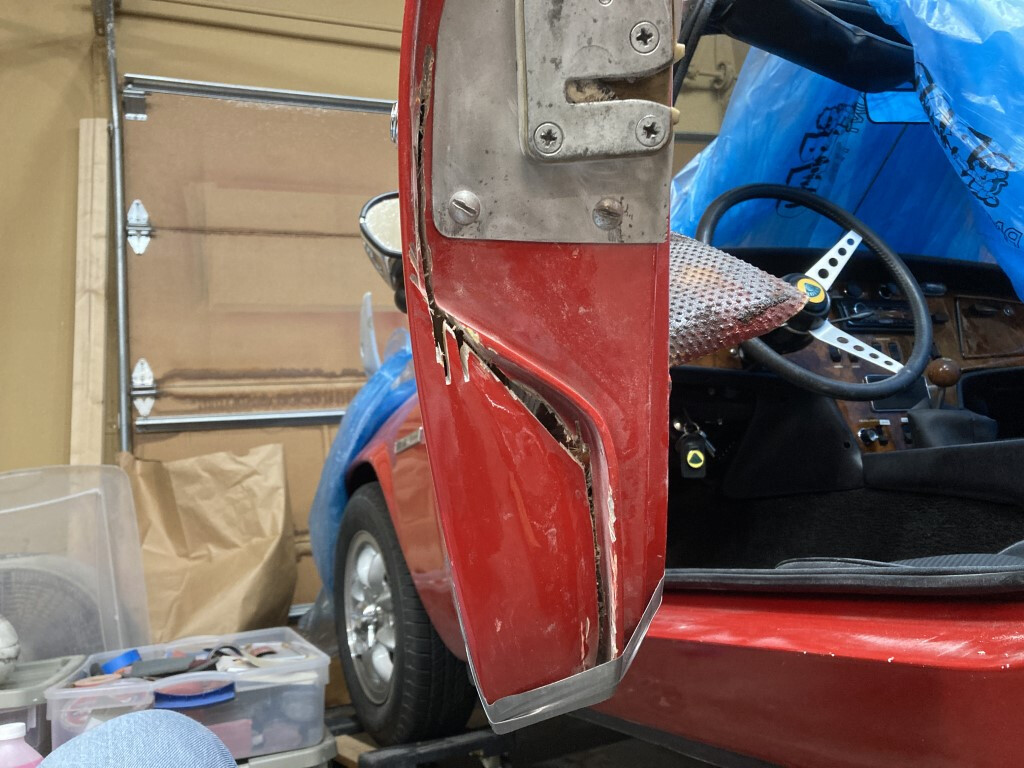
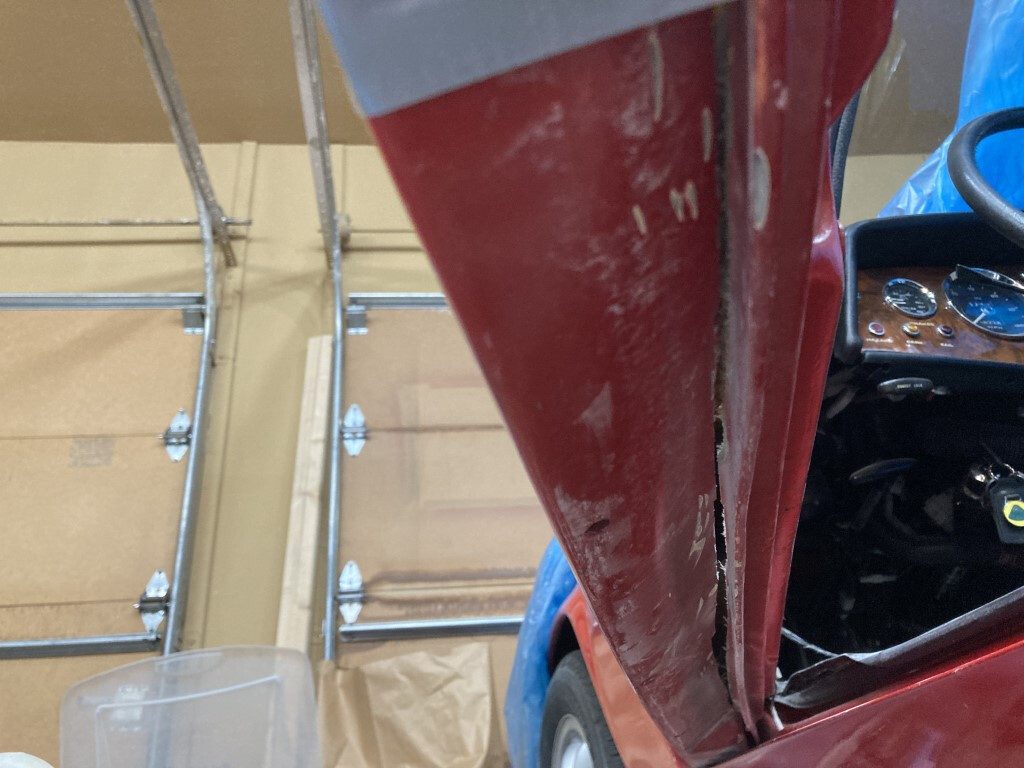
- The usual lower rear doors sticking out.
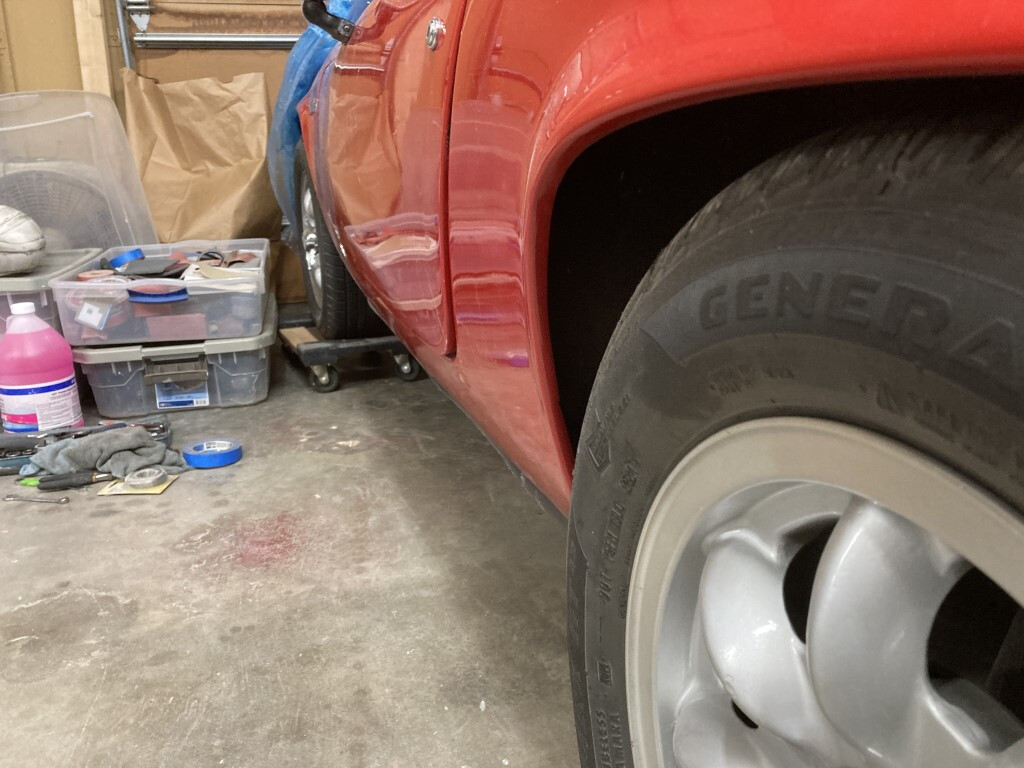
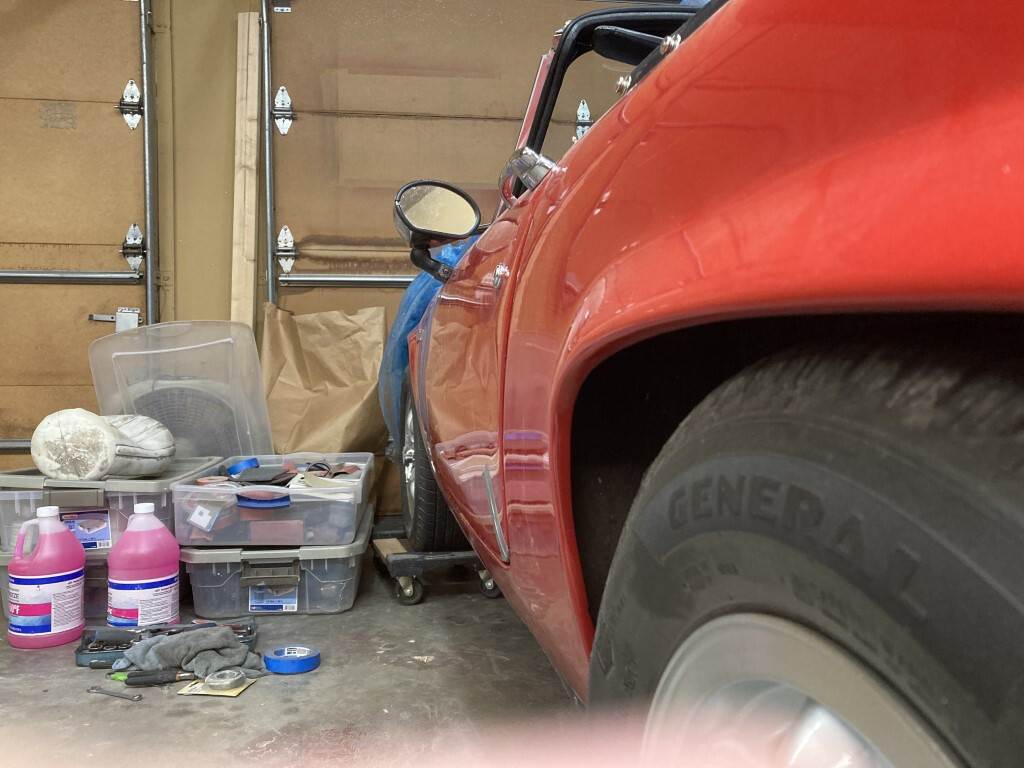
- The usual (?) upper/rear of the front fenders being ‘below’ the upper/front of the doors
 Some star cracking on the left rear fender where the battery contacts the fender wall.
At the last two LOG’s, Gary Boudreaux held tech sessions on using epoxy and fiberglass cloth options he’s used in aircraft construction for Lotus fiberglass body repairs. Conveniently, I already had some West System epoxy and fillers for sailboat repairs, and Gary graciously gave me enough cloth for the the above repairs (principally #1).
So I started with #1. The plan was to remove the radiator, headlights, headlight raising mechanism, and grill to provide access. Then grind out the reinforcing ribs underneath the crack in preparation for a patch. Prepare a patch of 4 layers of “Ruttan Cloth” wetted out with epoxy, and apply it to the underside of the crack. Let it cure, then grind out the crack from above, down to the patch level. Make out a patch of 3 layers of cloth and apply it to the ground out crack. Then mix up some epoxy and micro-balloons to about the consistency of wet peanut butter and apply it to the cured surface. Then sand that back down to the body profile. Finish with some glazing putty for any pinholes, then prime and paint.
For the smaller cracks, grinding revealed that they were in the filler above the mat. So for those I used patches of “deck cloth” wet out with epoxy, covered when cured with the micro-balloon mixture, sanded back down to the body contour and then primed.
The dimple just got a filling with the micro balloon mixture, etc…
The bumper scratches and rock chips, as well as the chips on the front end, just got some glazing, sanding, and priming.
Re: the “Ruttan” and “deck” cloth. The Ruttan cloth is 7 oz/yd, so quite substantial and strong, but also drapes and conforms exceedingly well. The deck cloth is 1 oz/yd, and a very tight weave that replaces the use of tissue. Both are available from “Aircraft Spruce And Specialty Co.” - aircraftspruce.com
Epoxy resin is preferable to the polyester resin that Lotus used due to it’s much higher adhesive strength, as well as the fact that it doesn’t shrink over time - so fairing compounds made out of it (i.e., the micro-balloon mixture) don’t expose the weave over time.
So at this point the front end is ready for paint. Next up is going after the lower-rear door issues.