My project car came with a twincam engine that the PO said had been rebuilt (he bought the engine that way) but only loosely assembled as he put it. I intend to strip the engine, measure then reassemble. Hopefully it will not be an actual rebuild.
So what do we have?
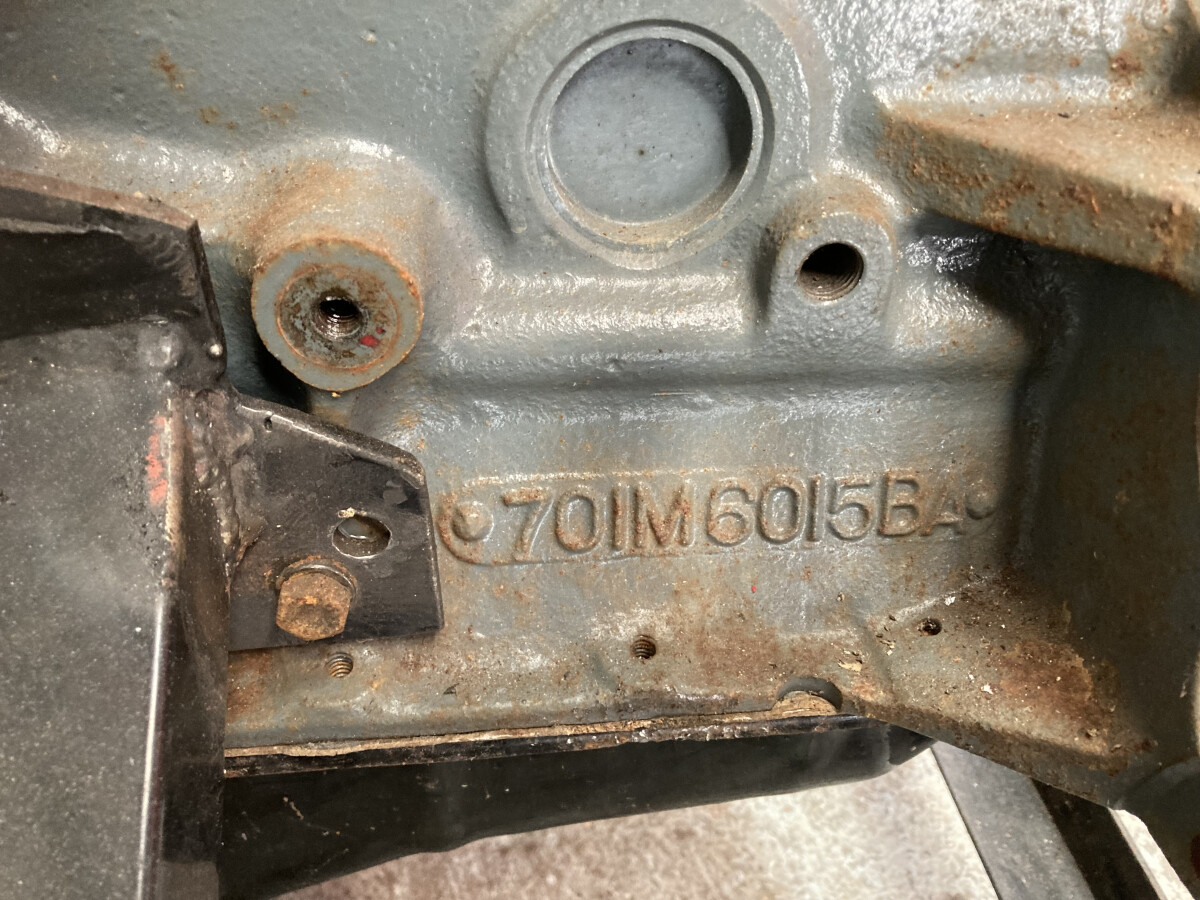
The block is marked 701M6018BA, I was told that the valves, cams and pistons are new and so it seems. The pistons are marked “QED standard”. Do the head bolts look ok? The valves must be standard size or else the PO would have said. The camshaft bearings look worn, so they will need to be replaced.
I will have the crank out tomorrow I hope.
Here are some pictures. Comments and observations please.
The engine looks like it has been assembled from used racing bits ? The holes in the web on the inlets between cylinders 2 and 3 are where people often mount the throttle cable on a racing engine without the airbox and the cover plate on the front chain cover in front of the layshaft is where mechanical drive tachos go, both typically seen in a twincam in an open wheeler.
The head itself is an early diecast version from early 60’s the block from early 70’s
I would strip completely and carefully measure every component to determine wear and any possible modification before starting assembly which it sounds like your planning to do.
The head bolts are the earlier waisted design and consistent with the early head. If reusing them I would at least clean them up and examine for cracks. Does the block have a Lotus or Ford engine number. Is there an engine number on the rear face of the head.
The rods bolts I would replace as a matter of course if I did not know their history.
Thank you so much for the information. The car that I bought was raced by the PO, and he was putting it back together when he decided to make it a road car. This engine was not from this car, but was bought originally to prepare to race before he changed his mind, so I’m not surprised it has had some modifications.
I have taken some pictures of the numbers on the head and block. I’m not sure I can make them out. Maybe because you know what you are looking for you can decipher them.
Here are some more engine pictures. The waterpump seems new and tight. The rod and crank bearings all look new also. The crank ones are marked 0.30. There is no scoring visible on the bearings and crank although there seems to be some quite gungy engine assembly grease evident. The PO said the timing chain was new, but it is a bit rusty. I do not know if it can be cleaned and used.
I have not taken the layshaft out yet, but it turns nice and smoothly.
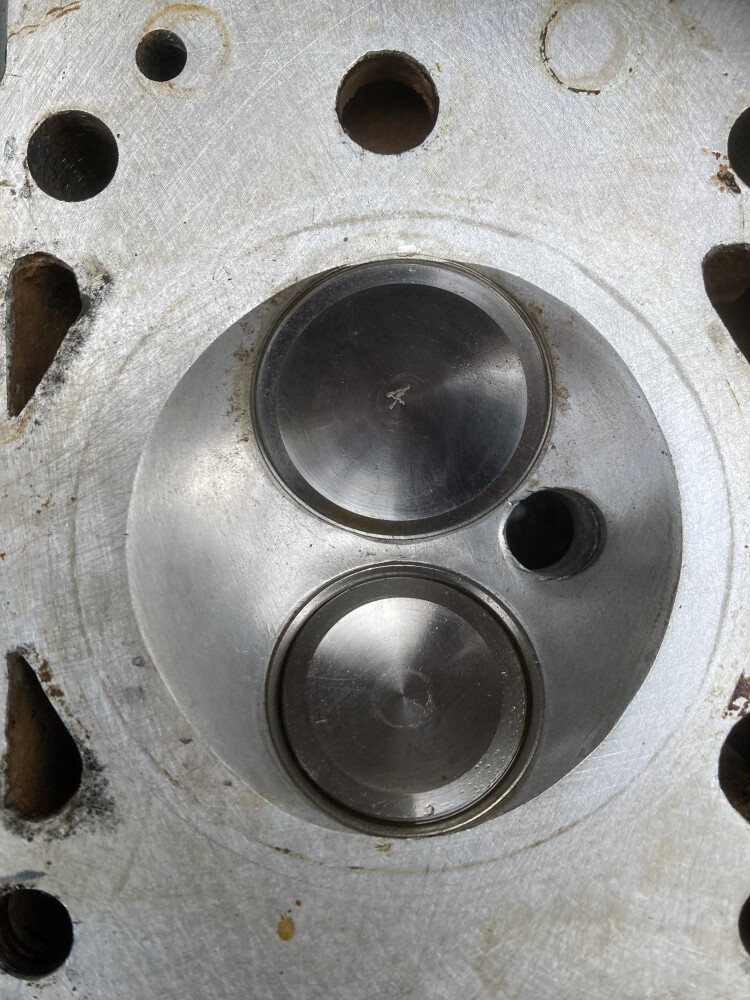
I tried to measure the valves with them still in the head, from what I can see they are nearly 40mm, do they look like the bigger variety? Picture in the next post. I could not add it here…
What rod bolts were fitted. If used original bolts were in the engine I would check everything else in the engine double careful as it was probably just slapped together to sell from a pile of old racing parts in the back of the workshop.
I would certainly get the head checked for hardness
The numbers stamped in the lower part of the head rear look like a Ford engine number so perhaps out of a Cortina originally? You need to clean the paint off to be able to read them better. I would be very surprised if anyone who knows anything about twincams would try to prepare an early diecast head for racing these days though it may have been race 50 years ago
118E in the engine number indicates that the block was originally from a pushrod engined Ford Cortina 1500GT. What do the bores look like and what is the bore diameter?
Strange though to have it stamped on an early twin cam head and no Lotus engine number apparent. I thought at that time all twiincams had Lotus engine numbers stamped on them but then it is Lotus and nothing is for certain?
Normally if putting a twin cam head on a ford block at a later time no one would stamp the engine number on the back of the head ?. The actual block with this head is a much later 701 block.
My guess is that Lotus built this head on a Ford block for some reason and stamped it with the Ford engine number, perhaps early on in the Lotus Cortina development ?
My guess is that the block is a recon unit for a mk1 cortina 1500gt (Ford’s code for the mk1 1500gt was 118e) and the head was mated to this at a much later date.
Ford used to supply (or organise the supply of) recon bottom ends for mk1/mk2 cortina (maybe a dealer fitted unit after a failure?) - I’ve seen a few 4 bolt cranks in 701m blocks before! Not sure if the block in the photos came with a 4 bolt crank originally but it’s certainly a 6 bolt proper Lotus one now.
118e cars finished production in 1966 as far as I’m aware.
I must admit this one is a little strange because the “118E” part of the engine number stamping looks to me like it was stamped at the factory and not aftermarket as a recon. The font and style of the “118E” stamping is as per Ford factory standard. I would expect a recon unit to retain it’s original number or to have no number if based on a new block.
Perhaps for new Ford engines supplied through spare parts using new blocks they stamped the blocks with a model series code and engine number before the long block assembly was supplied to Ford dealers. As spare parts engines would have still been supplied after the car itself ceased production. This would explain the reason for the block being a 701M (1970) code rather than something earlier like a 120E, 122E or 2731E code
sorry I misinterpreted the photos I thought they were both of the rear of the head… my eyes are not what they used to be
Clearly the 701 block has been from the recon program and stamped with the original engine number when fitted in the early 70’s to a 1500 C0rtina
The head numbers shown in the photos are the casting numbers. Below them on the rear of the head near the face to the block should be the Lotus engine number the head came from stamped.
I don’t think this block was originally from a recon. engine. Somebody way back when walked into a Ford dealership and bought a new 1500GT engine for a Cortina. Either that or a Cortina had it’s engine replaced with a new one not a recon. one. The engine would have been bought or fitted around 1970 at the earliest and stamped by Ford at the factory with it’s engine number before being released to market.
Sorry my wording was loose. The new block was provided by Ford in the 70’s for rebuilding an engine or for a complete new engine if they provided those at the time ?
Yes from what I’ve seen blocks like this stamping could only be done by either Ford or someone authorised by Ford to put the relevant stamps on the blocks. They appear to be quite unique to Ford in their style and that it must be for use within the Ford group (or those authorised by them).
Ford did produce 120e blocks for the late Consul Capri 116e 1500gt’s as advised by a very well versed member of the 116e owners club (early ones had a 116e cast into the block, very late ones had 120e cast in) but the number stamped on the engine mount would have the actual engine number (possibly the end part of the chassis number?) in one plane and then stamped above that to the right would be 116e - ie the model number of the car - regardless of whether it was either a 120e or a 116e casting number. I believe the model number of the car is stamped on the engine mount in all cases when supplied for a known car. That would appear to only apply to Ford cars without a Lotus engine as Lotus would put their own numbers over the engine mount, without reference to the car code. So, a mk1 Lotus Cortina - code 125e - didn’t have 125e over the engine mount as far as I’m aware, just the Lotus LF number. Same for mk2 Cortina Twincam. I think Mk1 Escort Twincams just had a 5 or 6 digit reference over the mount, probably the last part of the chassis number as per Ford cars of the period.
Perhaps 2cams70 can advise what your engine(s) are in your escorts in terms of numbering method (not asking for the actual number!). I know it could be even more complicated for Aus mk1 Twincams / GT’s.
I’ve had people asking me when I’ve sold 1500gt engines in the past whether it has a 116e or 120e stamping on the engine mount, presumably because they are looking for a block that is more period correct, even if the rest of the number below it would be incorrect for their car!
So the 118e number to me would mean this block was destined for a Mk1 cortina 1500gt as a replacement engine.
Not sure of the time line on how the stamping was done for recon/replacement engines but as you suggest it’s certainly a sensible idea to stamp the car model number and then add the other details below - ie engine/chassis number - later on as indeed.
I thought you thought you’d seen something that wasn’t there, I was waiting for the penny to drop for you!
Regarding the cylinder head, didn’t that early type head finish in production around 1964? Most I have seen actually have the date stamped underneath the head near to the gasket surface. I’ve got a couple that have complete dates from 1963 on there (can’t remember the exact full dates that are on there though!)
Definitely an engine put together from bits. Perhaps the owner of the 1500gt car did it as they wouldn’t need to much to make a 1500gt into a Lotus Twincam rep. The factory Lotus Twincams were based on Mk1 Cortina 1500gt’s anyway!
I think for new long engines regardless of whether destined for fitment to cars or supply as spare parts they were all treated the same by Ford. The engine number coding follows the structure of any other part number of the period - i.e there’s the model code 105E, 109E, 116E, 118E etc. of the vehicle the part was first used in followed by some other digits. In the case of engines these digits are the engine serial number in the case of other parts it’s numbers referencing what section of the car the part is in (engine, gearbox, suspension, etc.)
Ford would have built the engines and stamped them with their engine numbers before letting them out the door. Back then the engine numbers were created independently of vehicle chassis numbers.
I’ve seen 997cc Anglias fitted with engine numbers prefixed with either 105E or 109E. The 109E stamped engines had the later 109E block. (105E model = Ford Anglia, 109E model = Ford Classic)