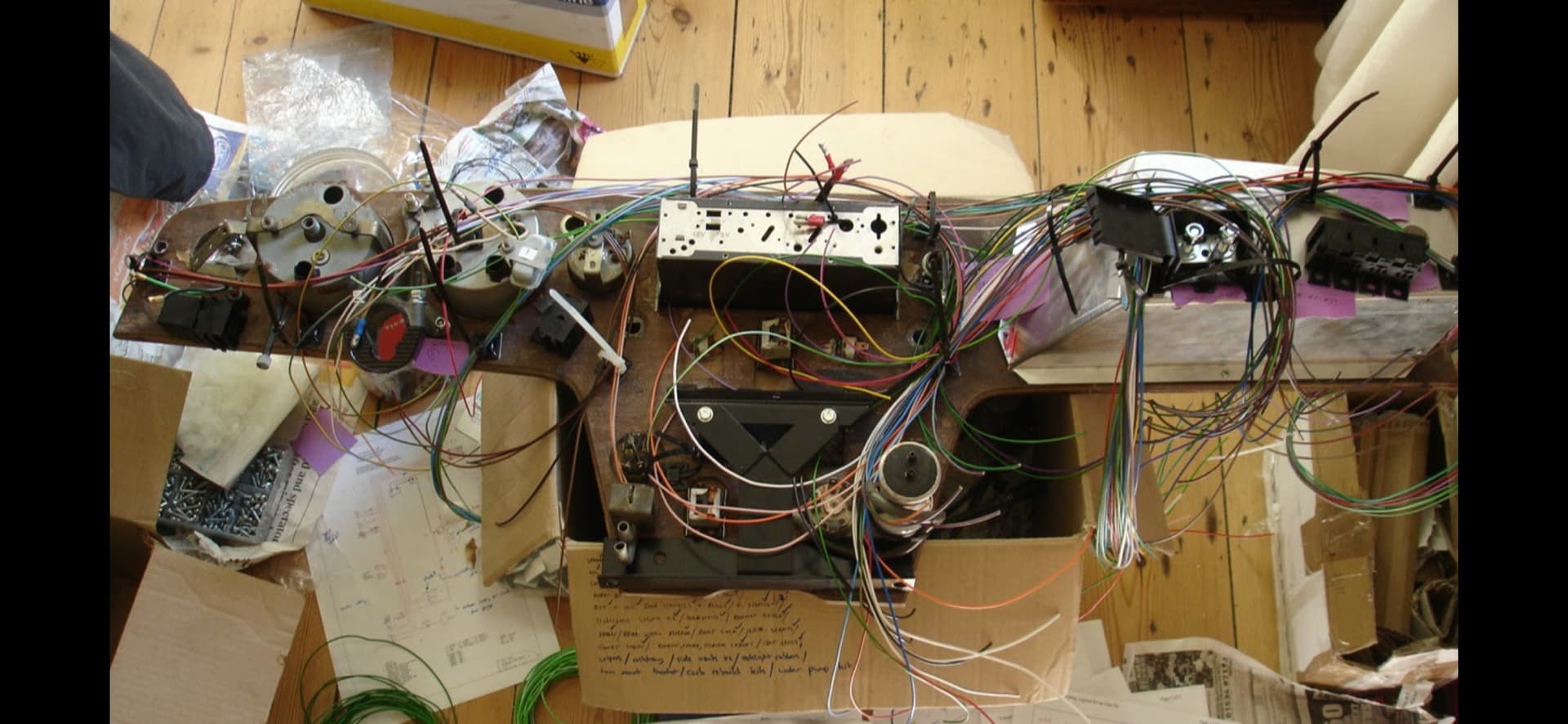
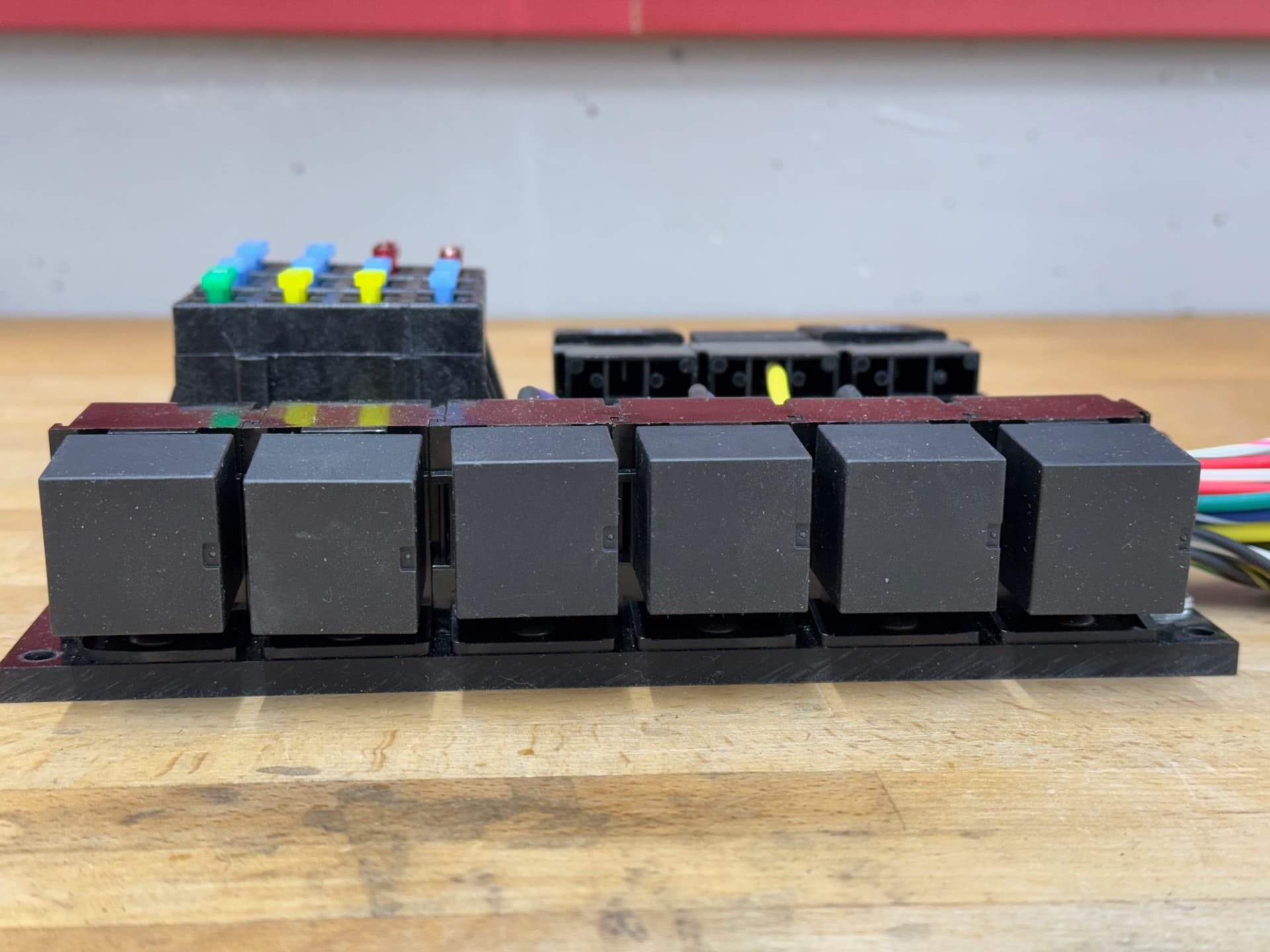
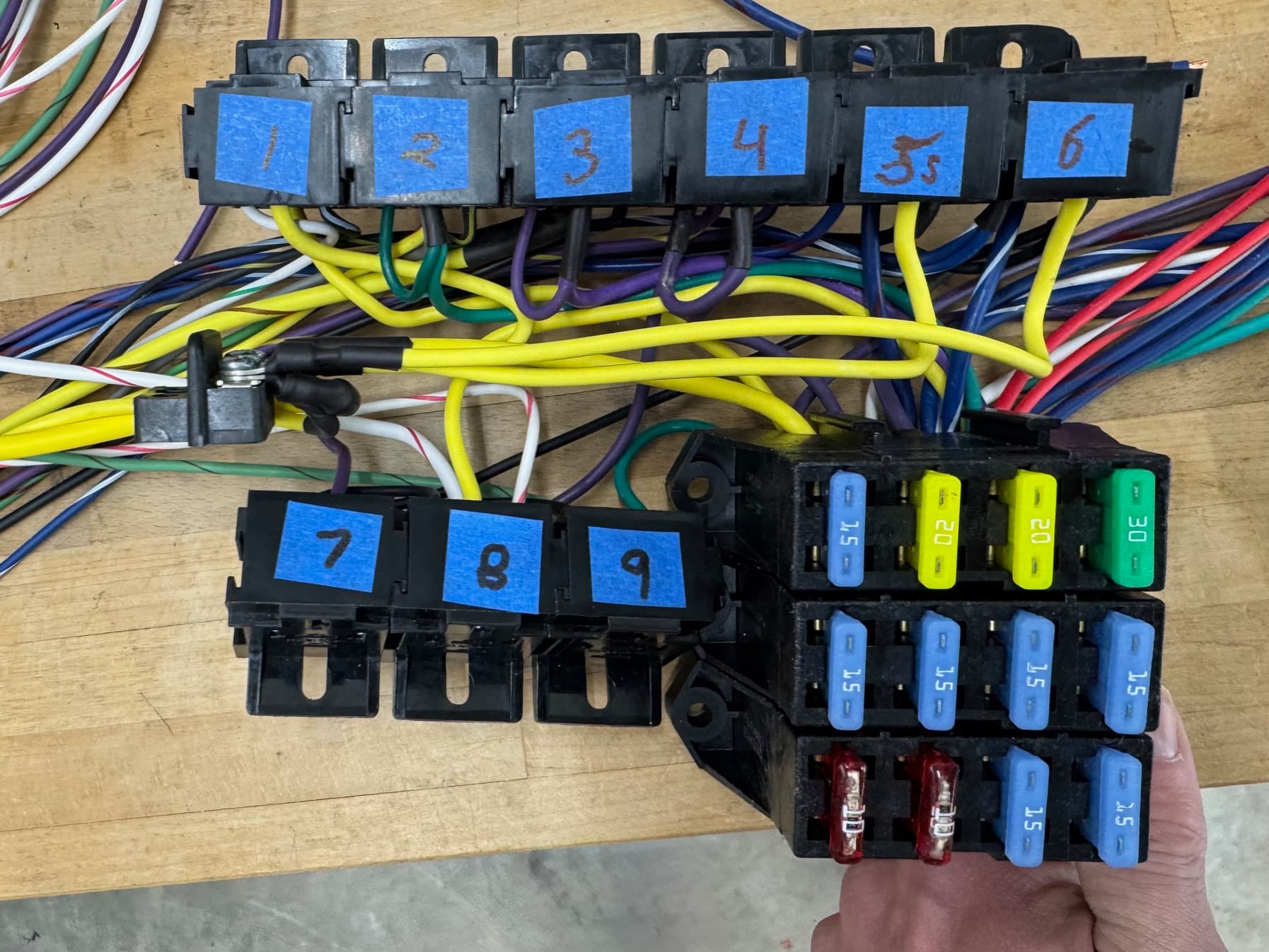
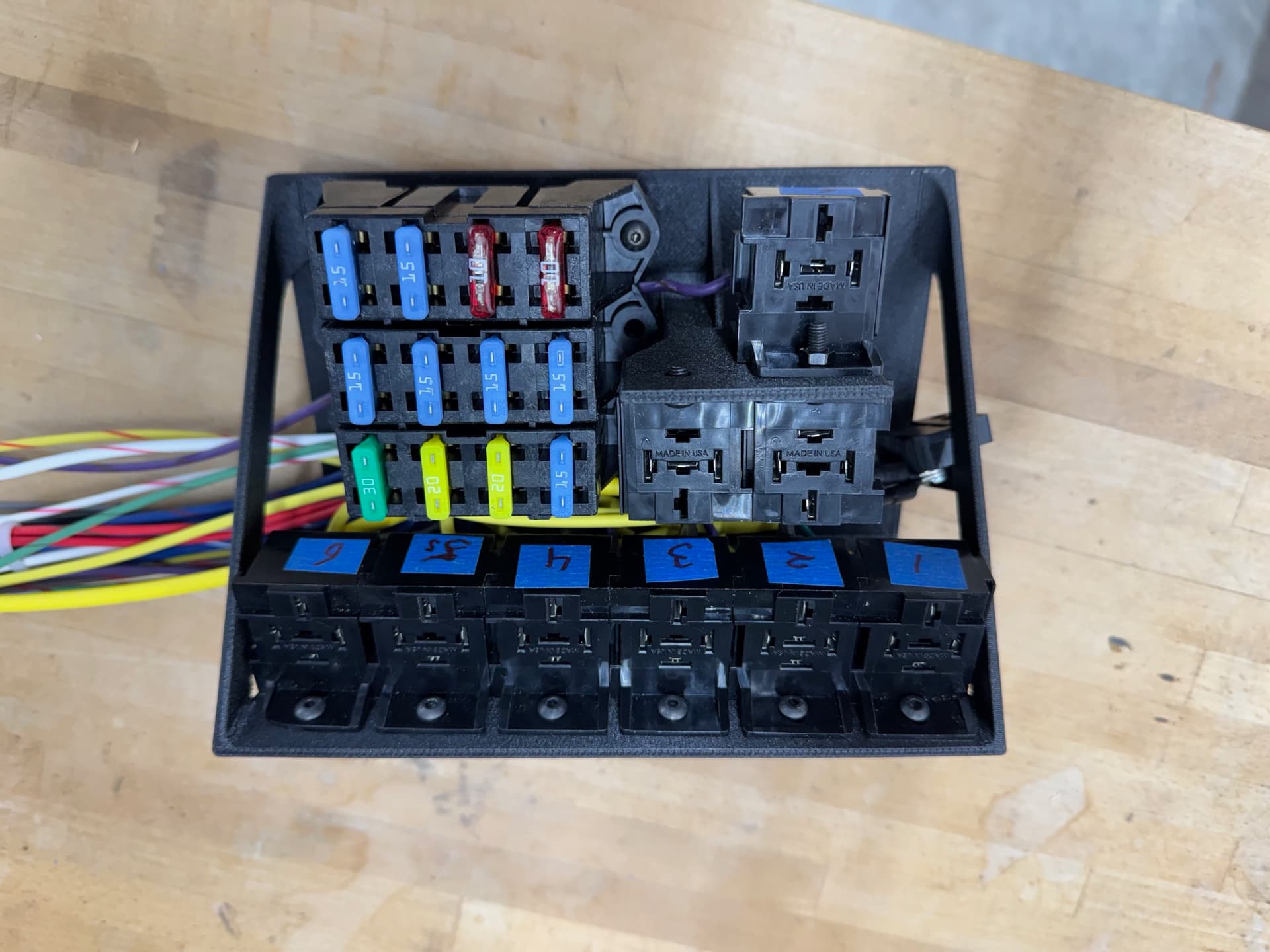
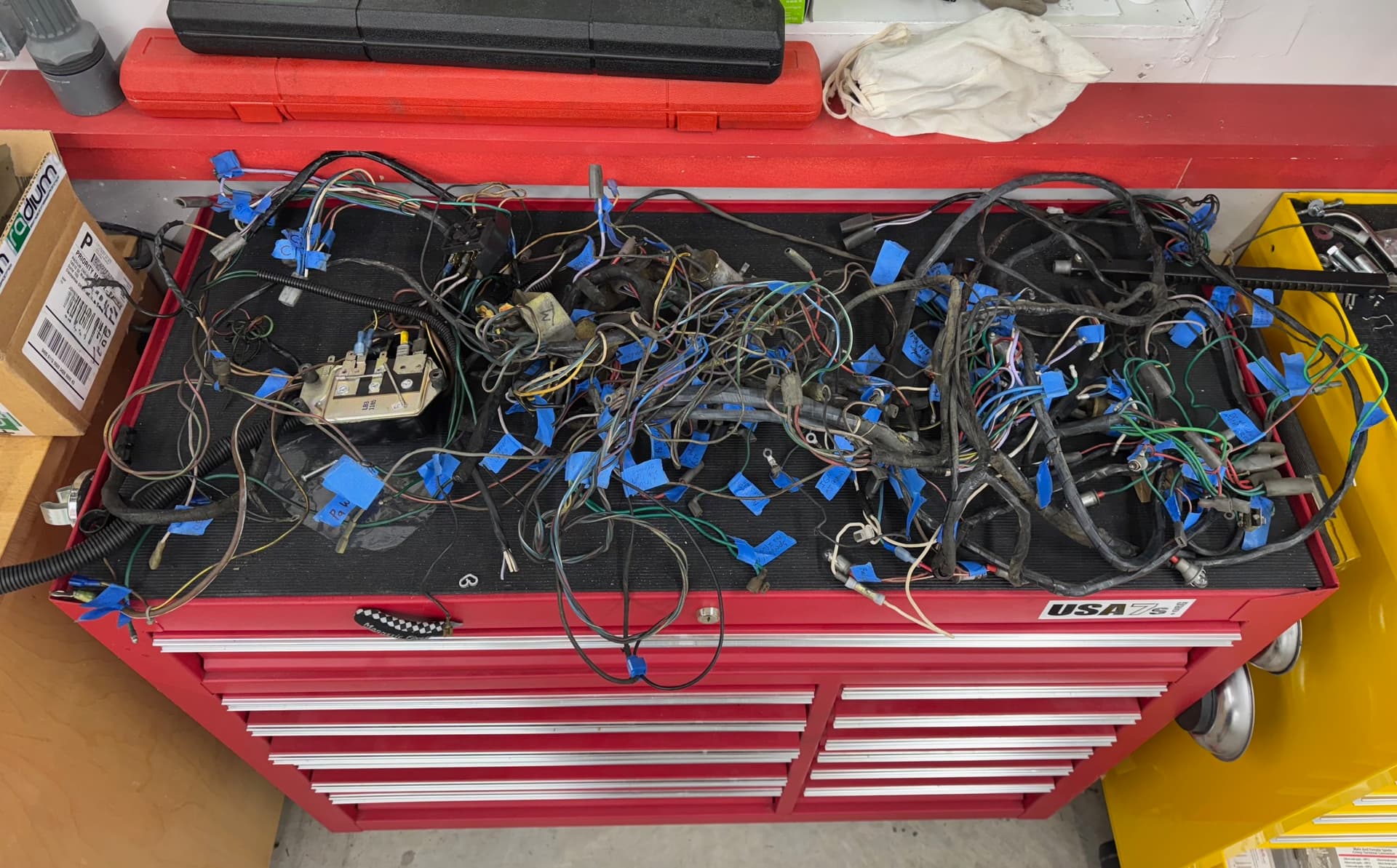
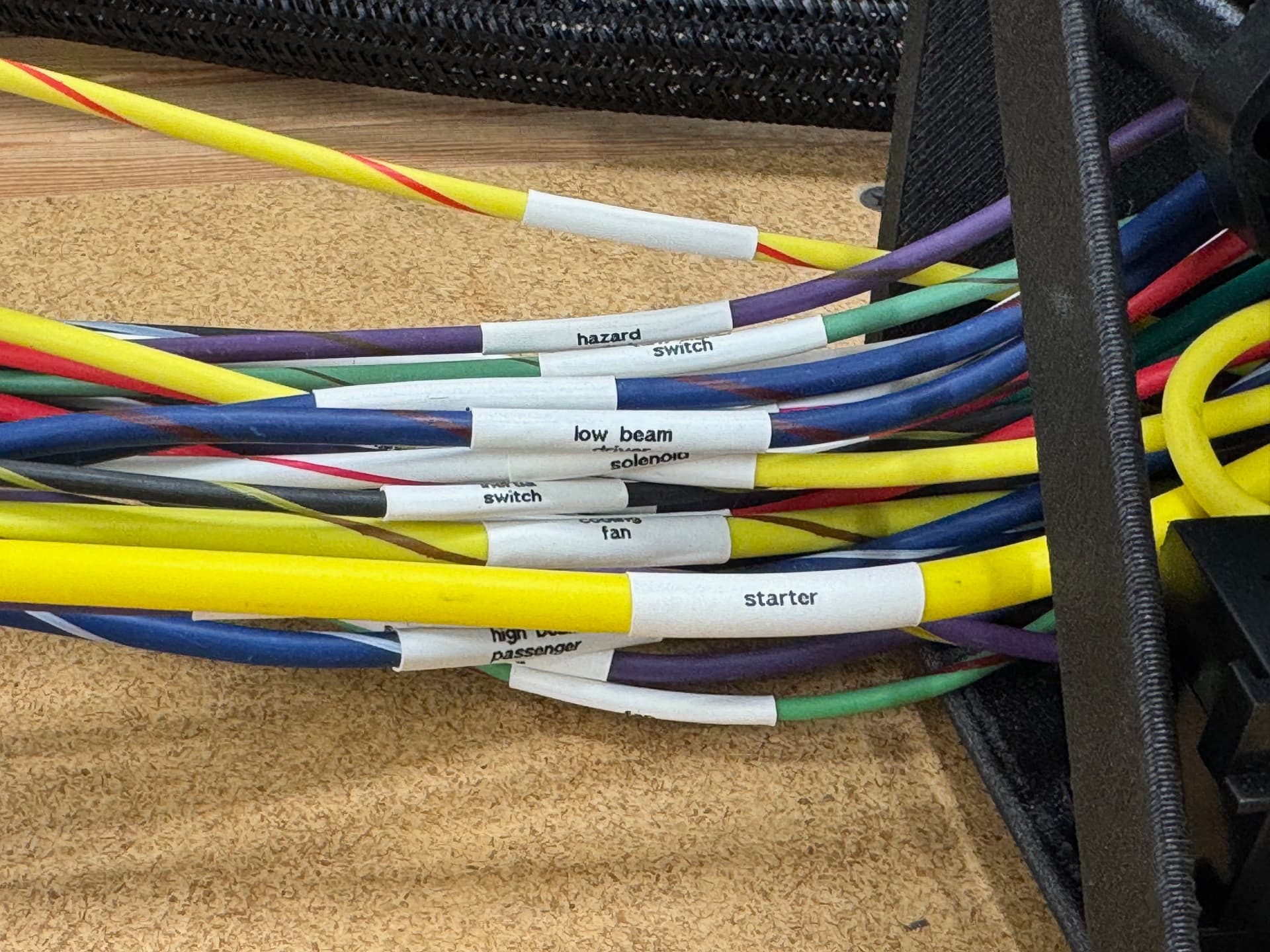
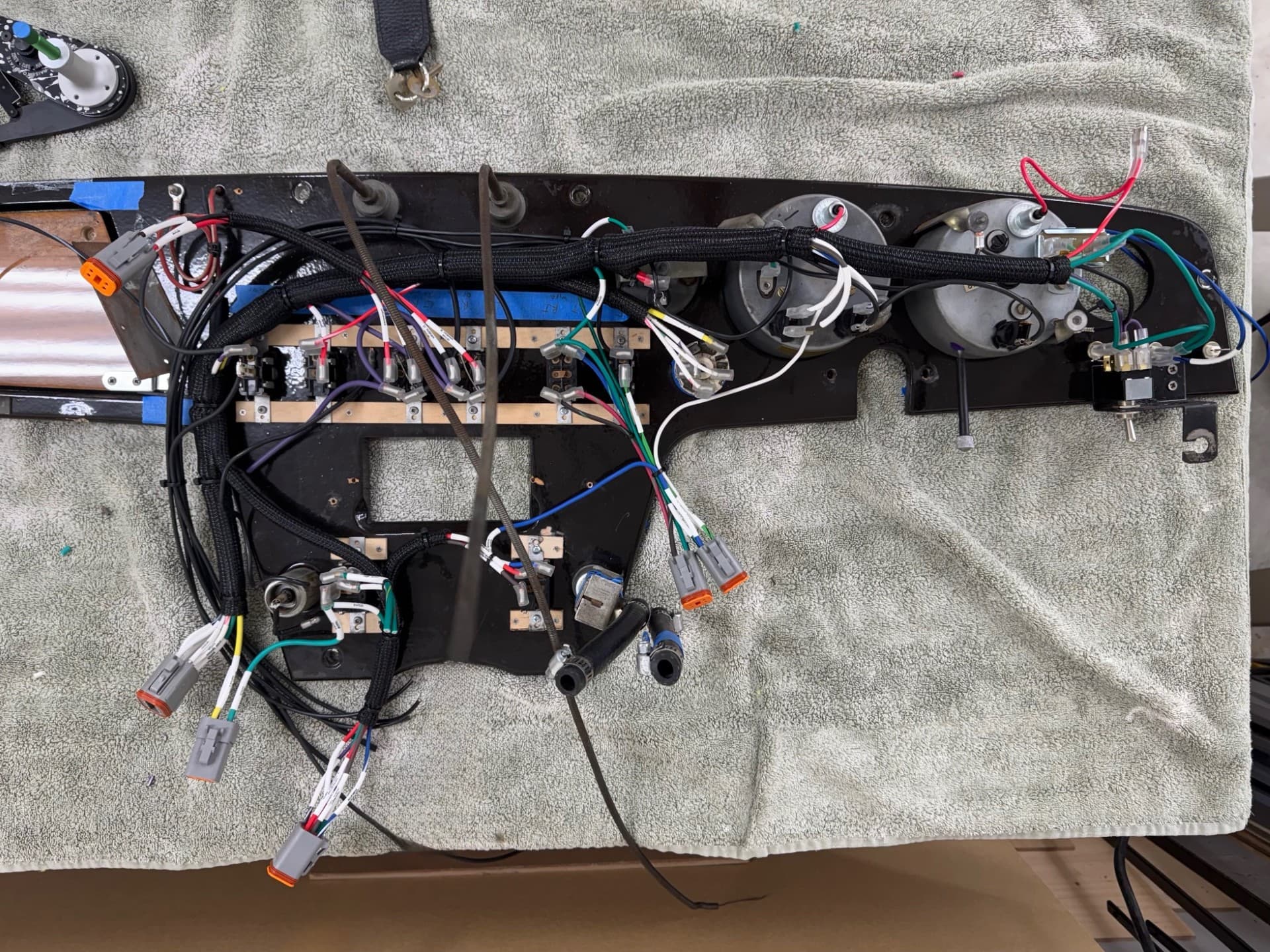
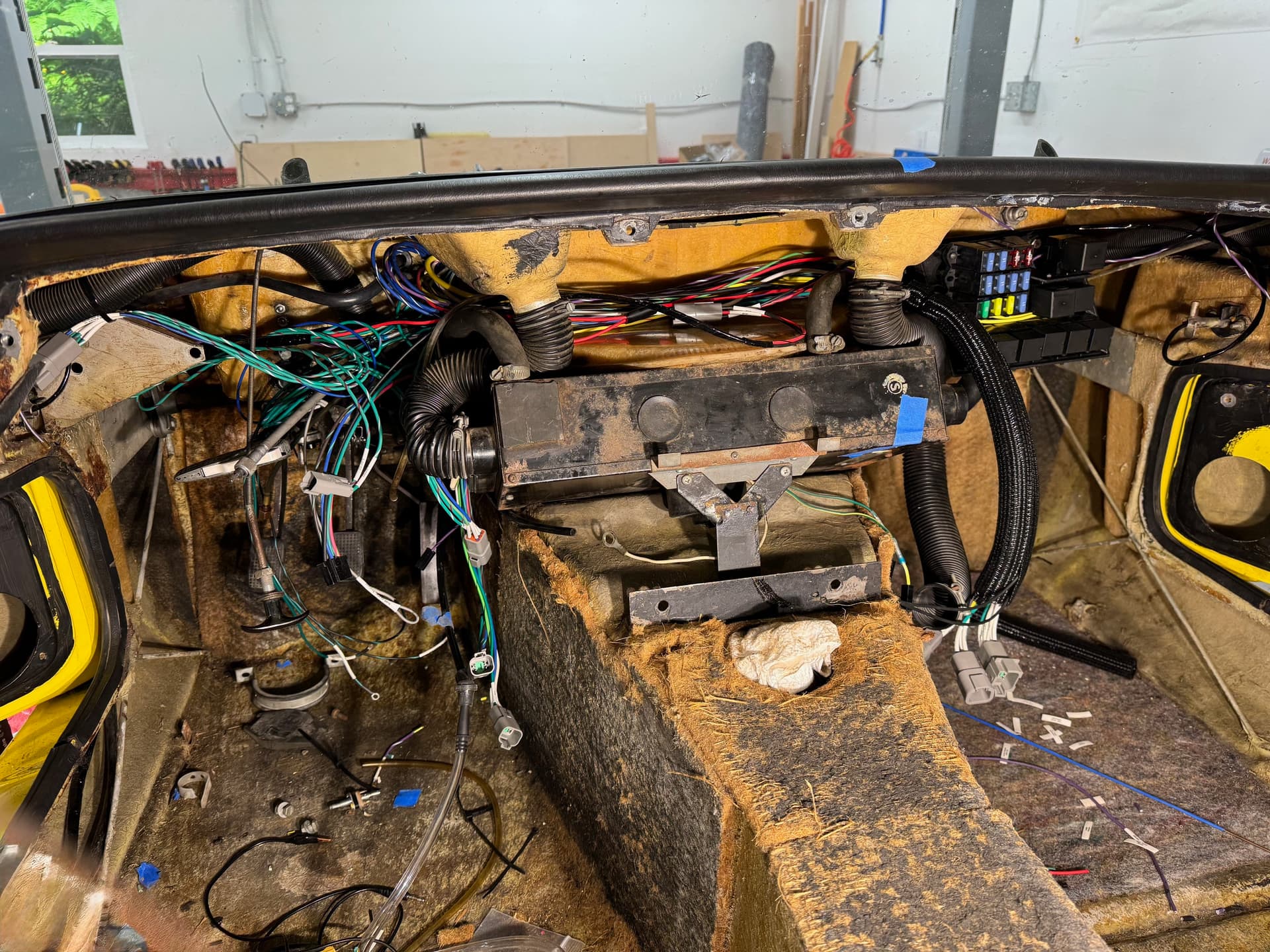
I’ll bucket this into challenges adapting the AAW harness to my car, and things on the car I discovered had failed/were failing.
Wiring
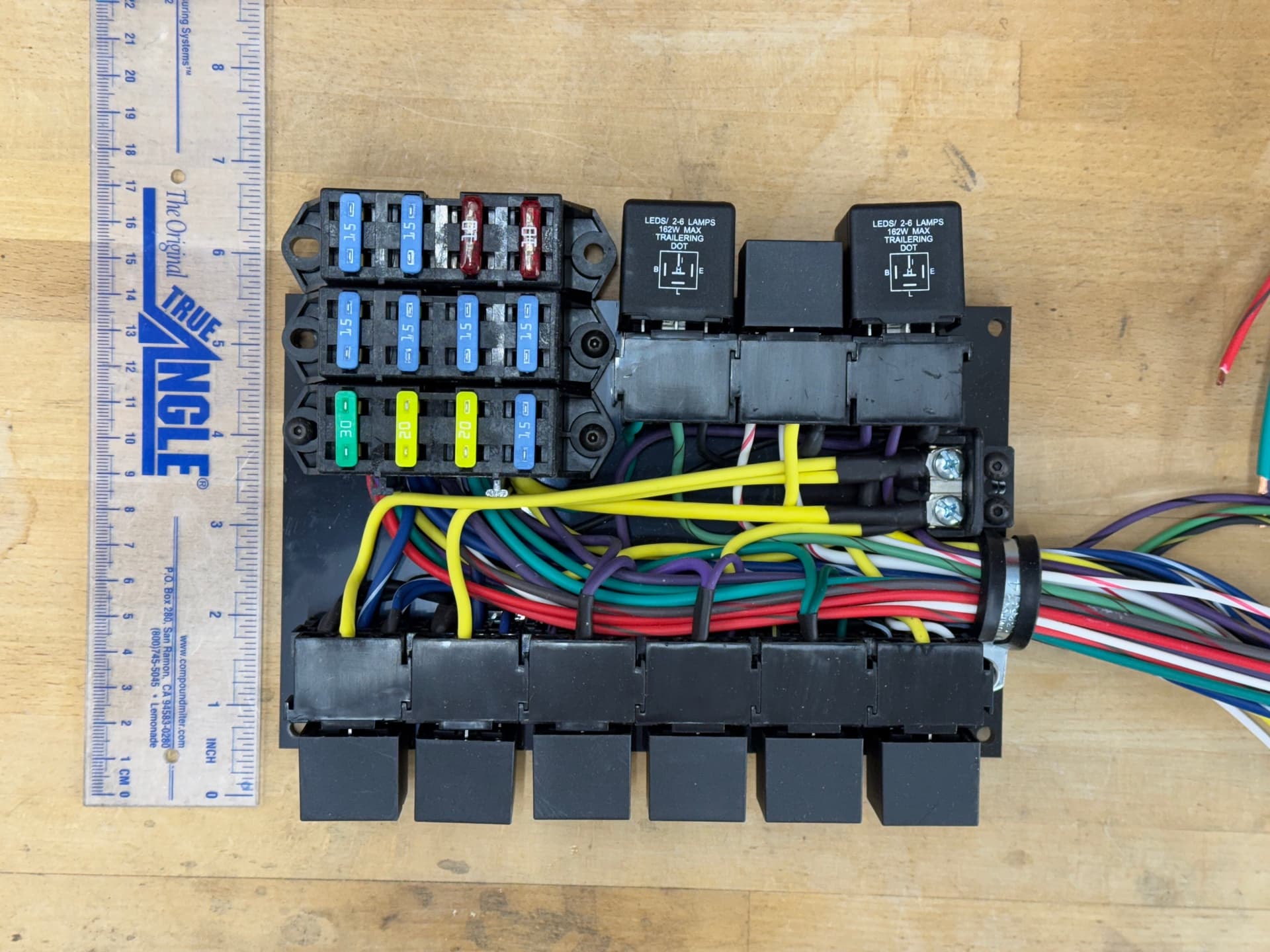
First issue was the indicator warning light on the dash. The AAW schematic shows there are dedicated wires from both the signal and hazard relays. Except there aren’t. It tuns out the wiring diagram shows the old relays, not the newer LED enabled relays. Some digging on the forum suggested wiring an incandescent bulb between the left and right signal wires leading from the hazard switch would work on both circuits. Something Steve at AAW later confirmed.
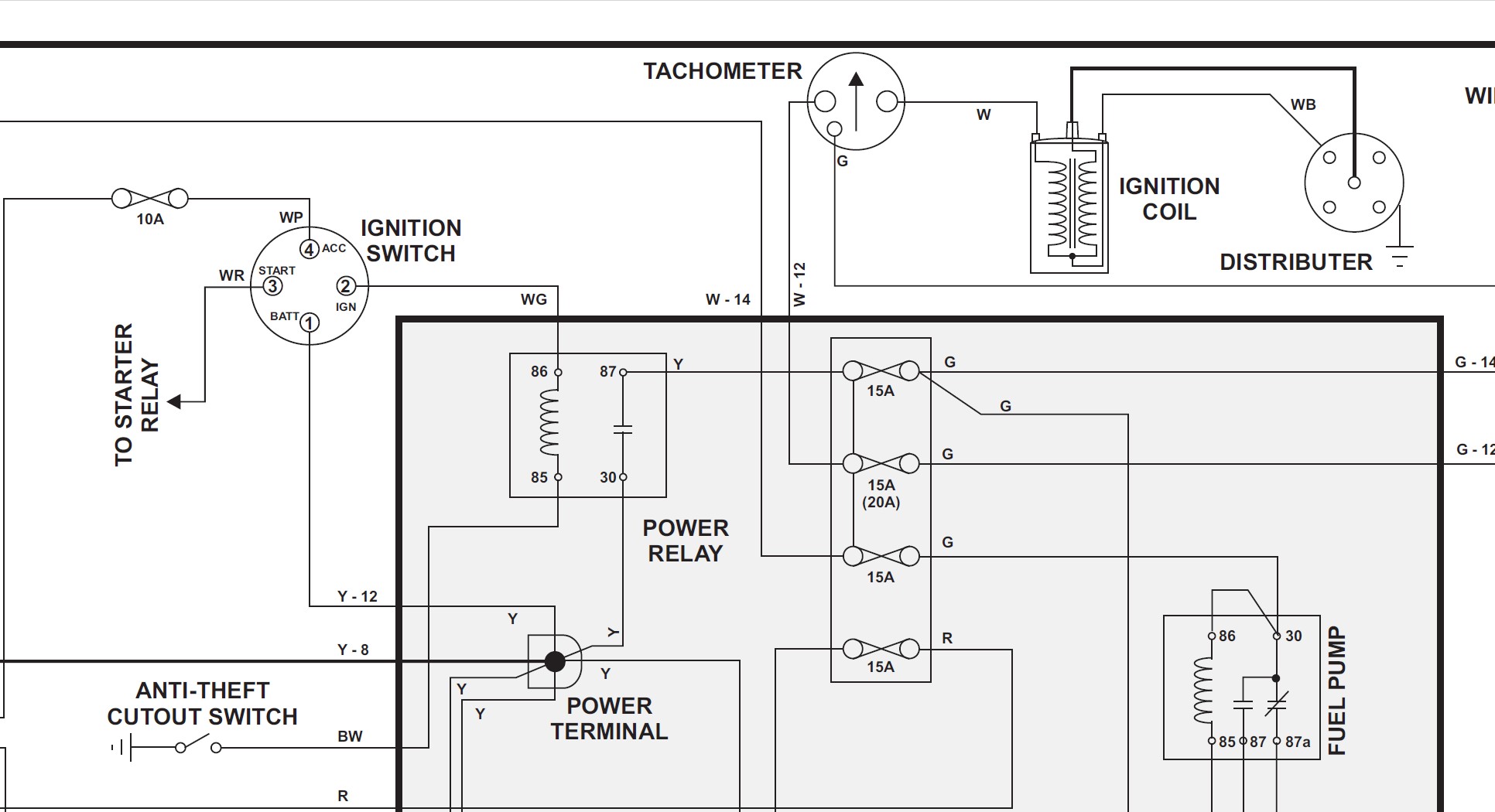
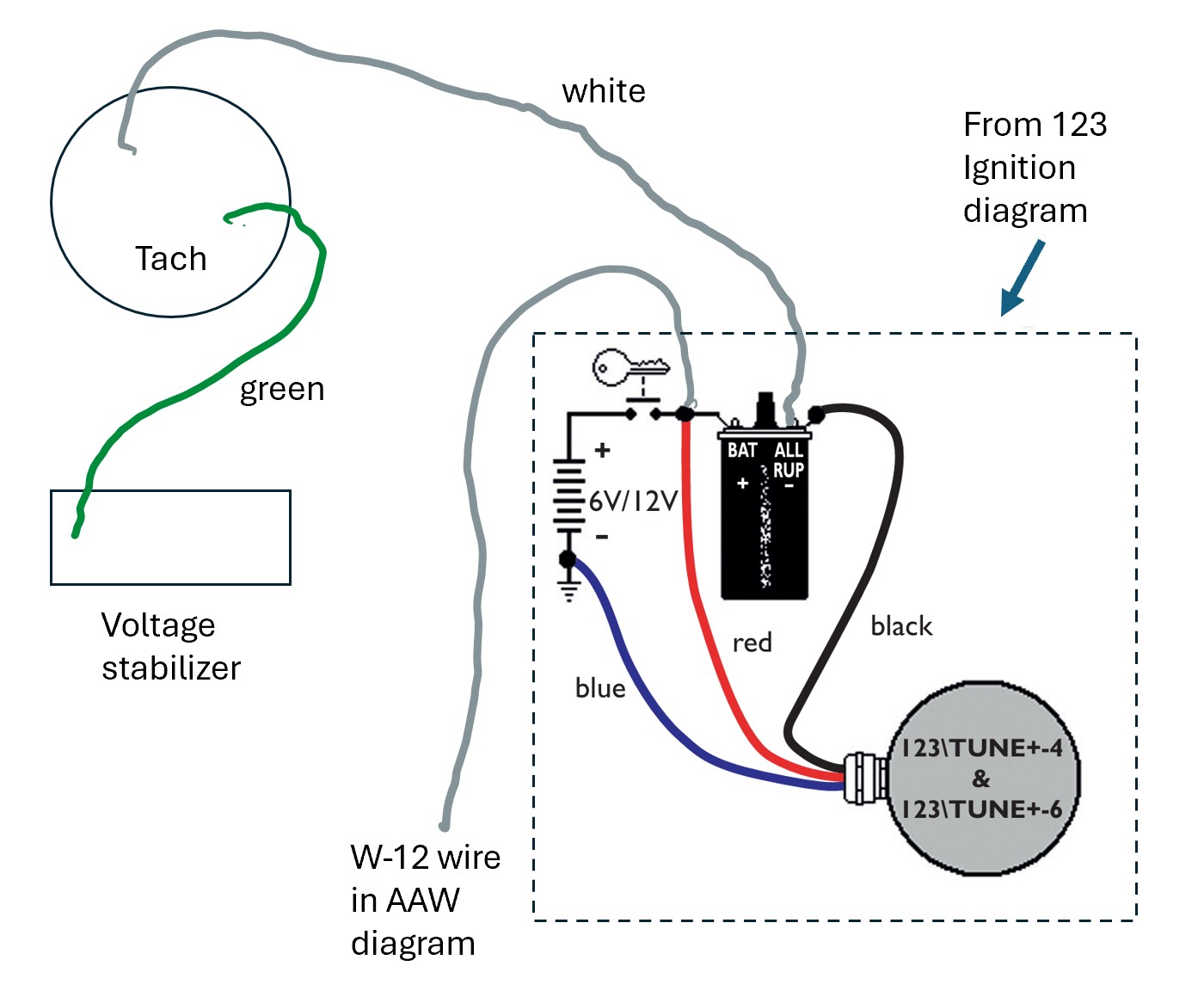
Next was the tach. AAW shows a green wire from the voltage stabilizer to the back of the tach a 12 awg white wire from a switched fuse to the tach, and a white 14 awg from the tach to the coil. My tach has been converted to RVC and has a single white wire coming out of the back, and a spade for the green wire from the voltage stabilizer. Adding to the complexity, my engine is using a 123 Ignition. The pictures below show the AAW diagram, and the wiring diagram from 123 Ignition with my planned integration with the AAW harness. If anyone sees an issue, please speak up.
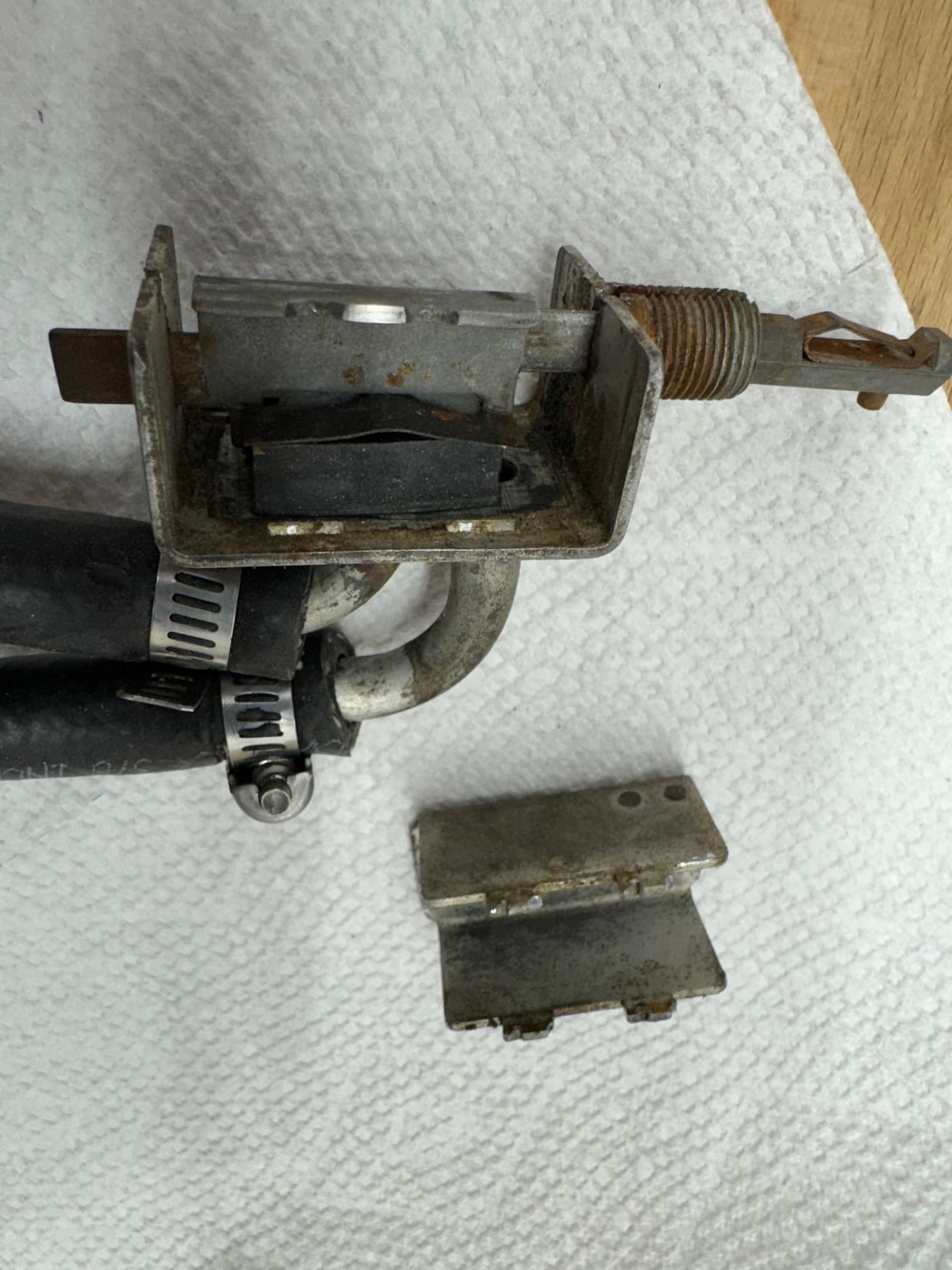
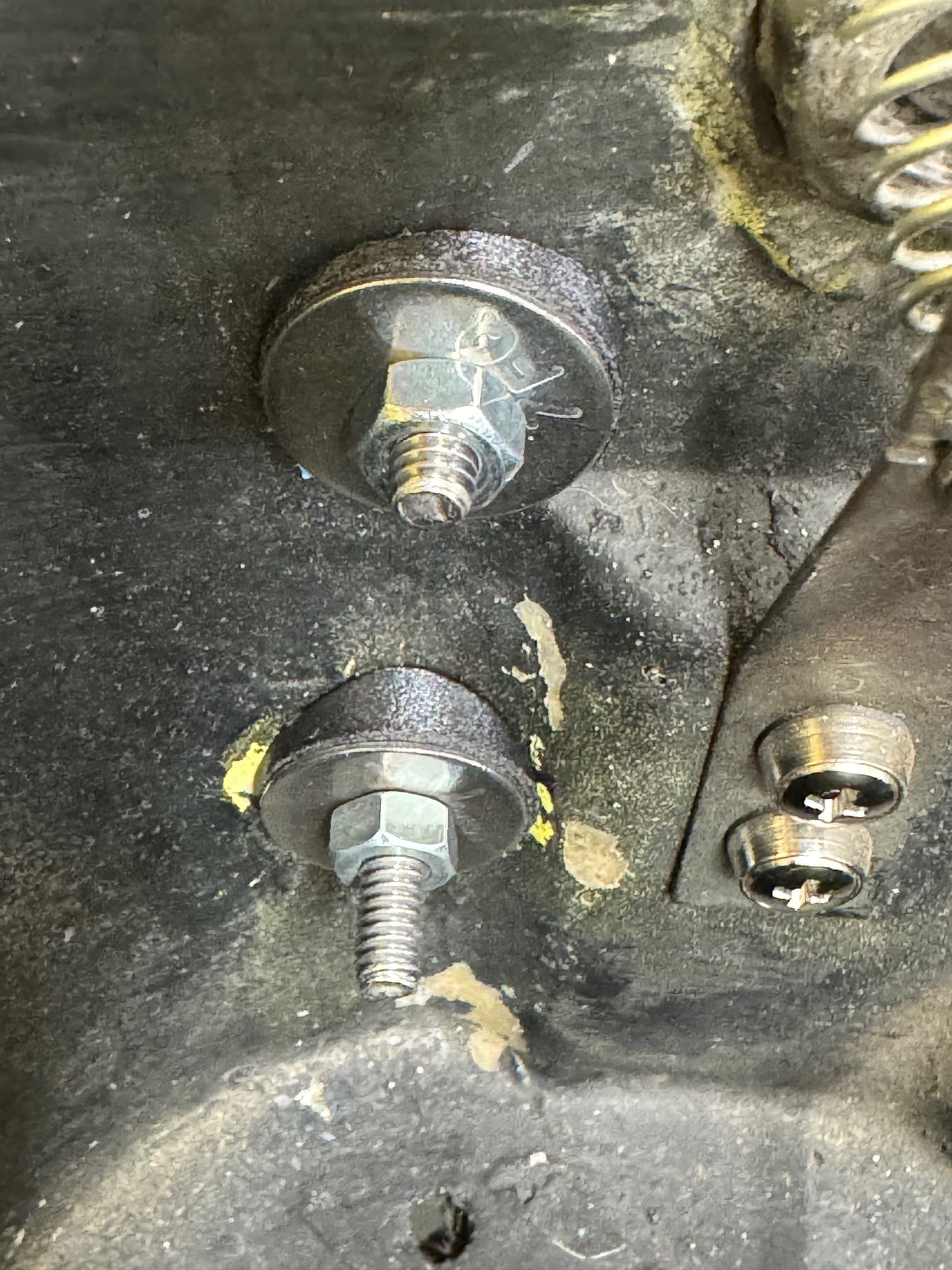
The other difference was the cooling fan. AAW has it setup to use a coolant fan switch and provision for an override switch in the cabin. However, my car is fitted with an adjustable fan controller with its own relay, and is wired differently. For example, its override switch connects to 12v+ whereas the AAW override switch connects to ground. I was unable to find a variable speed controller that didn’t have a native relay, which meant choosing between the controller or the AAW setup. I’m not crazy about how the controller was previously installed. They drilled and tapped a hole in the thermostat cover and applied a boatload of sealant (removed switch next to threaded hole shown below). It’s never leaked, but it’s not done to the standard I’d like to keep for the car. For now, I’ve decided to keep the controller as-is and cleaned up some of the wiring but also run the AAW wires into the correct locations in case I change my mind in the future. I suspect I’ll stick with the controller but eventually replace the thermostat cover with one designed to be fitted with a coolant switch/sensor.
Parts issues
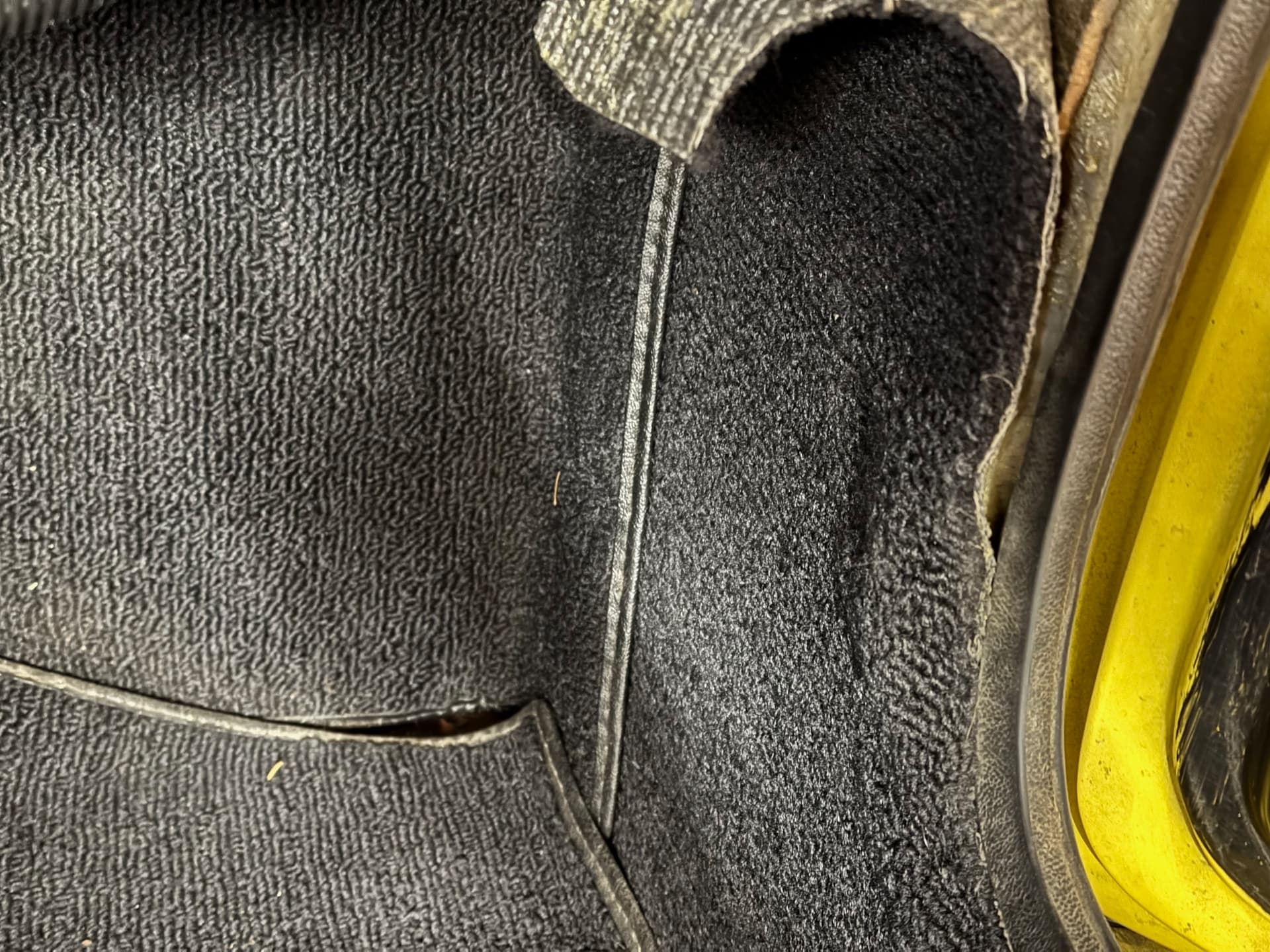
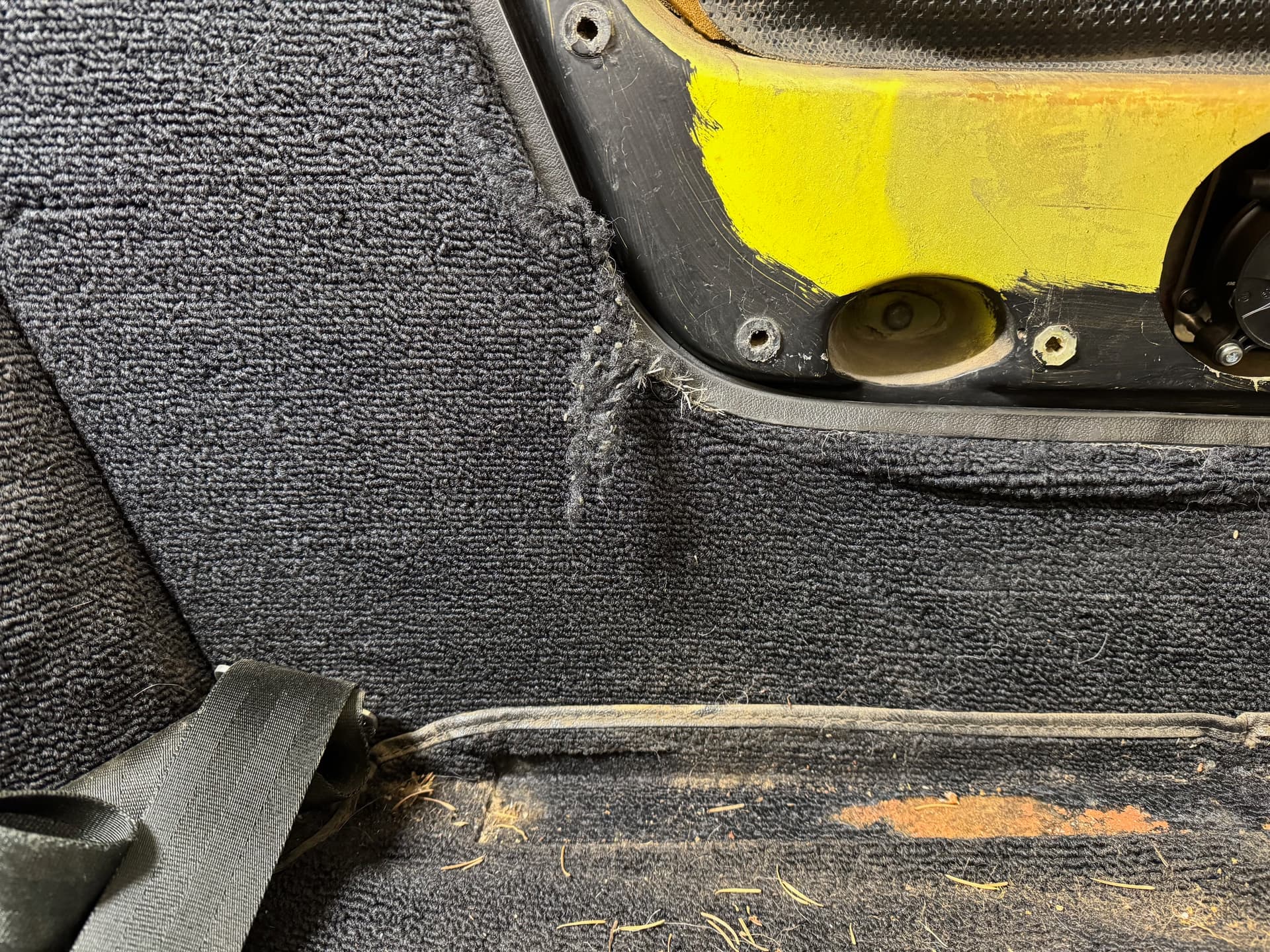
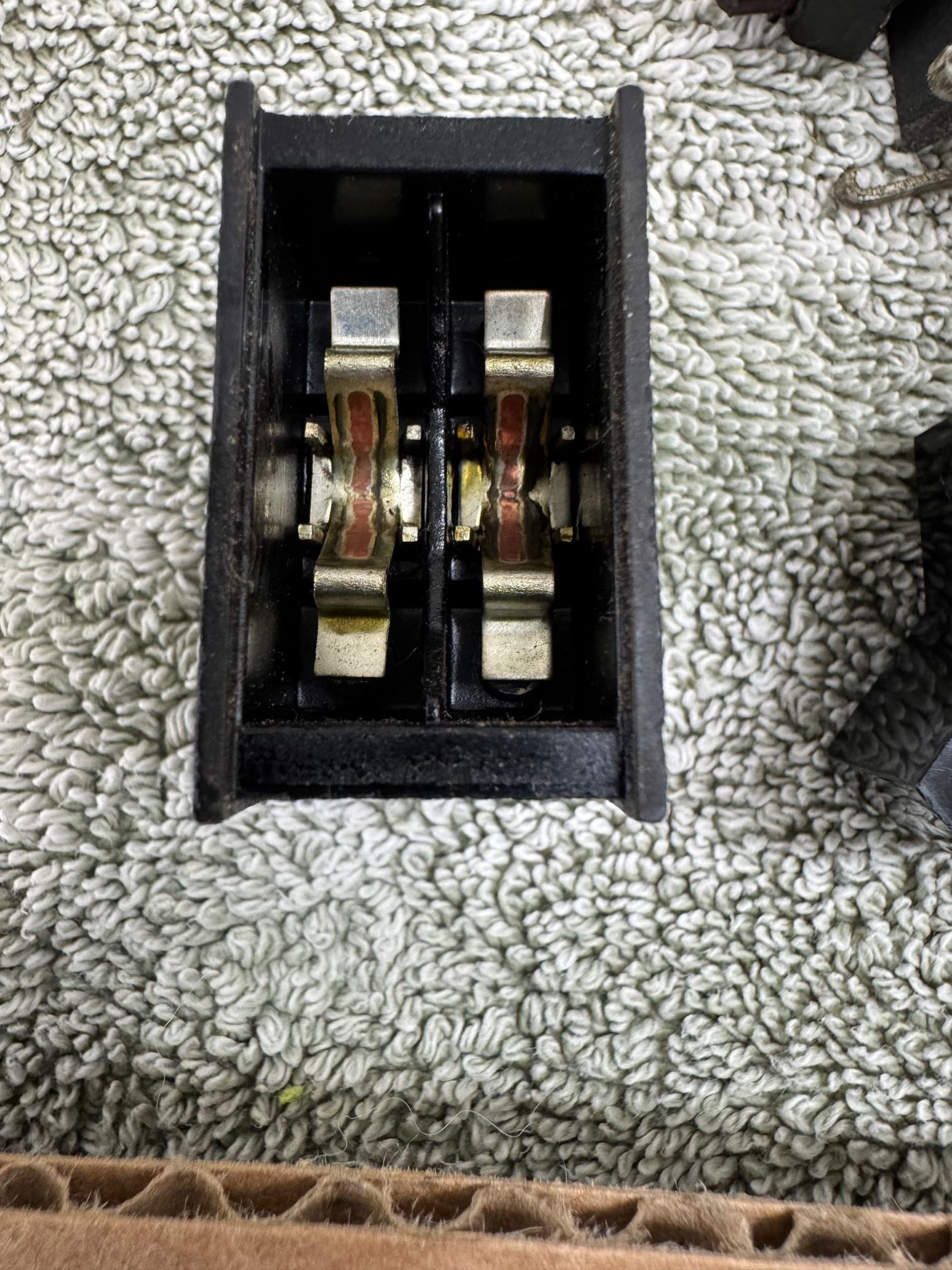
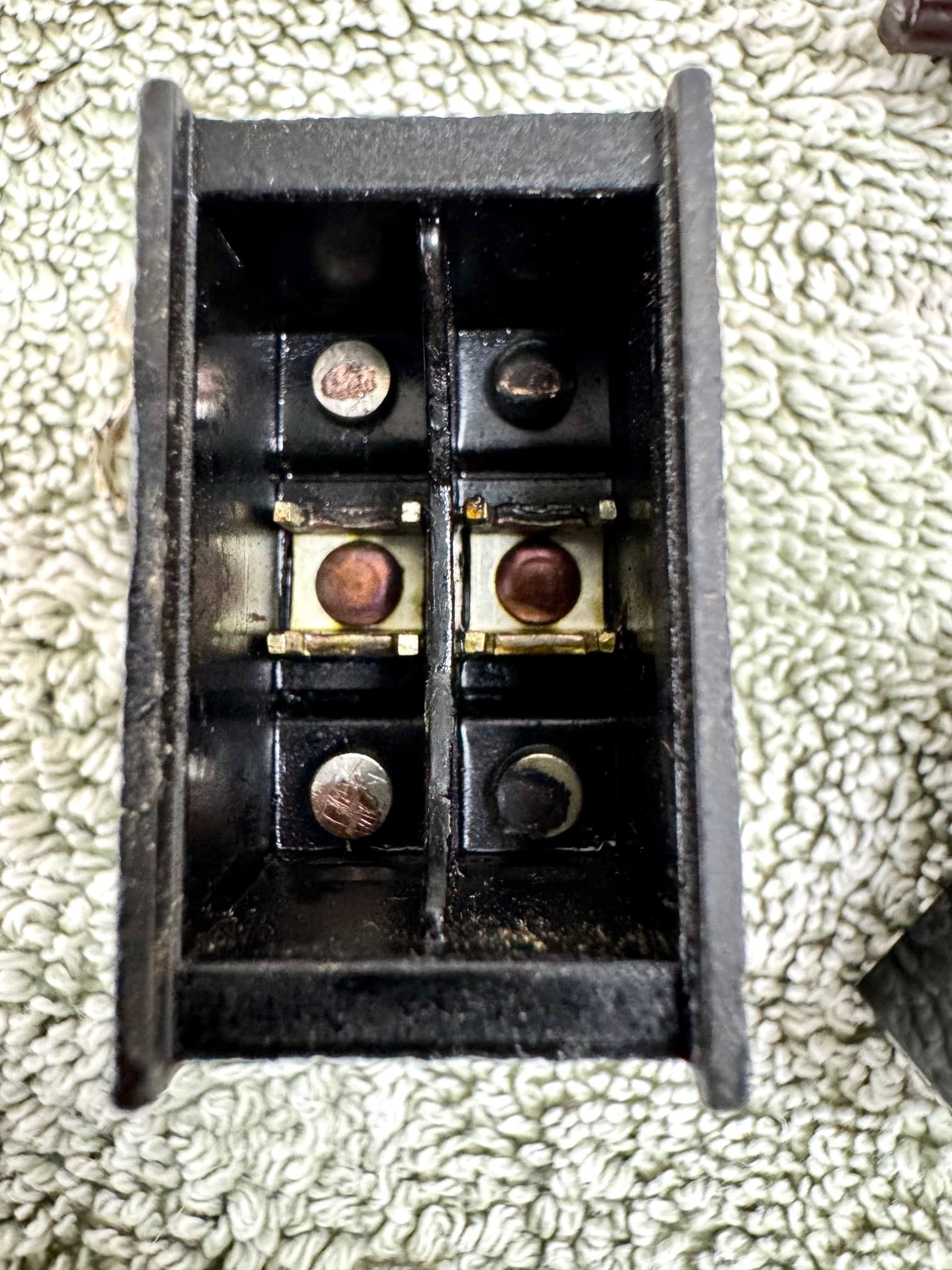
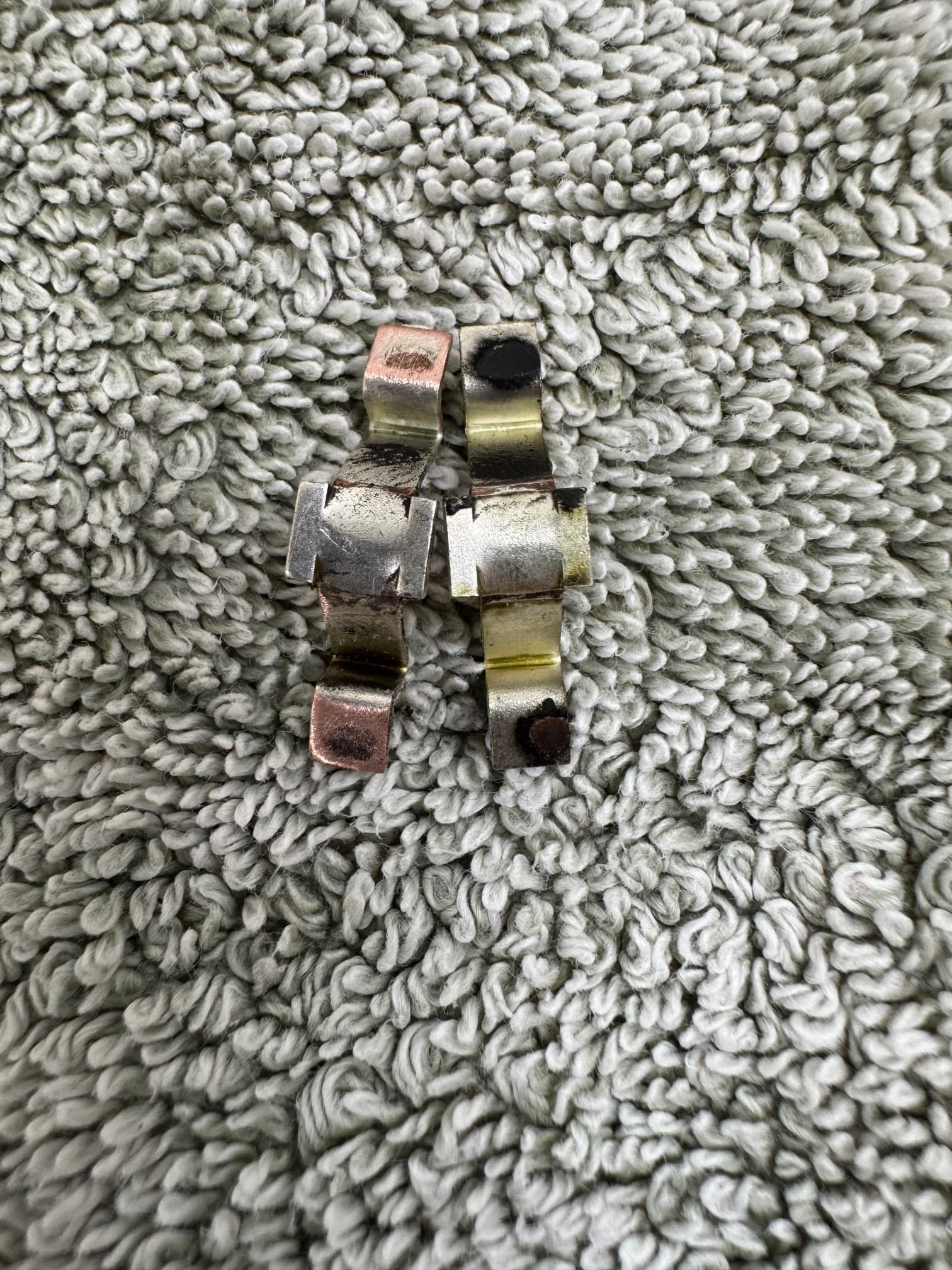
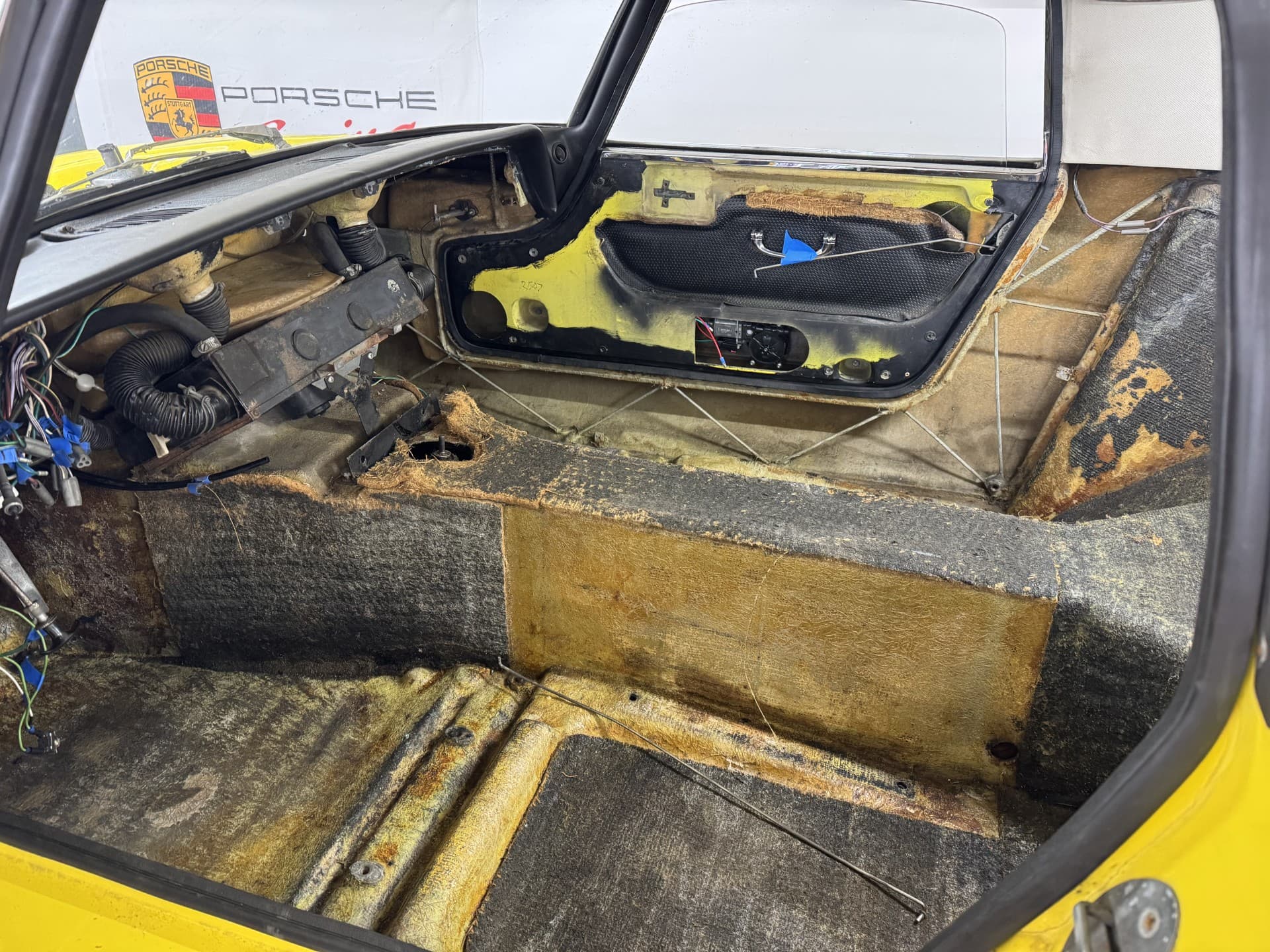
When doing testing to confirm the output tab operation on the back of the ignition switch, I discovered it was failing. A new one was ordered. Next, the positive wire from the middle of the cigarette lighter was toast. The insulation was rock hard and cracking through to the wires. A replacement was ordered. The wire going into the boot lid to power license plate lights was also failing. Hard insulation, and when cut and stripped several inches from the original termination point, the wires were corroded and brittle. Moving on to the front turn signals, at some point, those were replaced with Lucas units that function as both turn signals and running lights, but only wired for the former. The running lights are still wired to the little white thimble lights as per factory design. Not a huge deal, except the LED replacement lights don’t fit in place of the two filament bulbs. I also discovered that the right front signal wire had failed at some point (wires going into the bullet were broken and corroded) and the PO’s fix was to simply plug into the running light wire. That means the turn signal light output was less on that side of the car. Easy fix. As long as the seats and carpet wire were already removed, this seemed like a great opportunity to grease the front prop shaft u-joint. When removing the rubber access cover on the transmission tunnel, it crumbled in my hands. Another replacement part to order.
I’ll skip all the details my flag connector journey except to say that I was finally able to find a set of affordable crimpers from Ferrules Direct for the non-insulated style that work well. I also used their terminals to ensure compatibility. If you go the insulated route, crimpers are easy to find, but some of the quality insulated terminals available through sites like Mouser and Newark appear to require special crimpers to avoid cracking the insulation. Don’t ask me how I know…