Giant Test: Elan Sprint v TR6
CAR, June 1971
| LOTUS | TRIUMPH | |
|---|---|---|
| For: | Brilliant dry-weather roadholding, agile handling, strong acceleration, fair fuel consumption. | Reasonably good roadholding, controllable handling, strong acceleration, fair fuel consumption, relaxed high speed cruising, rugged, simple construction. |
| Against: | Noisy and undergeared for motorway use, poor history of reliability, lack of attention to detail, irritating, skittish wet road handling at speed. | Hardly roomier than Lotus, suspension prone to pitch and tail-squat, relatively cumbersome shape. |
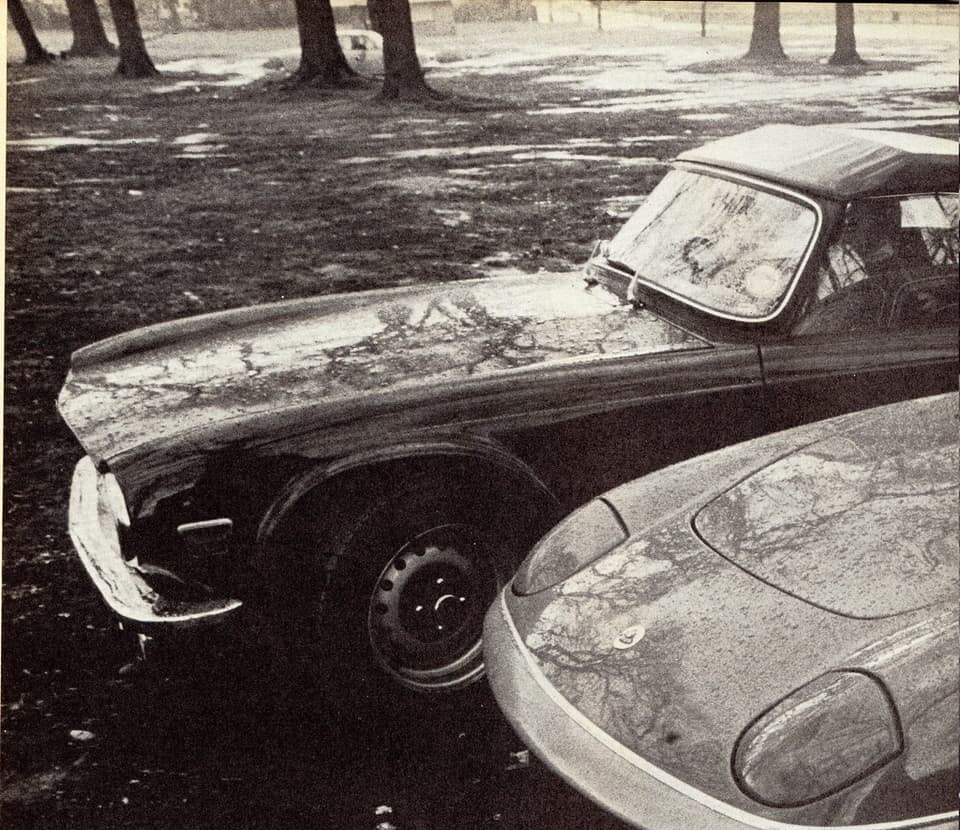
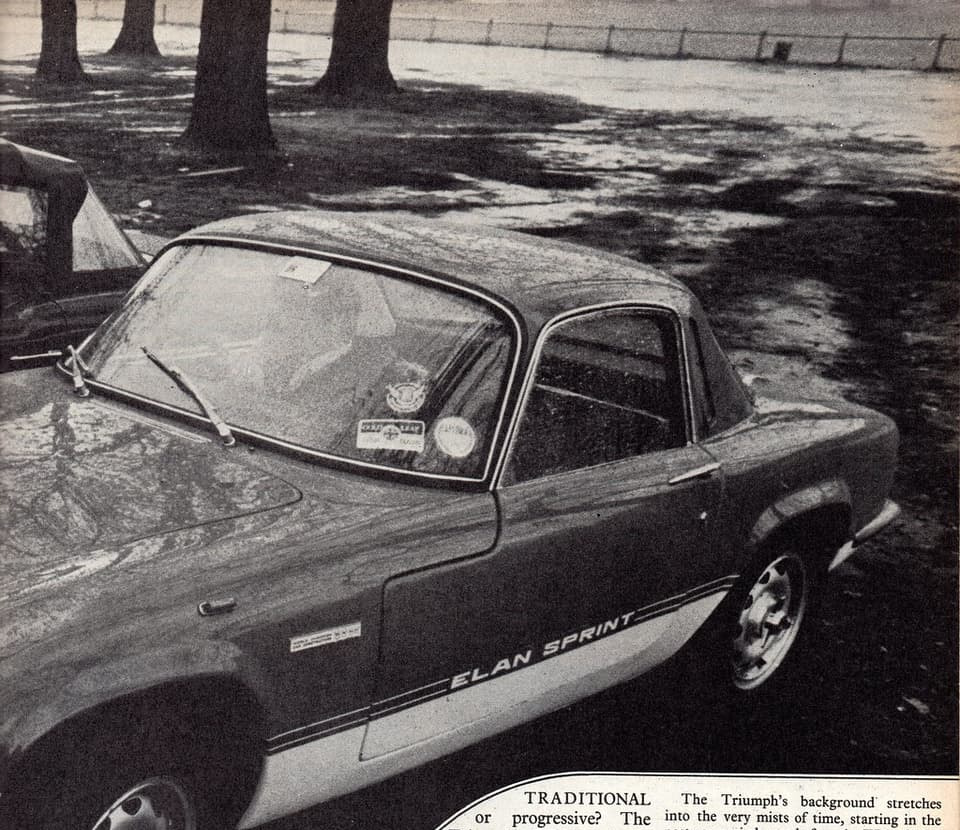
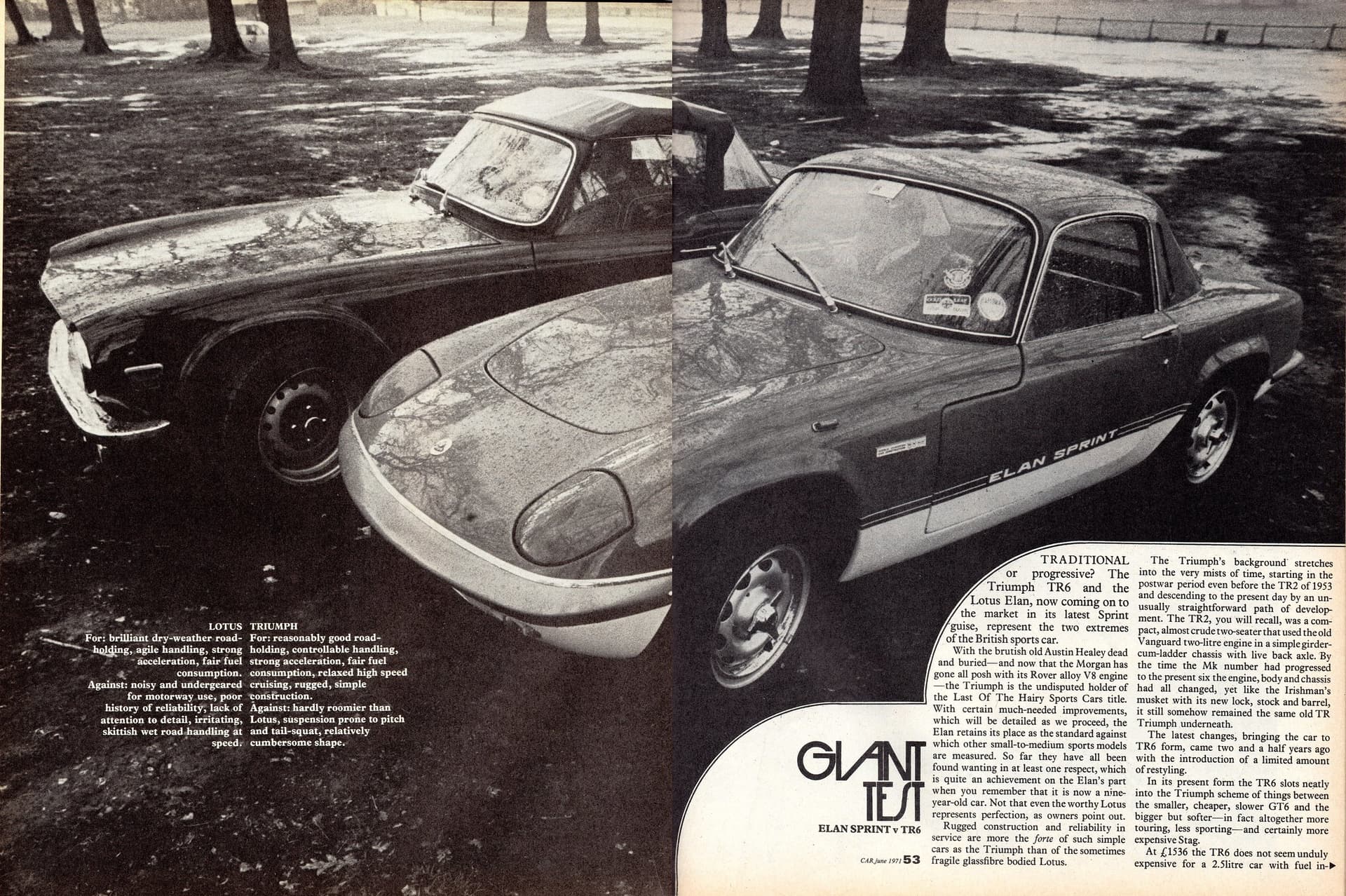
Traditional or progressive? The Triumph TR6 and the Lotus Elan, now coming on to the market in its latest Sprint guise, represent the two extremes of the British sports car.
With the brutish old Austin Healey dead and buried — and now that the Morgan has gone all posh with its Rover alloy V8 engine — the Triumph is the undisputed holder of the Last Of The Hairy Sports Cars title. With certain much-needed improvements, which will be detailed as we proceed, the Elan retains its place as the standard against which other small-to-medium sports models are measured. So far they have all been found wanting in at least one respect, which is quite an achievement on the Elan’s part when you remember that it is now a nine-year-old car. Not that even the worthy Lotus represents perfection, as owners point out.
Rugged construction and reliability in service are more the forte of such simple cars as the Triumph than of the sometimes fragile glassfibre bodied Lotus.
The Triumph’s background stretches into the very mists of time, starting in the postwar period even before the TR2 of 1953 and descending to the present day by an unusually straightforward path of development. The TR2, you will recall, was a compact, almost crude two-seater that used the old Vanguard two-litre engine in a simple girder-cum-ladder chassis with live back axle. By the time the Mk number had progressed to the present six the engine, body and chassis had all changed, yet like the Irishman’s musket with its new lock, stock and barrel, it still somehow remained the same old TR Triumph underneath.
The latest changes, bringing the car to TR6 form, came two and a half years ago with the introduction of a limited amount of restyling.
In its present form the TR6 slots neatly into the Triumph scheme of things between the smaller, cheaper, slower GT6 and the bigger but softer — in fact altogether more touring, less sporting — and certainly more expensive Stag.
At £1536 the TR6 does not seem unduly expensive for a 2.5litre car with fuel injection, especially when matched against the £1310 asked for the GT6 and the £2274 of the cheapest Stag.
At £1685 the Lotus coupé is a more expensive proposition even in component form (while the convertible is £10 more). Yet the extra cost is unlikely to be a major factor in dissuading buyers when seen against the total sum involved. Neither is the matter of home assembly very offputting, for although the job may take longer than the weekend of legend it is still pretty straightforward work, needing tools no more complex than a (rentable) engine hoist. After all, it’s only supposed to be a task of bolting together major units which have been built up from small components by the factory.
Lotus obviously expect buyers to take the DIY route for they aren’t even bothering to quote a home market price for the ready-made car. If they did it would be well over £2000, pricing the Elan right out of the field. All of which makes economical sense, but nonsense of the firm’s hopes expressed last year of getting out of the kit-car business with its savour of the backyard special. But the prospect of a Value Added Tax on the horizon could spell trouble for Lotus and their smaller brethren, for it would mean an end to purchase tax loopholes.
The Sprint is no more than a series of more or less important improvements wrapped up in a ‘new model’ package, but it is to Lotus’ credit that the resultant price increases are minimal: the convertible only went up by £36 while the coupé increase was held to £26.
At these figures the Elan is not a lot dearer than the mid-engined Europa, which also comes as a kit in these hard times, and costs £1460. The Elan Plus Two S130 — available only ready built — is in a completely different bracket at £2676.
By way of comparison with our Giant Test contenders the intending sports car buyer in this price range can choose from a quartet of three-litre V6 cars — Marcos at £1895, Ginetta G21 at £1845, Gilbern at £1663 and TVR at £1595 — or the Morgan Plus 8 at £1699 and the two-litre Marcos at £1675.
Style and Engineering
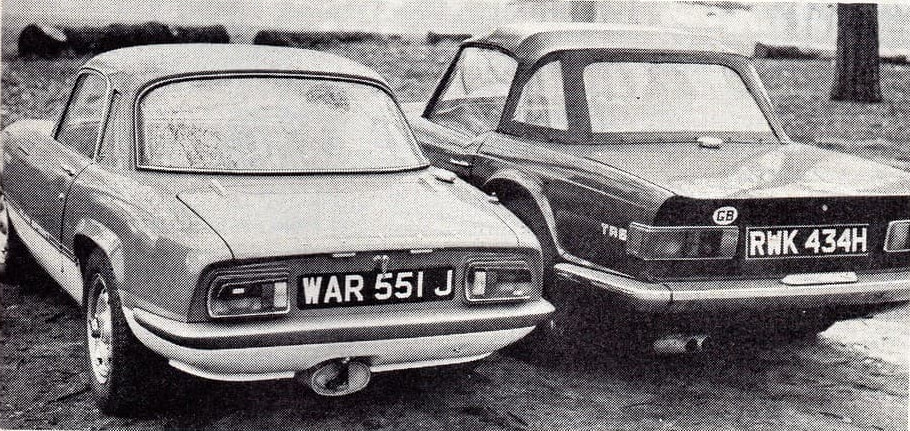
As we said at the outset, the Triumph and the Lotus represent two diametrically opposed schools of design, a fact reflected in their appearance. The Triumph looks a long and bulky car, but we thought the hardtop — a £65 extra — improved the appearance by giving a better balance to the lines. Certainly the hood looks an afterthought.
Conversely, most people felt that the little Elan looked better with its hood up. Its small size combines with anonymous styling to make the Lotus look completely unassuming.
Still, it’s an easy shape to produce in glass-fibre, while the Triumph’s lends itself to traditional steel pressings, complete with some unsightly joins. Divergence crops up again in the chassis. It’s remarkable that in 1971 a volume-produced car like the Triumph even has a chassis but there it is — an archaic structure of box-section side members with cruciform bracing.
Chapman having proved the impracticability of unitary construction in glass-fibre with the Elite, the Elan has a steel chassis of tuning fork configuration. The prongs fit around the engine and meet aft of the gearbox in a single deep backbone member that forks out again at the rear to carry the suspension and final drive. The body is attached via rubber bushes and outrigger members which also support the seats.
Both cars agree on the desirability of double wishbone and coil spring front suspension. At the back it’s a different story. The Lotus has a lower wishbone and strut, where the Triumph uses semi-trailing arms — a feature it shares with the Stag and the 2000/2.5PI saloons. Coil springs are the suspension medium on Triumph and Lotus.
The pair also share rack and pinion steering, but differ in matters of braking. The Lotus uses a simple system of discs all round, whereas the Triumph has front discs combined with rear drums which are power-assisted.
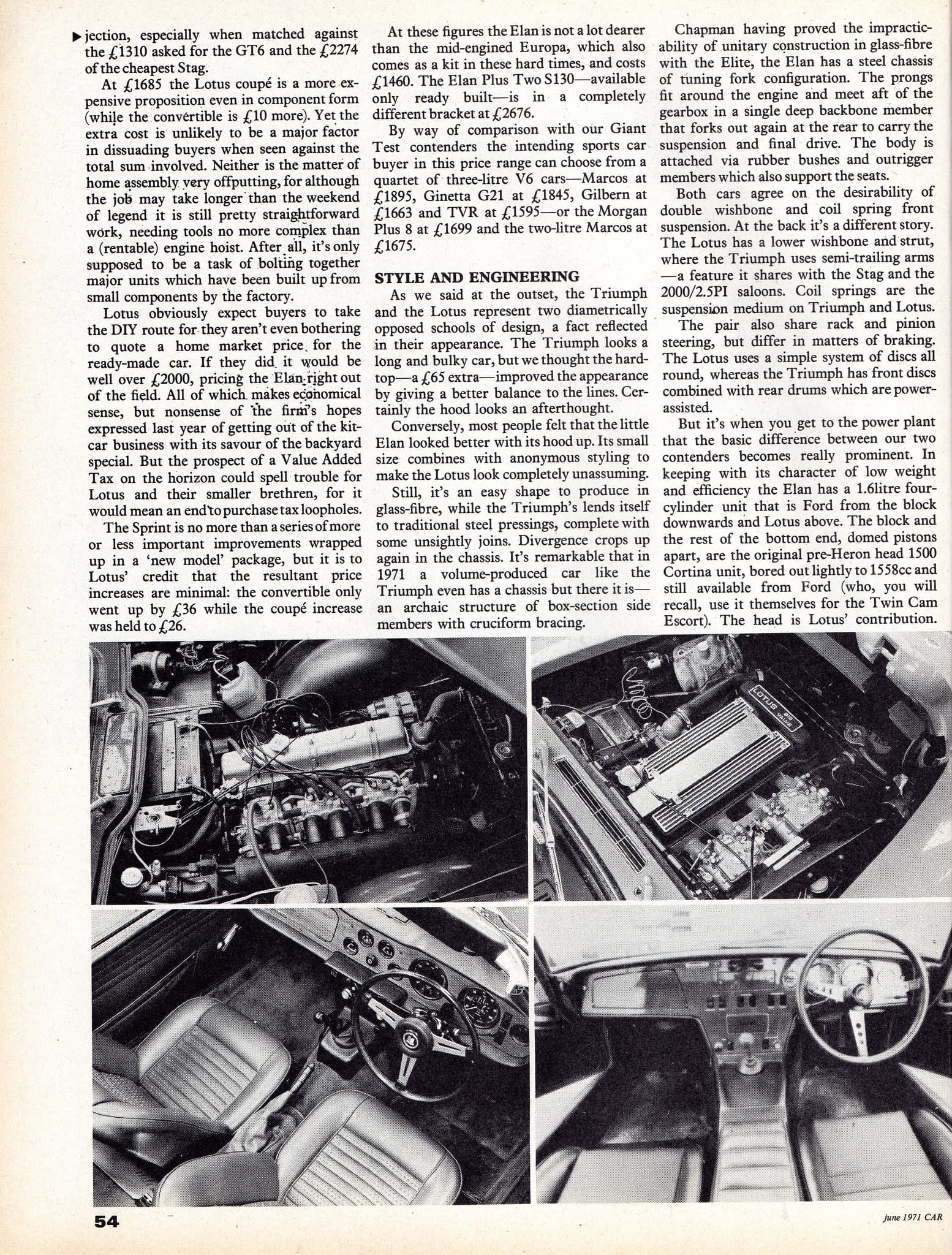
But it’s when you get to the power plant that the basic difference between our two contenders becomes really prominent. In keeping with its character of low weight and efficiency the Elan has a 1.6litre four-cylinder unit that is Ford from the block downwards and Lotus above. The block and the rest of the bottom end, domed pistons apart, are the original pre-Heron head 1500 Cortina unit, bored out lightly to 1558cc and still available from Ford (who, you will recall, use it themselves for the Twin Cam Escort). The head is Lotus’ contribution.
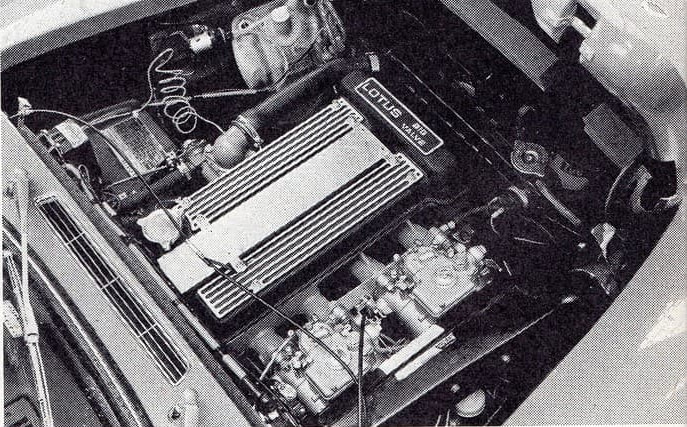
It carries two chain-driven camshafts and was designed from the outset with economical production as a predominant requirement. As a result it is not the most efficient of dohc heads even when allowance is made for some of the power output claims made for it in the past. These figures appear to have got Lotus themselves confused once or twice but the record seems to have been set straight with the introduction of the Sprint. For this the inlet valves have been enlarged and carburation has reverted to twin choke Webers instead of variable choke Strombergs (pollution hang-ups mean that American buyers still get the small valves and Strombergs). Net power goes up to 126bhp at 6500rpm, while torque is 113lb ft at an inordinately high 5500rpm. Peaky as these figures make the Sprint engine seem — and its road behaviour emphasises the relatively poor low-speed torque — they are undeniably excellent for a 1600.
One other change made by Lotus to the Sprint engine is the introduction of a new valve cover, stiffer than before to stop the oil leaks that have plagued this unit in the past. And, finally, they have at last stiffened the rubber doughnut couplings in the driveshafts to reduce surge.
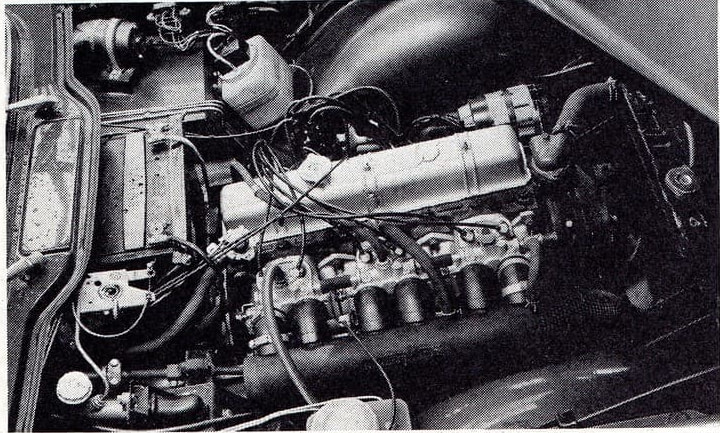
The Triumph has no need of this, having metallic universal joints for the halfshafts. Its engine is the boringly conventional pushrod overhead valve six-cylinder fitted to late-model Standard Vanguards and now used in various guises for the Vitesse, GT6, 2000 and — enlarged by 25 percent and equipped with fuel injection — for the 2.5PI saloon as well as the TR6. In the sports model a hotter cam and better breathing step up output to 150bhp which is probably as much as the four-bearing crank and comparatively narrow journals can comfortably handle. Nor does the long stroke help, for peak power represents a piston speed of nearly 3500ft per min.
Triumphs remain the only volume-produced cars to use the Lucas injection system and, in fact, the only mass production British ones to have fi of any kind despite the fact that it’s been around since the 1950s. Injection does a great deal for low- and mid-range torque, throttle response and smoothness and also mildly benefits bhp and mpg figures. In practice the drawback with the Lucas system in its present form is the high cost and an inability to produce a decently ‘clean’ exhaust at tick over. As a result TR6s bound for pollution-conscious America are still on carburettors.
The Lotus sticks to a Ford gearbox with fairly close if rather low overall ratios, while the Triumph can be had — for an extra £72 — with overdrive on second, third and top.
So there we are, the Triumph is solid, straightforward, reactionary even and quite a heavyweight at over 20cwt; the Lotus almost flimsy, clever but not complex, still a design leader and very much a lightweight at 14cwt. And in Sprint form with the extra power a very fast car!
Use of Space
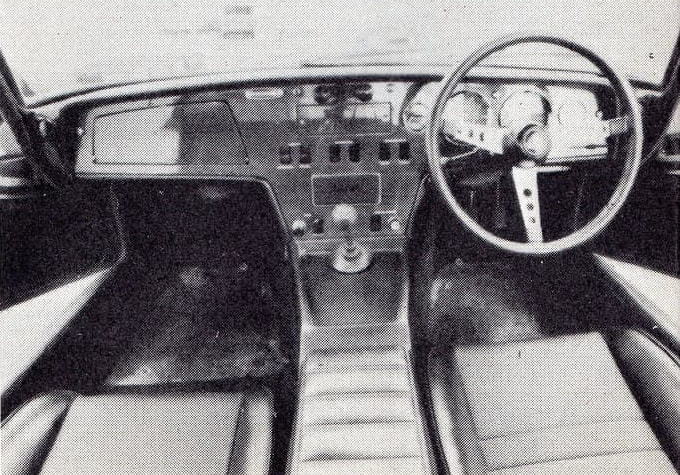
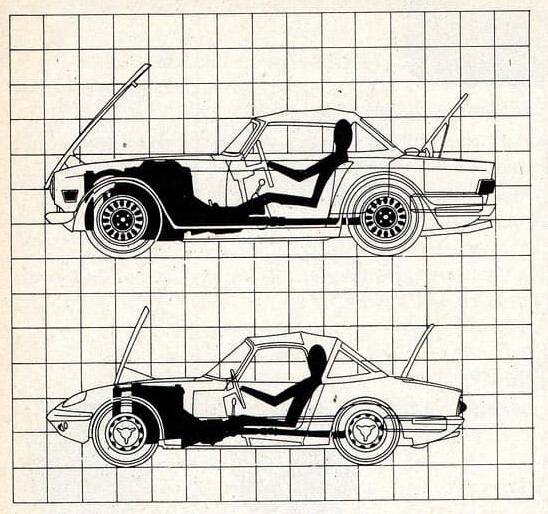
The Lotus is not a very roomy car. It’s an uncompromising two-seater with no waste space either to the sides or fore and aft. This means that two adults are encapsulated neatly but with no room for a third — and even those two people encapsulate best if they are of Chapman standard build, slightly on the short side of average. Behind the seats there’s a very limited amount of room for odds and ends. The doors are hollowed out to provide elbow room and also contain the radio speakers.
Although the strut rear suspension is an excellent space saver in itself there simply isn’t much space to save in the Elan; even less by the time the fuel tank and spare wheel have been accommodated. So luggage room is at a premium, as in most sports cars that started life open rather than as fastback coupés. The space that is available takes the carefully stowed luggage of a couple of adults providing they’re prepared to travel light (and don’t mind rainwater pouring in from the lid when it’s opened; or letting their baggage rub shoulders with an unprotected battery).
Nor should they plan on bringing too much into the cockpit. Stowage for maps, cigarettes and other on-the-road paraphernalia is restricted to a lidded compartment in the facia and a tray around the gear lever.
Remember that the Elan is also a very small car. It would fit comfortably into a box measuring only just over 12ft by 4.5ft by 3.5ft. Even the engine compartment is smaller than most, making the twin cam and its Webers seem bigger than they are and access no easy matter.
The Triumph gains in this department from having a long, slim engine to accommodate beneath a long, wide bonnet. The fuel injection equipment, including six lengthy inlet stubs and a huge air box, does steal a lot of space along one side but the engine compartment as a whole remains far from overcrowded.
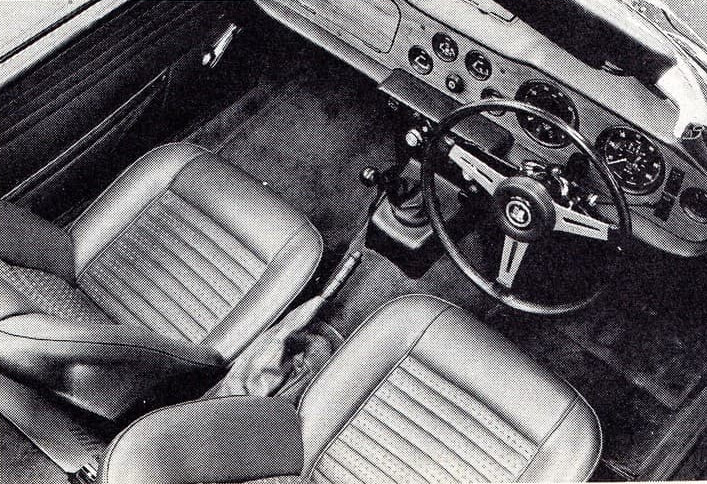
So does the cockpit. Although almost narrow by 1971 standards the TR is still a roomy car for a couple of adults. Behind there is nearly but not quite room for a children’s seat. Triumph have commendably resisted the temptation to upholster it enough to pass the TR6 off as an occasional four-seater. Instead they have carpeted the flat panel above the rear suspension and left it to the driver’s discretion to use either for (protesting) children or for soft baggage.
Like the Lotus, the Triumph lacks stowage room in the cockpit. And neither is its boot as big as appearances suggest though, again, it should be roomy enough for a long weekend’s luggage and is at least bigger than the Lotus’s.
As indeed it ought to be, for the Triumph is about 10in longer than the Elan, two inches wider and four higher. A much larger car altogether, in fact, yet in practice not all that much more roomy than its rival.
Comparison Data
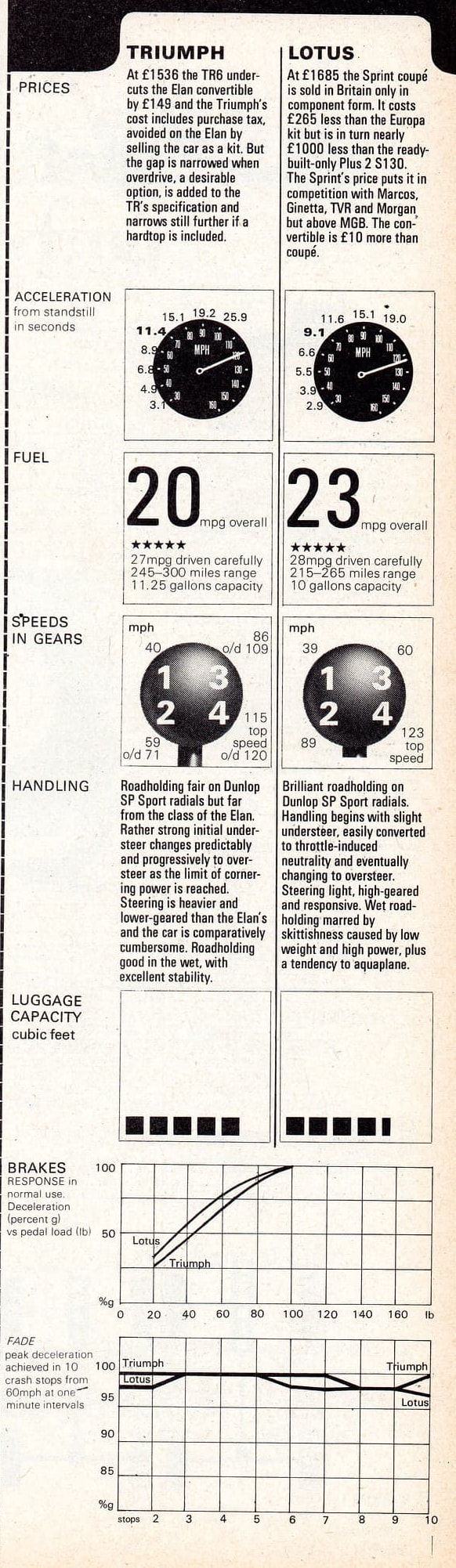
Prices
| TRIUMPH | LOTUS | |
|---|---|---|
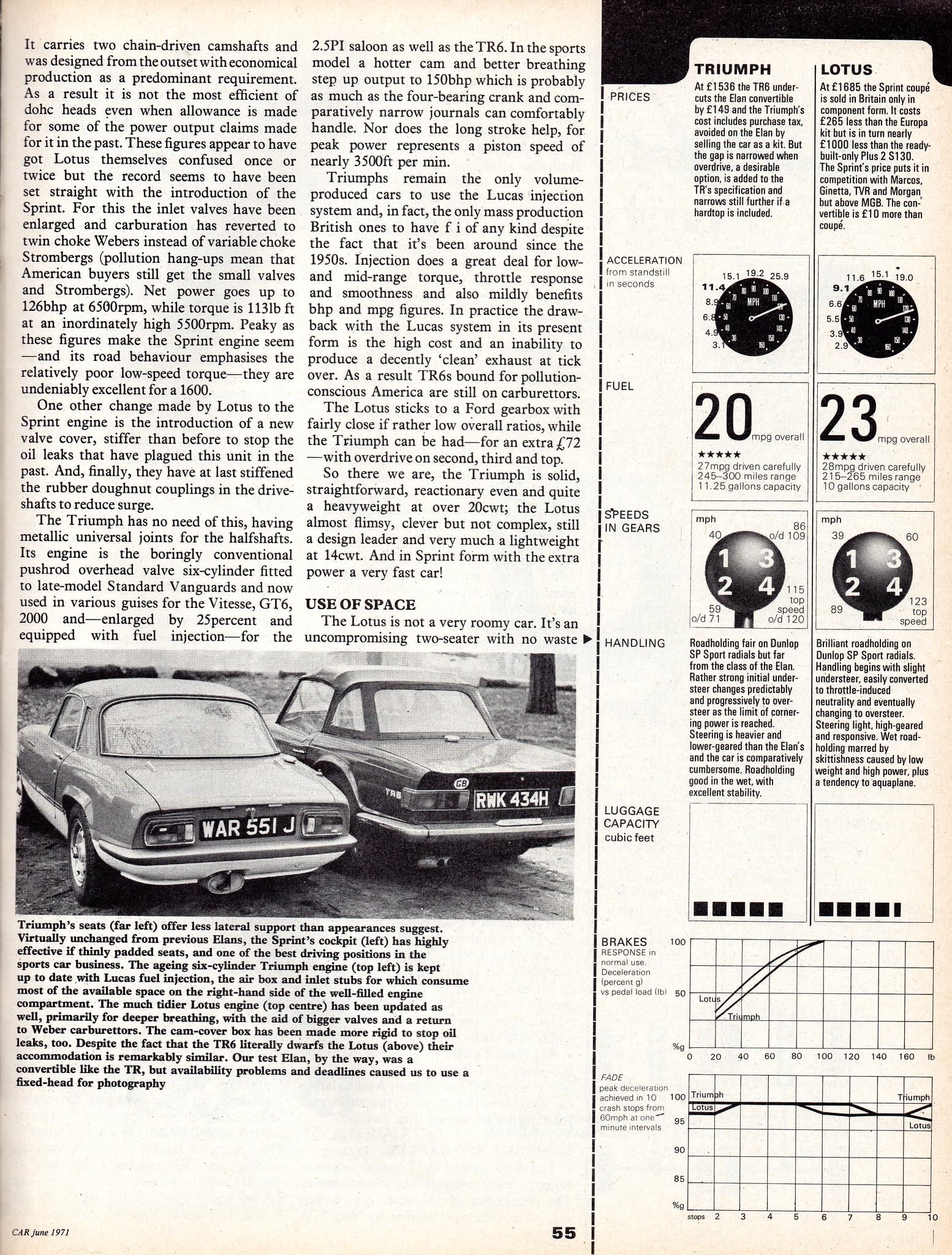
| Price | At £1536 the TR6 undercuts the Elan convertible by £149 and the Triumph’s cost includes purchase tax, avoided on the Elan by selling the car as a kit. But the gap is narrowed when overdrive, a desirable option, is added to the TR’s specification and narrows still further if a hardtop is included. | At £1685 the Sprint coupé is sold in Britain only in component form. It costs £265 less than the Europa kit but is in turn nearly £1000 less than the ready-built-only Plus 2 S130. The Sprint’s price puts it in competition with Marcos, Ginetta, TVR and Morgan but above MGB. The convertible is £10 more than coupé. |
Acceleration from standstill (seconds)
TRIUMPH TR6
| Speed | Time |
|---|---|
| 30mph | 3.1 |
| 40mph | 4.9 |
| 50mph | 6.8 |
| 60mph | 8.8 |
| 70mph | 11.4 |
| 80mph | 15.1 |
| 90mph | 19.2 |
| 100mph | 25.9 |
LOTUS Elan Sprint
| Speed | Time |
|---|---|
| 30mph | 2.9 |
| 40mph | 3.9 |
| 50mph | 5.5 |
| 60mph | 6.6 |
| 70mph | 9.1 |
| 80mph | 11.6 |
| 90mph | 15.1 |
| 100mph | 19.0 |
Fuel
| TRIUMPH | LOTUS | |
|---|---|---|
| Overall mpg | 20 ★★★★★ | 23 ★★★★★ |
| Driven carefully | 27mpg | 28mpg |
| Range | 245–300 miles | 215–265 miles |
| Tank capacity | 11.25 gallons | 10 gallons |
Speeds in Gears (mph)
TRIUMPH
| Gear | Speed |
|---|---|
| 1st | 40 |
| 2nd | — |
| 3rd | — |
| 4th | 86 |
| O/D 2nd | — |
| O/D 3rd | 109 |
| O/D 4th (top) | 115 |
| O/D top | 120 |
LOTUS
| Gear | Speed |
|---|---|
| 1st | 39 |
| 2nd | — |
| 3rd | 60 |
| 4th (top) | 123 |
| O/D top | — |
| Top speed | 123 |
Handling
| TRIUMPH | LOTUS |
|---|---|
| Roadholding fair on Dunlop SP Sport radials but far from the class of the Elan. Rather strong initial understeer changes predictably and progressively to oversteer as the limit of cornering power is reached. Steering is heavier and lower-geared than the Elan’s and the car is comparatively cumbersome. Roadholding good in the wet, with excellent stability. | Brilliant roadholding on Dunlop SP Sport radials. Handling begins with slight understeer, easily converted to throttle-induced neutrality and eventually changing to oversteer. Steering light, high-geared and responsive. Wet roadholding marred by skittishness caused by low weight and high power, plus a tendency to aquaplane. |
Luggage Capacity (cubic feet)
(Triumph marginally larger boot than Lotus)
Dimensions, Specifications & Data

| TRIUMPH | LOTUS | |
|---|---|---|
| DIMENSIONS | ||
| inches | inches | |
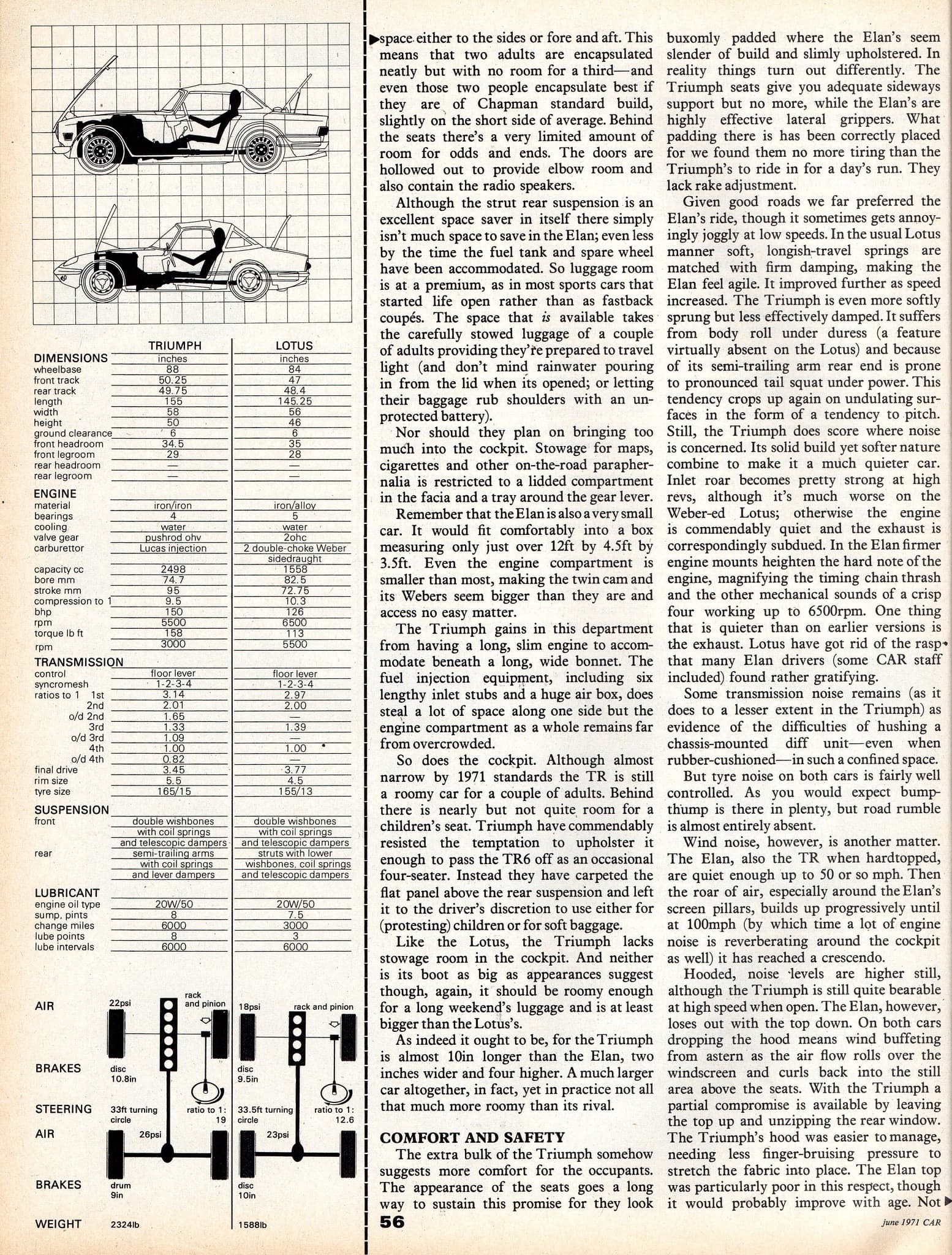
| wheelbase | 88 | 84 |
| front track | 50.25 | 47 |
| rear track | 49.25 | 48.4 |
| length | 155 | 145.25 |
| width | 58 | 56 |
| height | 50 | 46 |
| ground clearance | 6 | 6 |
| front headroom | 34.5 | 35 |
| front legroom | 29 | 28 |
| rear headroom | — | — |
| rear legroom | — | — |
| ENGINE | ||
| material | iron/iron | iron/alloy |
| bearings | 4 | 5 |
| cooling | water | water |
| valve gear | pushrod ohv | 2ohc |
| carburettor | Lucas injection | 2 double-choke Weber sidedraught |
| capacity cc | 2498 | 1558 |
| bore mm | 74.7 | 82.5 |
| stroke mm | 95 | 72.75 |
| compression to 1 | 9.5 | 10.3 |
| bhp | 150 | 126 |
| rpm | 5500 | 6500 |
| torque lb ft | 158 | 113 |
| rpm | 3000 | 5500 |
| TRANSMISSION | ||
| control | floor lever | floor lever |
| synchromesh | 1-2-3-4 | 1-2-3-4 |
| ratios to 1 — 1st | 3.14 | 2.97 |
| 2nd | 2.01 | 2.00 |
| o/d 2nd | 1.65 | — |
| 3rd | 1.33 | 1.39 |
| o/d 3rd | 1.09 | — |
| 4th | 1.00 | 1.00 * |
| o/d 4th | 0.82 | — |
| final drive | 3.45 | 3.77 |
| rim size | 5.5 | 4.5 |
| tyre size | 165/15 | 155/13 |
| SUSPENSION | ||
| front | double wishbones with coil springs and telescopic dampers | double wishbones with coil springs and telescopic dampers |
| rear | semi-trailing arms with coil springs and lever dampers | struts with lower wishbones, coil springs and telescopic dampers |
| LUBRICANT | ||
| engine oil type | 20W/50 | 20W/50 |
| sump, pints | 8 | 7.5 |
| change miles | 6000 | 3000 |
| lube points | 8 | 3 |
| lube intervals | 6000 | 6000 |
| AIR (tyre pressures) | ||
| front | 22psi | 18psi |
| steering | rack and pinion | rack and pinion |
| BRAKES | ||
| front | disc 10.8in | disc 9.5in |
| rear | drum 9in | disc 10in |
| STEERING | ||
| turning circle | 33ft | 33.5ft |
| ratio to 1 | 19 | 12.6 |
| AIR (loaded pressures) | ||
| rear | 26psi | 23psi |
| WEIGHT | ||
| 2324lb | 1588lb | |
Space either to the sides or fore and aft. This means that two adults are encapsulated neatly but with no room for a third — and even those two people encapsulate best if they are of Chapman standard build, slightly on the short side of average. Behind the seats there’s a very limited amount of room for odds and ends. The doors are hollowed out to provide elbow room and also contain the radio speakers.
Although the strut rear suspension is an excellent space saver in itself there simply isn’t much space to save in the Elan; even less by the time the fuel tank and spare wheel have been accommodated. So luggage room is at a premium, as in most sports cars that started life open rather than as fastback coupés. The space that is available takes the carefully stowed luggage of a couple of adults providing they’re prepared to travel light (and don’t mind rainwater pouring in from the lid when it’s opened; or letting their baggage rub shoulders with an unprotected battery).
Nor should they plan on bringing too much into the cockpit. Stowage for maps, cigarettes and other on-the-road paraphernalia is restricted to a lidded compartment in the facia and a tray around the gear lever.
Remember that the Elan is also a very small car. It would fit comfortably into a box measuring only just over 12ft by 4.5ft by 3.5ft. Even the engine compartment is smaller than most, making the twin cam and its Webers seem bigger than they are and access no easy matter.
The Triumph gains in this department from having a long, slim engine to accommodate beneath a long, wide bonnet. The fuel injection equipment, including six lengthy inlet stubs and a huge air box, does steal a lot of space along one side but the engine compartment as a whole remains far from overcrowded.
So does the cockpit. Although almost narrow by 1971 standards the TR is still a roomy car for a couple of adults. Behind there is nearly but not quite room for a children’s seat. Triumph have commendably resisted the temptation to upholster it enough to pass the TR6 off as an occasional four-seater. Instead they have carpeted the flat panel above the rear suspension and left it to the driver’s discretion to use either for (protesting) children or for soft baggage.
Like the Lotus, the Triumph lacks stowage room in the cockpit. And neither is its boot as big as appearances suggest though, again, it should be roomy enough for a long weekend’s luggage and is at least bigger than the Lotus’s.
As indeed it ought to be, for the Triumph is about 10in longer than the Elan, two inches wider and four higher. A much larger car altogether, in fact, yet in practice not all that much more roomy than its rival.
Comfort and Safety
The extra bulk of the Triumph somehow suggests more comfort for the occupants. The appearance of the seats goes a long way to sustain this promise for they look buxomly padded where the Elan’s seem slender of build and slimly upholstered. In reality things turn out differently. The Triumph seats give you adequate sideways support but no more, while the Elan’s are highly effective lateral grippers. What padding there is has been correctly placed for we found them no more tiring than the Triumph’s to ride in for a day’s run. They lack rake adjustment.
Given good roads we far preferred the Elan’s ride, though it sometimes gets annoyingly joggly at low speeds. In the usual Lotus manner soft, longish-travel springs are matched with firm damping, making the Elan feel agile. It improved further as speed increased. The Triumph is even more softly sprung but less effectively damped. It suffers from body roll under duress (a feature virtually absent on the Lotus) and because of its semi-trailing arm rear end is prone to pronounced tail squat under power. This tendency crops up again on undulating surfaces in the form of a tendency to pitch. Still, the Triumph does score where noise is concerned. Its solid build yet softer nature combine to make it a much quieter car. Inlet roar becomes pretty strong at high revs, although it’s much worse on the Weber-ed Lotus; otherwise the engine is commendably quiet and the exhaust is correspondingly subdued. In the Elan firmer engine mounts heighten the hard note of the engine, magnifying the timing chain thrash and the other mechanical sounds of a crisp four working up to 6500rpm. One thing that is quieter than on earlier versions is the exhaust. Lotus have got rid of the rasp that many Elan drivers (some CAR staff included) found rather gratifying.
Some transmission noise remains (as it does to a lesser extent in the Triumph) as evidence of the difficulties of hushing a chassis-mounted diff unit — even when rubber-cushioned — in such a confined space.
But tyre noise on both cars is fairly well controlled. As you would expect bump-thump is there in plenty, but road rumble is almost entirely absent.
Wind noise, however, is another matter. The Elan, also the TR when hardtopped, are quiet enough up to 50 or so mph. Then the roar of air, especially around the Elan’s screen pillars, builds up progressively until at 100mph (by which time a lot of engine noise is reverberating around the cockpit as well) it has reached a crescendo.
Hooded, noise levels are higher still, although the Triumph is still quite bearable at high speed when open. The Elan, however, loses out with the top down. On both cars dropping the hood means wind buffeting from astern as the air flow rolls over the windscreen and curls back into the still area above the seats. With the Triumph a partial compromise is available by leaving the top up and unzipping the rear window. The Triumph’s hood was easier to manage, needing less finger-bruising pressure to stretch the fabric into place. The Elan top was particularly poor in this respect, though it would probably improve with age. Not that the Triumph top can exactly be operated singlehanded without leaving the seat but it is only a couple of minutes’ work to operate.
Heating and ventilation continue to occupy a minor rating in most sports car designers’ list of priorities. This condensation-prone twosome are no exception with their feeble fresh air supplies and all-or-nothing heating arrangements. The Triumph’s set-up was particularly vague and unresponsive to the controls, although, as in the Lotus, the inadequate heater was augmented by often unwelcome warmth flooding into the footwells from the engine.
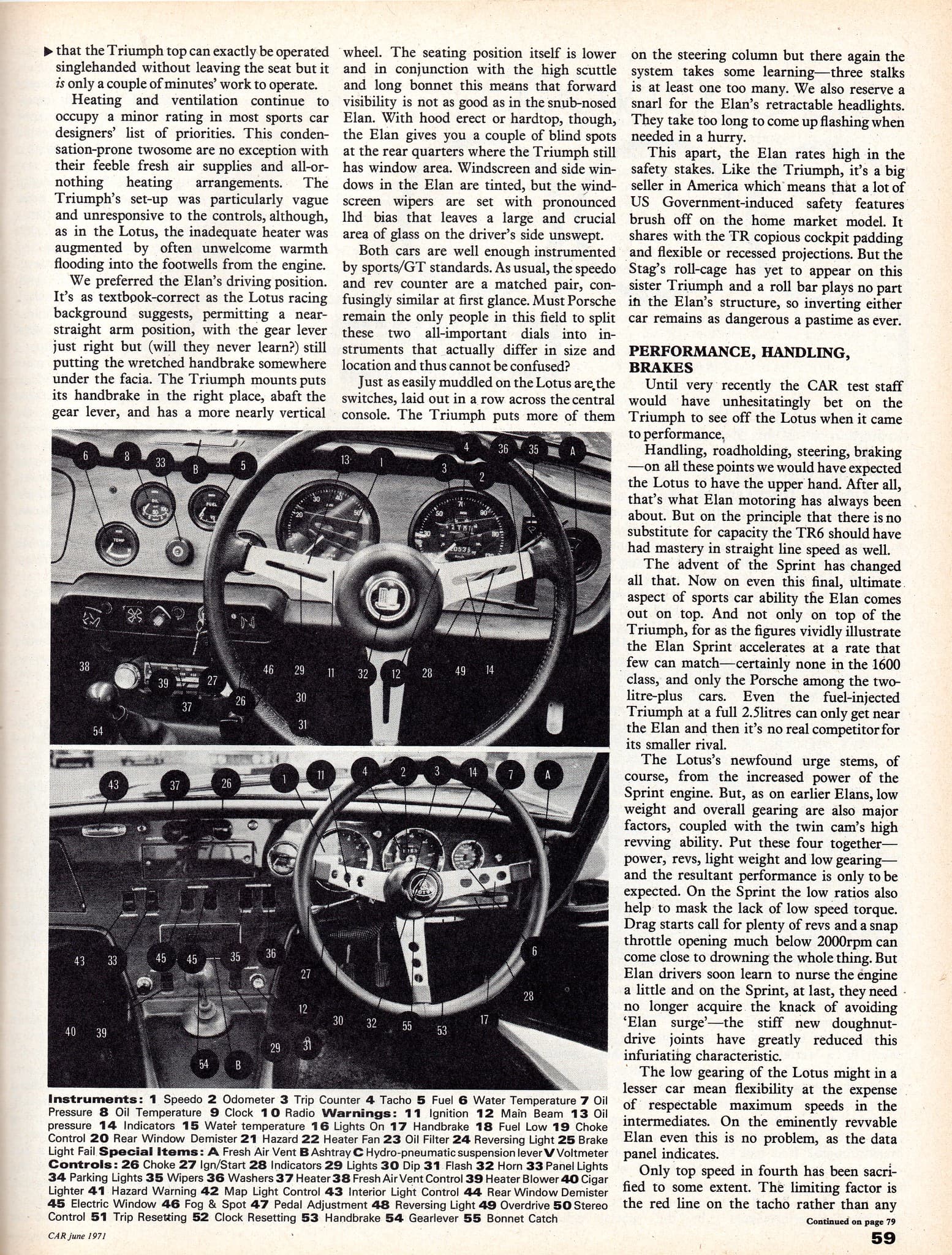
We preferred the Elan’s driving position. It’s as textbook-correct as the Lotus racing background suggests, permitting a near-straight arm position, with the gear lever just right but (will they never learn?) still putting the wretched handbrake somewhere under the facia. The Triumph mounts puts its handbrake in the right place, abaft the gear lever, and has a more nearly vertical wheel. The seating position itself is lower and in conjunction with the high scuttle and long bonnet this means that forward visibility is not as good as in the snub-nosed Elan. With hood erect or hardtop, though, the Elan gives you a couple of blind spots at the rear quarters where the Triumph still has window area. Windscreen and side windows in the Elan are tinted, but the windscreen wipers are set with pronounced lhd bias that leaves a large and crucial area of glass on the driver’s side unswept.
Both cars are well enough instrumented by sports/GT standards. As usual, the speedo and rev counter are a matched pair, confusingly similar at first glance. Must Porsche remain the only people in this field to split these two all-important dials into instruments that actually differ in size and location and thus cannot be confused?
Just as easily muddled on the Lotus are the switches, laid out in a row across the central console. The Triumph puts more of them on the steering column but there again the system takes some learning — three stalks is at least one too many. We also reserve a snarl for the Elan’s retractable headlights. They take too long to come up flashing when needed in a hurry.
This apart, the Elan rates high in the safety stakes. Like the Triumph, it’s a big seller in America which means that a lot of US Government-induced safety features brush off on the home market model. It shares with the TR copious cockpit padding and flexible or recessed projections. But the Stag’s roll-cage has yet to appear on this sister Triumph and a roll bar plays no part in the Elan’s structure, so inverting either car remains as dangerous a pastime as ever.
Instruments
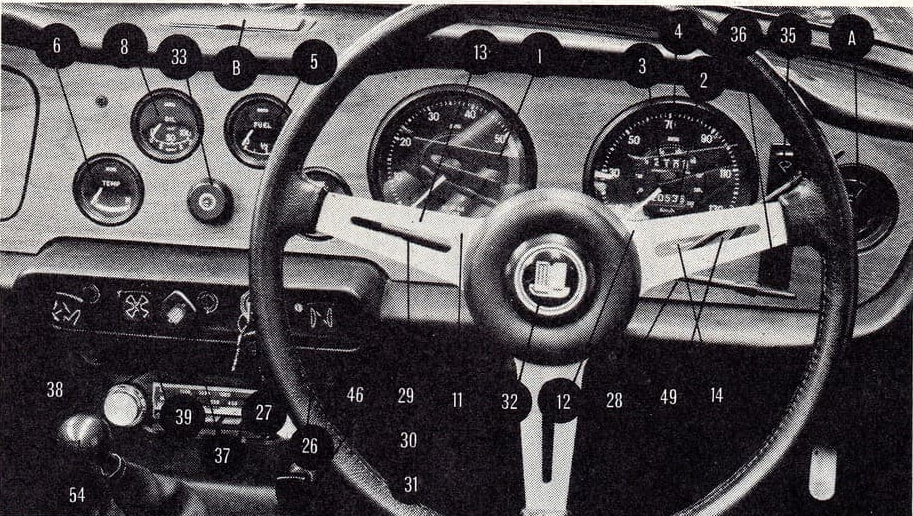
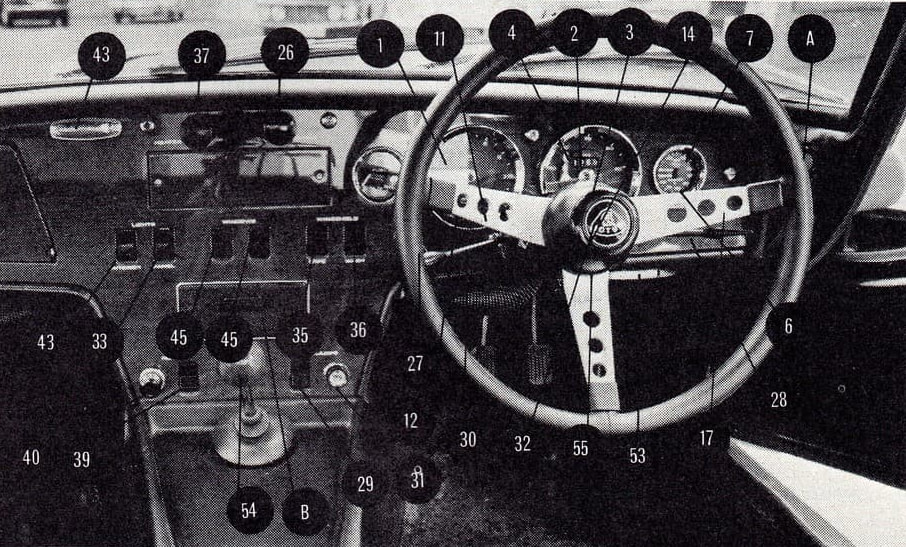
Instruments: 1 Speedo 2 Odometer 3 Trip Counter 4 Tacho 5 Fuel 6 Water Temperature 7 Oil Pressure 8 Oil Temperature 9 Clock 10 Radio Warnings: 11 Ignition 12 Main Beam 13 Oil pressure 14 Indicators 15 Water temperature 16 Lights On 17 Handbrake 18 Fuel Low 19 Choke Control 20 Rear Window Demister 21 Hazard 22 Heater Fan 23 Oil Filter 24 Reversing Light 25 Brake Light Fail Special Items: A Fresh Air Vent B Ashtray C Hydro-pneumatic suspension lever V Voltmeter Controls: 26 Choke 27 Ign/Start 28 Indicators 29 Lights 30 Dip 31 Flash 32 Horn 33 Panel Lights 34 Parking Lights 35 Wipers 36 Washers 37 Heater 38 Fresh Air Vent Control 39 Heater Blower 40 Cigar Lighter 41 Hazard Warning 42 Map Light Control 43 Interior Light Control 44 Rear Window Demister 45 Electric Window 46 Fog & Spot 47 Pedal Adjustment 48 Reversing Light 49 Overdrive 50 Stereo Control 51 Trip Resetting 52 Clock Resetting 53 Handbrake 54 Gearlever 55 Bonnet Catch
Performance, Handling, Brakes
Until very recently the CAR test staff would have unhesitatingly bet on the Triumph to see off the Lotus when it came to performance.
Handling, roadholding, steering, braking — on all these points we would have expected the Lotus to have the upper hand. After all, that’s what Elan motoring has always been about. But on the principle that there is no substitute for capacity the TR6 should have had mastery in straight line speed as well.
The advent of the Sprint has changed all that. Now on even this final, ultimate aspect of sports car ability the Elan comes out on top. And not only on top of the Triumph, for as the figures vividly illustrate the Elan Sprint accelerates at a rate that few cars can match — certainly none in the 1600 class, and only the Porsche among the two-litre-plus cars. Even the fuel-injected Triumph at a full 2.5litres can only get near the Elan and then it’s no real competitor for its smaller rival.
The Lotus’s newfound urge stems, of course, from the increased power of the Sprint engine. But, as on earlier Elans, low weight and overall gearing are also major factors, coupled with the twin cam’s high revving ability. Put these four together — power, revs, light weight and low gearing — and the resultant performance is only to be expected. On the Sprint the low ratios also help to mask the lack of low speed torque. Drag starts call for plenty of revs and a snap throttle opening much below 2000rpm can come close to drowning the whole thing. But Elan drivers soon learn to nurse the engine a little and on the Sprint, at last, they need no longer acquire the knack of avoiding ‘Elan surge’ — the stiff new doughnut-drive joints have greatly reduced this infuriating characteristic.
The low gearing of the Lotus might in a lesser car mean flexibility at the expense of respectable maximum speeds in the intermediates. On the eminently revvable Elan even this is no problem, as the data panel indicates.
Only top speed in fourth has been sacrificed to some extent. The limiting factor is the red line on the tacho rather than any breathlessness in the engine. Higher gearing, ideally in the form of a fifth ratio, could add another five mph, perhaps even 10mph. More importantly, it would make the Sprint a more relaxing, not to say relaxed, cruiser.
A fifth gear would also help pull fuel consumption up from the low figures we recorded — low that is for a 1600, hardly so for a car with the Elan Sprint’s potential. A higher (3.55) axle is a worthwhile £24.50 extra.
The Triumph did correspondingly better in fuel economy if you consider that its engine is nearly a litre larger and propelling a car over six hundredweight heavier.
The fuel injection is largely responsible for this, just as it is responsible for making the aged six a delightfully smooth, free-revving yet torque-laden engine to drive behind. All told, it does wonders for the uninspired power plant that it feeds with fuel and air: the torque is spread thickly over a wide band, so that 1000rpm suffices for brisk departure in fourth, yet power abounds at the top end of the rev range. The latter can be traced back to some pretty wild camshaft timing, the possible adverse effects of which at lower revs are efficiently masked by the Lucas injection and only manifest themselves in the form of uneven tick-over.
The Elan gains here from its Webers. You can dispense with the choke, just kicking the throttle to flood the inlet system. After that it idles and runs unhesitatingly.
Once it has warmed through, however, the TR engine performs well enough considering the bulk it has to shift. While slower in overall terms than the Lotus it does everything in a much easier, less urgent manner.
We preferred the lighter, more positive gearchange, if rather metallic, of the Lotus, though the Triumph box is pleasant enough to use and is made all the more so when overdrive is fitted. The ratios are such that o/d second and o/d third neatly fill the gaps between the direct gears, while o/d fourth is high enough to give both more relaxed, economical cruising and a higher top speed. The only snag is that a seven-speed gearbox with two controls — for that’s what the package amounts to — is at least two ratios more than the torquey Triumph needs.
The passing years have done little to dull our enthusiasm for the Elan’s handling. The Europa is better but so much less powerful. No other volume-produced marque can compare, though, and specially not the Triumph which feels cumbersome by comparison. It’s the difference between a shire horse and a steeplechaser.
With the additional power of the Sprint the throttle begins to play a more active part in cornering than it did on earlier Elans. Judiciously applied, there’s enough power now to build out the rear end slip angle (the relatively narrow rims and skinny tyres help here) and keep the car in a neutral stance, killing off the inherent very slight understeer. The transition to oversteer comes quickly when it does arrive but the Elan’s sheer cornering power is such that many drivers could go through an entire span of Lotus ownership without encountering it. Even then the beautifully precise (if lacking in self-centring) steering is quick enough to kill a slide at birth — lifting off alone can be enough to tuck the tail back in.
So on dry roads the Elan’s cornering is still in a category that only other Lotuses can match. In the wet it’s a rather different story. The extra power and the low weight make for a skittish rear end unless you’re discreet with the throttle. What’s more the Sprint is not as stable at high speed as its dry road behaviour leads one to expect. And the low weight means that aquaplaning can occur with disturbing ease.
At times like this the TR comes into its own, ploughing on almost regardless of the weather. Overall, though, it only deserves a medium rating for roadholding among sports cars. The handling starts with quite strong understeer, changing progressively to oversteer as the limit is approached. The steering is, unavoidably, heavier and slower than the Lotus’s. There remains the proneness to tail squat under power that we mentioned earlier, some body roll and occasional pitch. But within its limitations — and they look considerable when viewed against the Lotus — the Triumph is a highly manageable, indeed enjoyable car to drive.
In Conclusion
On virtually every score the Elan comes out on top. The years have done nothing to impair its roadholding and general handling qualities. They remain as outstanding as ever. And now the twin-cam engine produces enough power to make the Sprint a very quick car in a straight line as well as around corners.
At the same time, some shortcomings of earlier models have been cleared up so that the Elan is if anything even more attractive in 1971 than it was a few years ago. Notably, the tendency to surge, induced by the rubbery transmission joints, has been reduced though not eliminated. General standards of assembly remain low.
Lotus claim that finish, service and reliability are being improved. We must point out that during our tenure of the Sprint the catches of the nearside door and the facia locker both malfunctioned, as did the wipers, while the windscreen washers leaked on to the passenger’s legs and rain leaked into both footwells . . .
The Triumph, on the other hand, proved entirely reliable during the test. But CAR staff weren’t queueing up to drive it as they were the Lotus.
Allowing for the aged nature of the basic design, the TR6 is undeniably fast and blessed with reassuring handling. Yet roadholding and suspension are far from brilliant and by no stretch of the imagination is it fun to drive anywhere, at any time in the way that the Lotus is.
Yet there is one circumstance in which we would definitely go for the bigger car. On a long run over open straight roads, a protracted bout of motorway travel, the Triumph’s relaxed, solid nature makes it a more restful car to use.