Giant Test: Marcos 1600 versus Elan S4
CAR magazine, November 1968
Photography: John Perkins
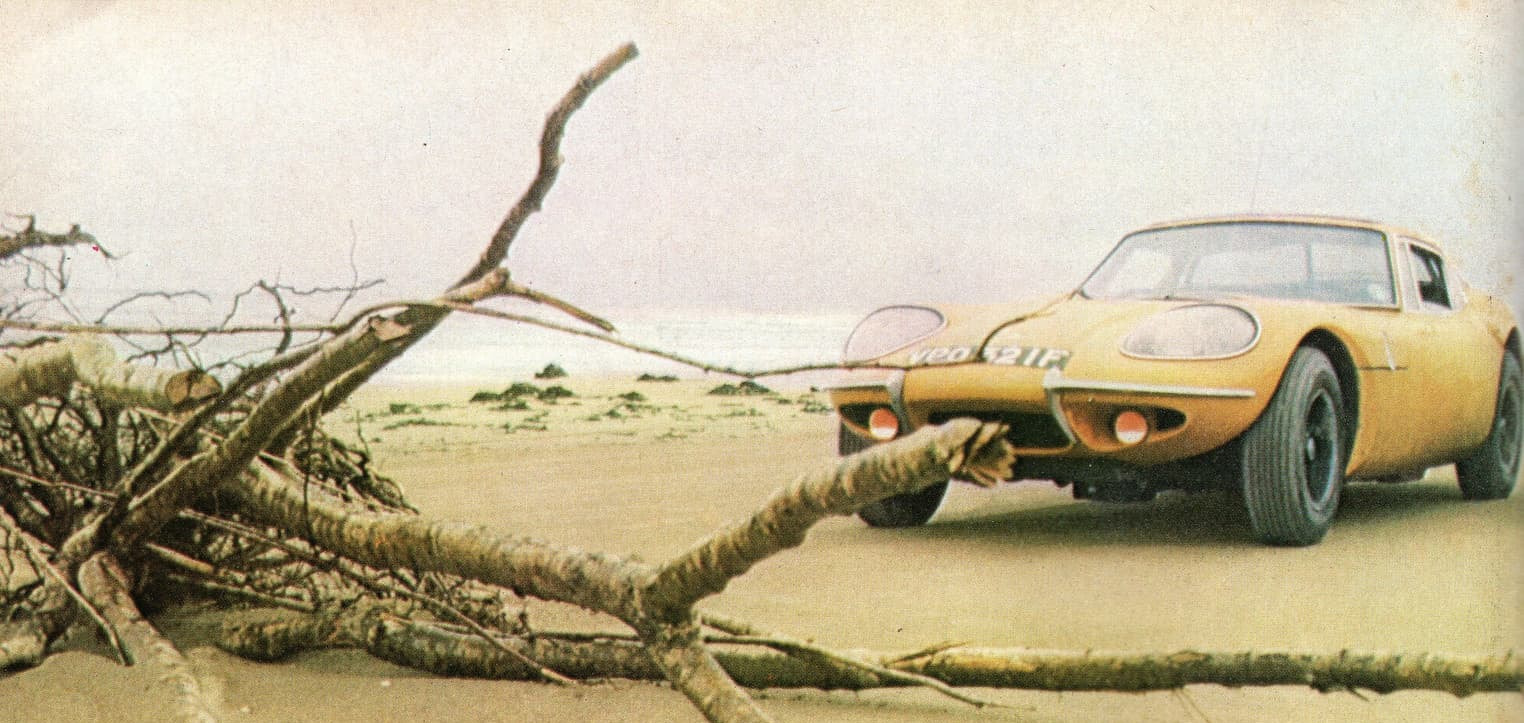
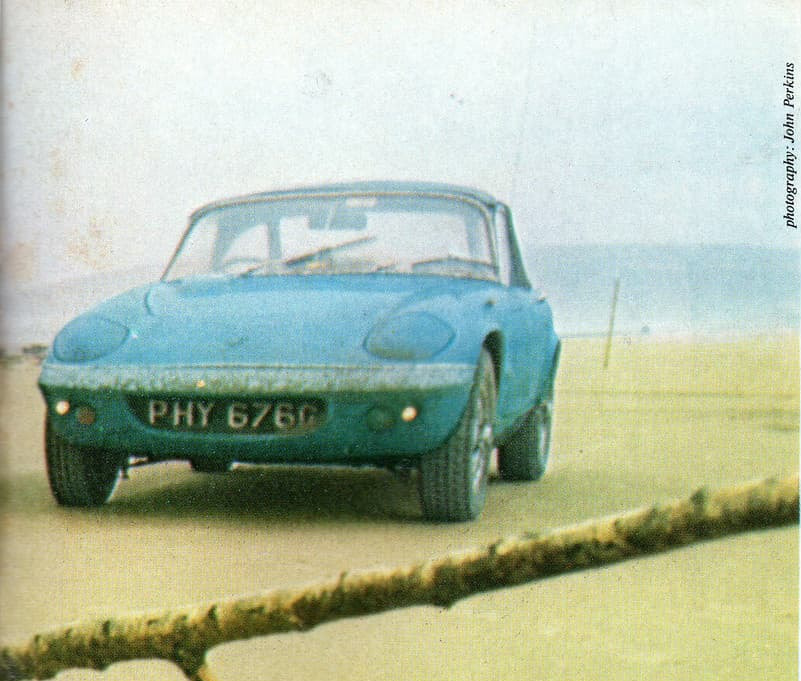
LOTUS HAVE BEEN PRODUCING ELANS for six years now. After the initial furore about whether it was ethical to replace the delightful Elite with anything (see our own Giant Test of the two of January 1966) the word got around that the Elan was a whole lot more practical and quite good enough in all departments of roadworthiness to set the standards by which other cars are judged. Now, of course, Lotus are far from being special builders, and instead are established manufacturers with sufficient pull even to persuade Joe Lucas to make special bits for them instead of having to make do with other people’s. The Elan has progressed as far as its fourth major variant, and quite apart from the fact that the opposition has been improving all the time it has two younger brothers to contend with, one of which — the Europa — is spoken of as at least as good and potentially rather better. So where does the Elan stand today? With all that rationalisation, productionisation and civilisation, has it lost out on its more basic qualities? How does it stand in the roadworthiness league?
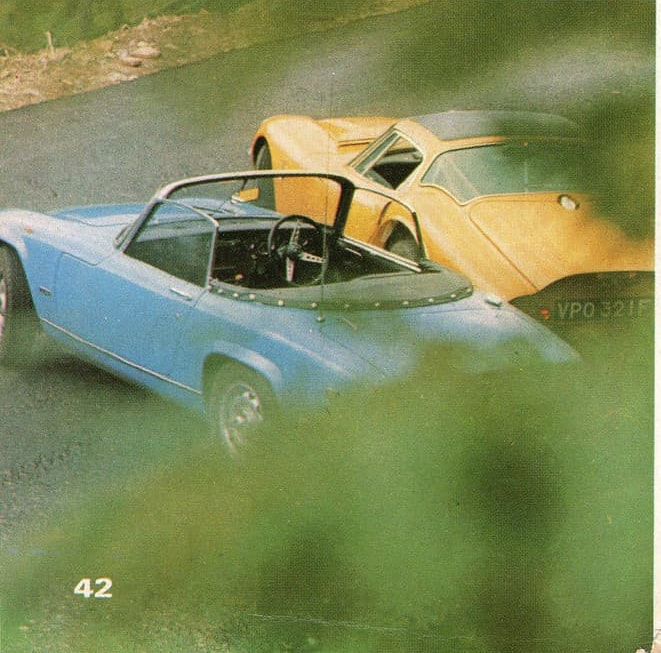
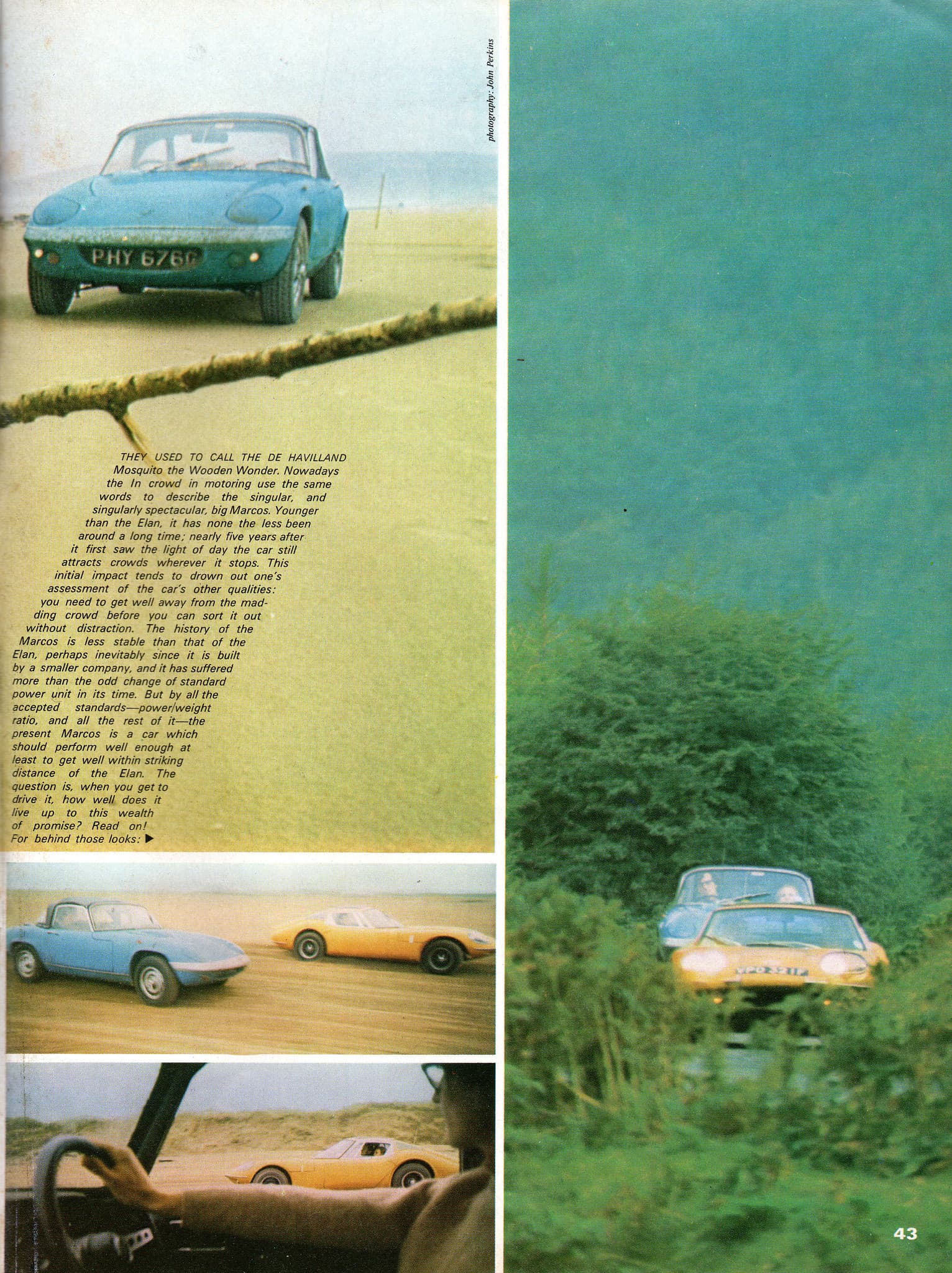
THEY USED TO CALL THE DE HAVILLAND Mosquito the Wooden Wonder. Nowadays the In crowd in motoring use the same words to describe the singular, and singularly spectacular, big Marcos. Younger than the Elan, it has none the less been around a long time; nearly five years after it first saw the light of day the car still attracts crowds wherever it stops. This initial impact tends to drown out one’s assessment of the car’s other qualities: you need to get well away from the madding crowd before you can sort it out without distraction. The history of the Marcos is less stable than that of the Elan, perhaps inevitably since it is built by a smaller company, and it has suffered more than the odd change of standard power unit in its time. But by all the accepted standards — power/weight ratio, and all the rest of it — the present Marcos is a car which should perform well enough at least to get well within striking distance of the Elan. The question is, when you get to drive it, how well does it live up to this wealth of promise? Read on! For behind those looks:
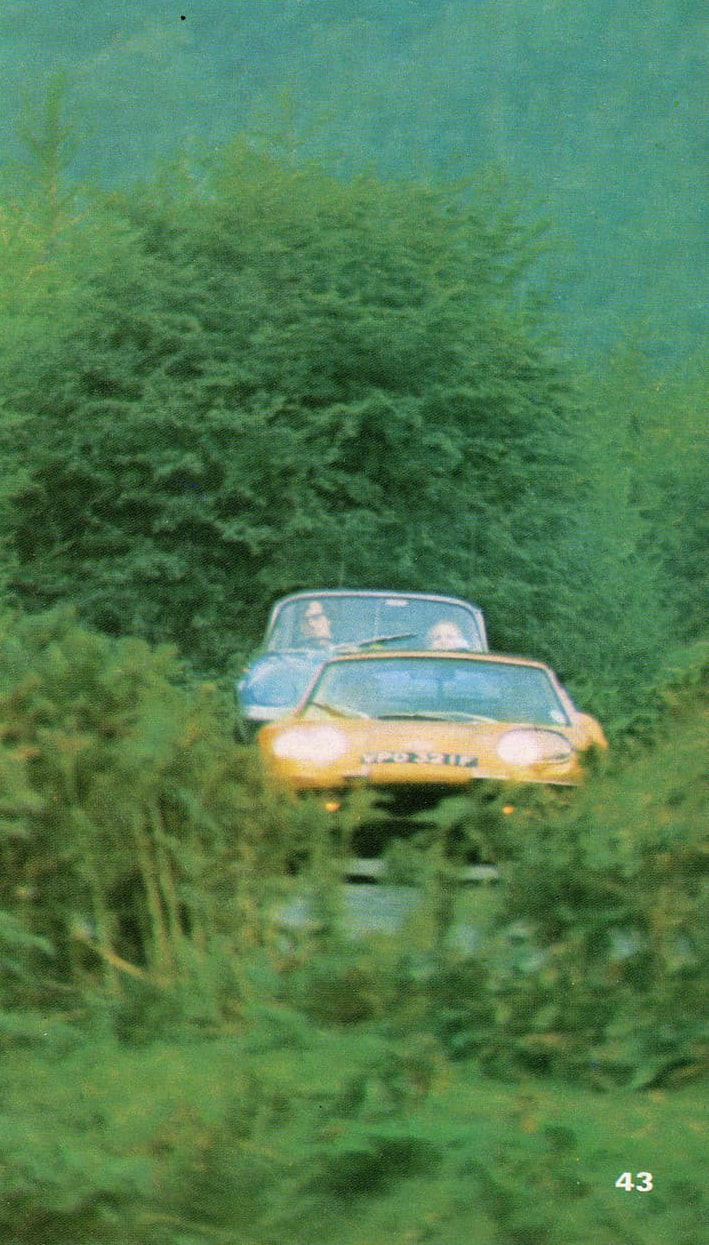
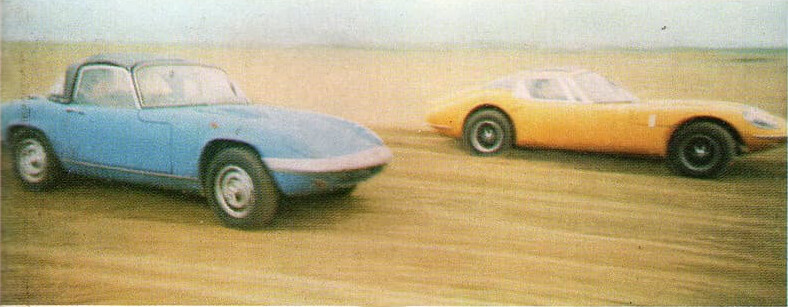
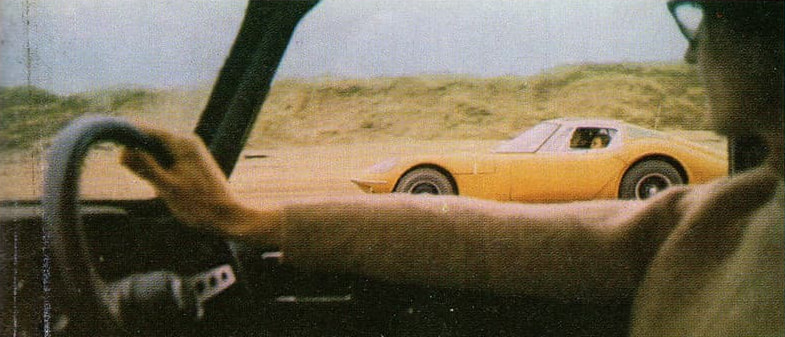
ONE OF THE REPUTATIONS WHICH HAS suffered most since the end of the last war is that of the sports car. It has suffered under the onslaught of the tuned saloon and been driven out of rallying; it has succumbed to the call of specialisation until the ‘sports cars’ which win races — mid-engined projectiles with everything subjugated to the interests of roadholding and handling — bear no relation to the sort of sports car you can buy off the peg and run on the road. The only area of sport where these latter cars can survive is in the heavily protected field of club marque events.
One way and another it seems that we need to reappraise the concept of a sports car. Originally it was thought of as a car which could outrun, outhandle and outbrake any saloon car of comparable price, by taking advantage of smaller size, lighter weight, lower cg and the rest. This was fine before the war, but with some of the saloons around today in both the £750 Spridget/Spitfire and the £1200 MGB/TR5 classes, things are a lot more difficult, so that the only people who buy the traditional sports cars are those who value an opening lid and those who value their sex appeal; they have been shunned, by and large, by those who wish to get from A to B in the shortest time consistent with safety.
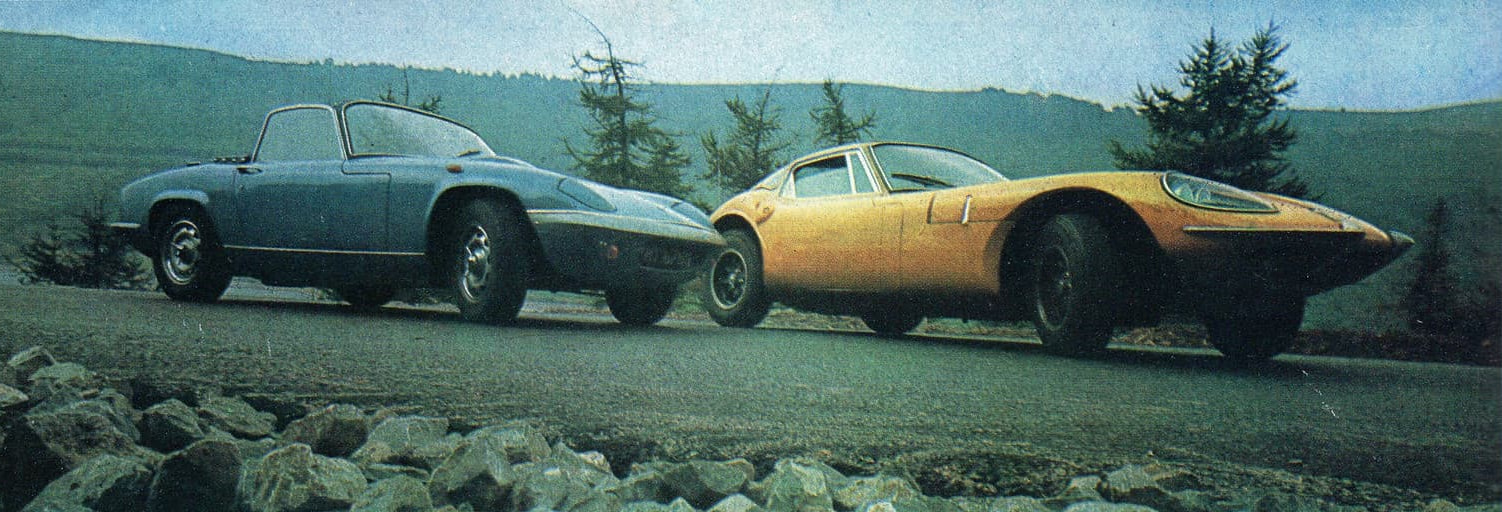
It seems to us that the salvation of the sports car (for it would be a shame to see it die a death, especially one of emasculation) lies in a greater concentration on structural efficiency and a preparedness to break new ground in suspension design. And we have taken a long look at the two cars which are the most promising pointers as to the direction in which sports car design might move: the latest Lotus Elan and the Marcos 1600.
Both cars, as we shall see, are strong on structural efficiency. The Elan at least has helped to set new standards of suspension design for production cars: not so surprising, perhaps, in view of Chapman’s predeliction for suspension design (although this should not be allowed to detract from his abilities as a structures man).
As cars go, both are pretty well on into their production lives. The Elan is some six years old, the Marcos five; which makes it all the more disappointing that nobody else shows much sign of following their lead. Moreover, their popularity with the connoisseur has meant that demand for them has been very consistent, so that there are never many cars to spare at any one time. This must tend to inhibit the appearance of their successors, on the grounds that you never wantonly replace anything which is doing really well.
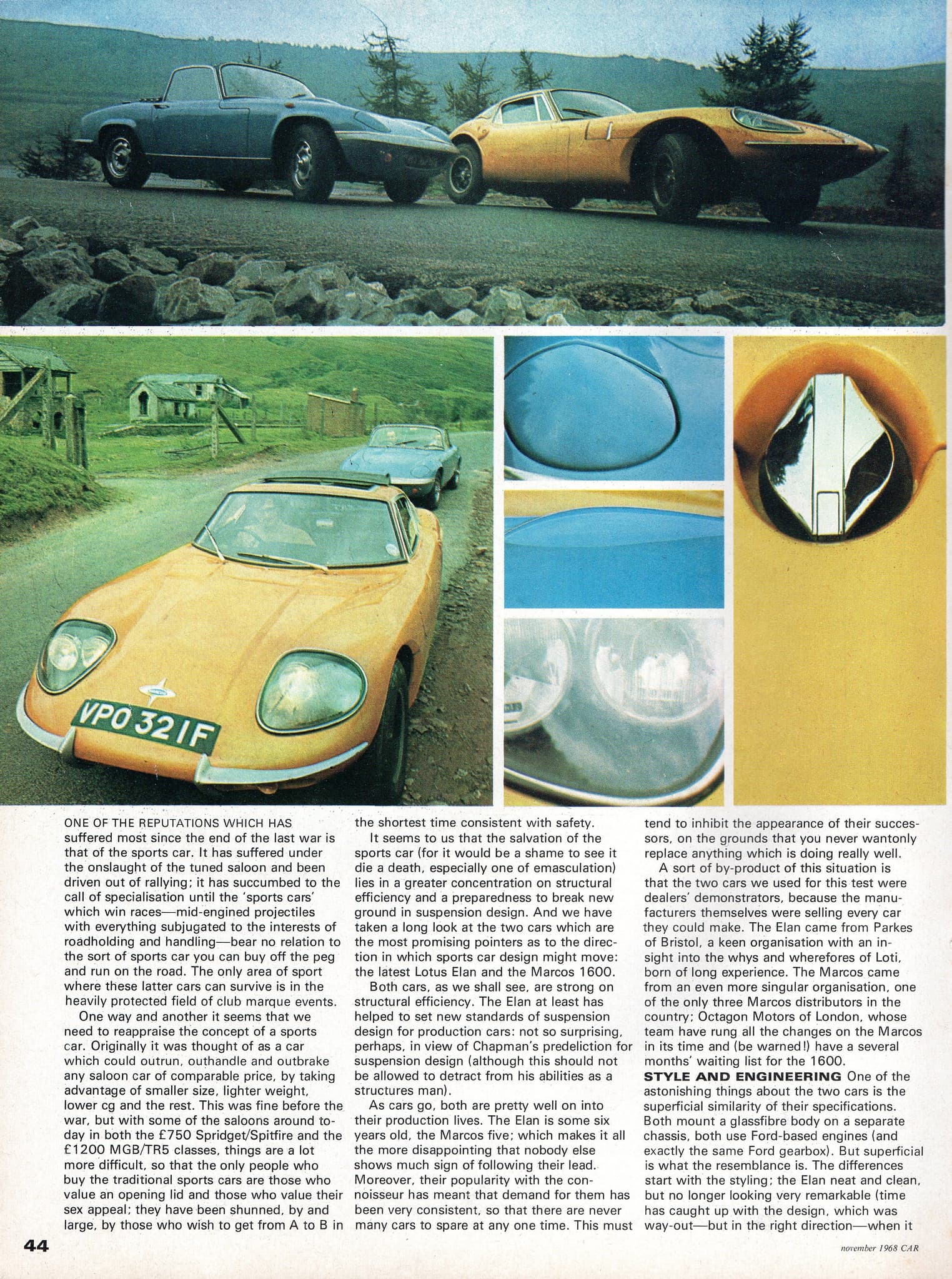
A sort of by-product of this situation is that the two cars we used for this test were dealers’ demonstrators, because the manufacturers themselves were selling every car they could make. The Elan came from Parkes of Bristol, a keen organisation with an insight into the whys and wherefores of Loti, born of long experience. The Marcos came from an even more singular organisation, one of the only three Marcos distributors in the country: Octagon Motors of London, whose team have rung all the changes on the Marcos in its time and (be warned!) have a several months’ waiting list for the 1600.
Style and Engineering
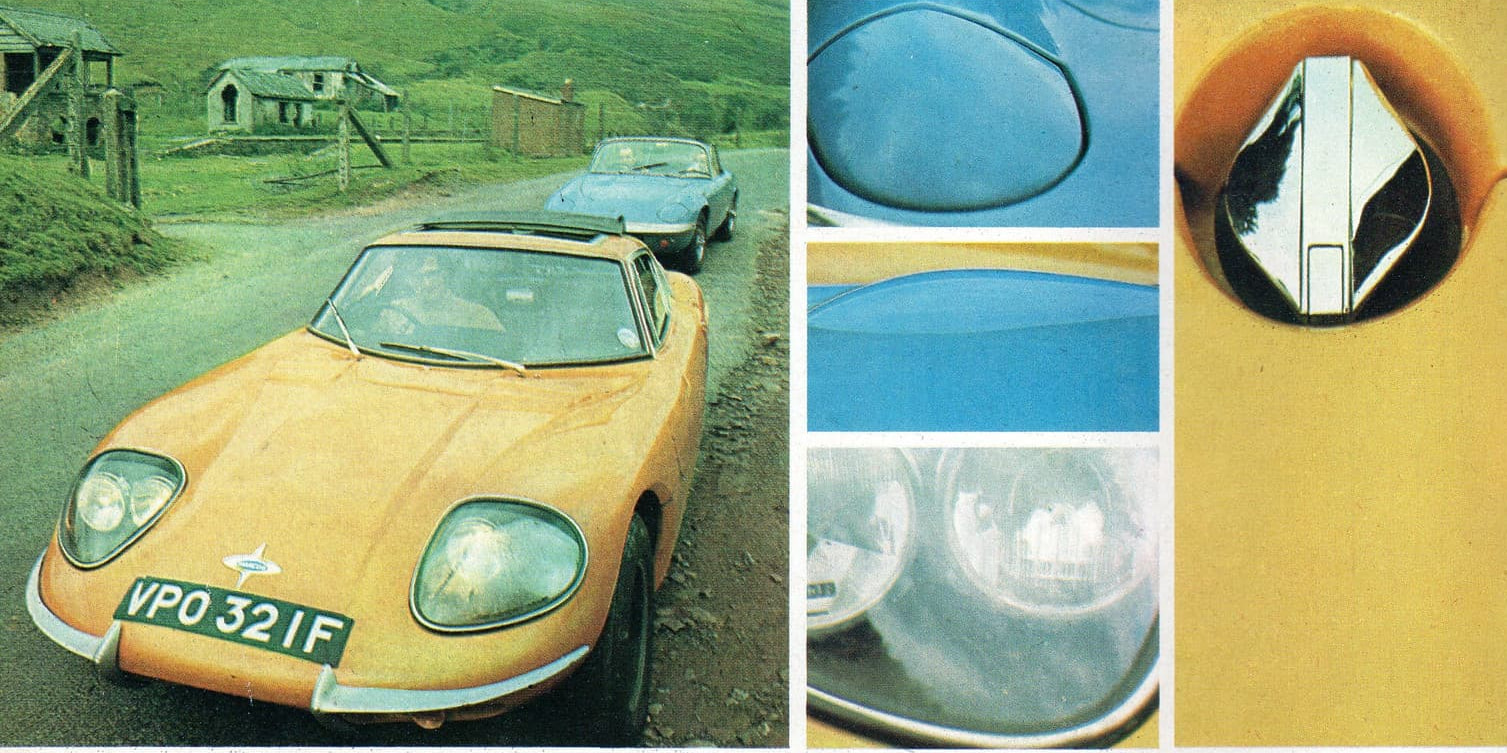
One of the astonishing things about the two cars is the superficial similarity of their specifications. Both mount a glassfibre body on a separate chassis, both use Ford-based engines (and exactly the same Ford gearbox). But superficial is what the resemblance is. The differences start with the styling: the Elan neat and clean, but no longer looking very remarkable (time has caught up with the design, which was way-out — but in the right direction — when it first emerged), the Marcos still a raging sensation wherever it goes, a tribute to a truly exciting basic shape which succeeds, with the help of the car’s comparative rarity, despite a certain amount of messy detail.
The Elan’s deep backbone chassis is a beautifully welded steel design which shows the aircraft influence perhaps as strongly as anything Lotus make. It may not make the Elan the most torsionally-rigid car in the world, but then the car lends a lot of strength to the arguments of those who maintain that such rigidity is not all that desirable an end. The frame does provide an elegant and easily-produced way of taking the loads out of the suspension units hung one on each corner of the outriggers, and out of the engine and transmission which run down its spine. It does dictate that the car shall be wide enough to take one person in comfort on each side of the frame, but then this sort of width is needed anyway if the track/wheelbase ratio is to be anything like right.
The Marcos is something else again. As most of the world knows, its frame is built up from high-quality marine plywood, glued together. The frame is a true monocoque, the loads being distributed about the shear webs of its skinning. There is nothing to be scared of in the thought of using wood as a basic structural material — it is a lot better than many people in this pressed-steel world would have you believe, especially in compression — and it is admirably suited to the needs of those who build in small numbers, because your tooling costs well-nigh disappear. Nor is the use of adhesive resins anything to worry about, because with the present state of the art, the resin will certainly be strong enough as long as the wood is. The only possible drawback to using wood is that you are faced with the odd tricky problem when attaching metal parts to the main structure. There is a tendency for such fittings to work loose, with the result that every few months the careful owner goes over his Marcos with a spanner, eliminating the various thumps and rattles coming from the more highly-stressed fittings (as time goes by, the need to do this becomes less frequent).
The use of a separate body which can be quickly dropped on to the chassis frame means that both cars are naturals for the tax-dodging kitcar game. This was how both firms started out in business, and even if Lotus are swinging away from the idea now that their Norfolk factory is functioning so well, with no guarantee that kit cars will still be forthcoming after the end of this year, Marcos are still firmly wedded to the idea.
As we have said, both engines are Ford-based. The Lotus engine is the good old twin-ohc conversion of the original 1500cc Cortina engine, and in its various forms powers the Elan, the Plus Two, the Cortina TC and the Escort TC. In the Elan it comes in two stages of tune, the standard engine producing a reputed 105bhp and the Special Equipment version 115.
The relative conservatism of the standard engine’s rating (which is the one we are considering) is shown up by the fact that the Marcos uses a moderately tuned pushrod crossflow Cortina GT engine which is supposed to produce a net 100bhp. The tweaks which push it this high, aside from the free-flow exhaust system which comes with the car, are relatively simple, using the sort of parts you can buy off the shelf at the Ford Performance Centre. The fact remains that twin-cam or no, the standard Elan has but a bare power margin over the Marcos, and an even barer margin of torque.
Interestingly, although the twin-cam engine with its higher bore/stroke ratio should be safe to higher speeds than the ordinary pushrod unit, Lotus retain the distributor cut-out which prevents you from exceeding 6500rpm, a figure to which the Marcos version of the Cortina GT engine with its stronger-than-standard valve springs will rev quite cheerfully. Not that it is worth substituting a plain rotor arm for Lotus’s doctored one, unless you wish to invalidate your guarantee . . .
The Marcos has always been in a bit of trouble finding itself a really suitable engine. It started life with the Volvo 1800 unit (with an eye out for export potential), then took to the old 1500cc Cortina GT engine for home consumption and had it bored-out and heavily tuned by Chris Lawrence so that it produced 120bhp for those customers who wanted real performance. Unhappily, the 1650cc unit was not entirely reliable, at least not in unsympathetic hands, and the emergence of the current power unit was greeted as something of a godsend. As for those who see the fitting of the Lotus engine as the obvious answer, well, they just haven’t tried it: the engine will go, but the induction gets fouled on the chassis.
At least there is entire agreement as to choice of gearbox. Both cars use the Ford GT-type box with the higher second gear. Gone are the days when Lotus did a really hairy close-ratio box for the Elan (and the Cortina): a shame, even if it did make traffic driving a shade tricky. Final drive is something else again. Neither car is spectacularly high-geared, but the Elan takes advantage of its lighter weight to fit a 3.55 back end, while the Marcos makes do with a 3.77. This means that the Elan has, amongst other things, marginally (but usefully) higher maximum speeds in the intermediate gears.
The Marcos ran afoul of the odd problem early on in the suspension department. It started life with something like a de Dion back end which was prone to take over the steering at awkward moments, with the result that it gave way to a sternly located live axle (radius rods and Panhard rod) which did a lot for the handling but nothing at all for the ride. The Elan on the other hand counts the suspension as its other major masterpiece: a straight read-across from the then-current racing car practice, it has never evidenced any need for change.
Both cars fit flat radial-ply tyres as standard. The Elan in its S4 form books low-profile 155/13s, for which the wheel arches have had to be slightly flared, while the Marcos goes one better with 165/13s. Brakes are discs all round on the Elan, with the more usual compromise of front discs/rear drums for the Marcos.
Use of Space
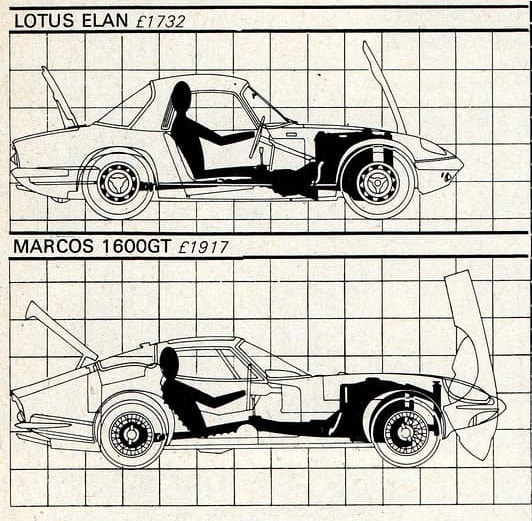
Who cares about space, when you are buying a two-seat sports car? Some people obviously care more than others, for the Elan is over a foot shorter than the Marcos, and six inches narrower withall. Yet both cars are strictly two-seaters, wisely eschewing the temptation to trim the space behind the seats into a bench fit only for a malformed dwarf. Not that there is a space behind the seats in the Marcos, whose two occupants recline gracefully against the rear bulkhead, whereas in the Elan there is a useful well for stowing anything which is needed on the voyage or which won’t go in the boot. Both cars waste a fair amount of length in the provision of a suitably aerodynamic nose. There is a clear difference of opinion between them, for the Elan droops (thus forcing the fitting of those frog-eye retractable lamps, so that they shine above the legal two-foot minimum) and the Marcos rises gracefully.
A lot of the Marcos’s extra length is accounted for in the passenger compartment. If you are seeking minimum possible height by laying your occupants down as low as that, then you have to give them a fair amount of length to stretch out in.
The Elan’s boot swallows a surprising amount for so small and streamlined a car, despite having to find room for the spare wheel and the fuel tank beneath the floor, and the battery into the bargain. The Marcos is less well endowed. Its tail is a pinched and tapering thing, and the luggage shares the space with the fat spare wheel, the petrol tank living forward of the boot space and behind the seats.
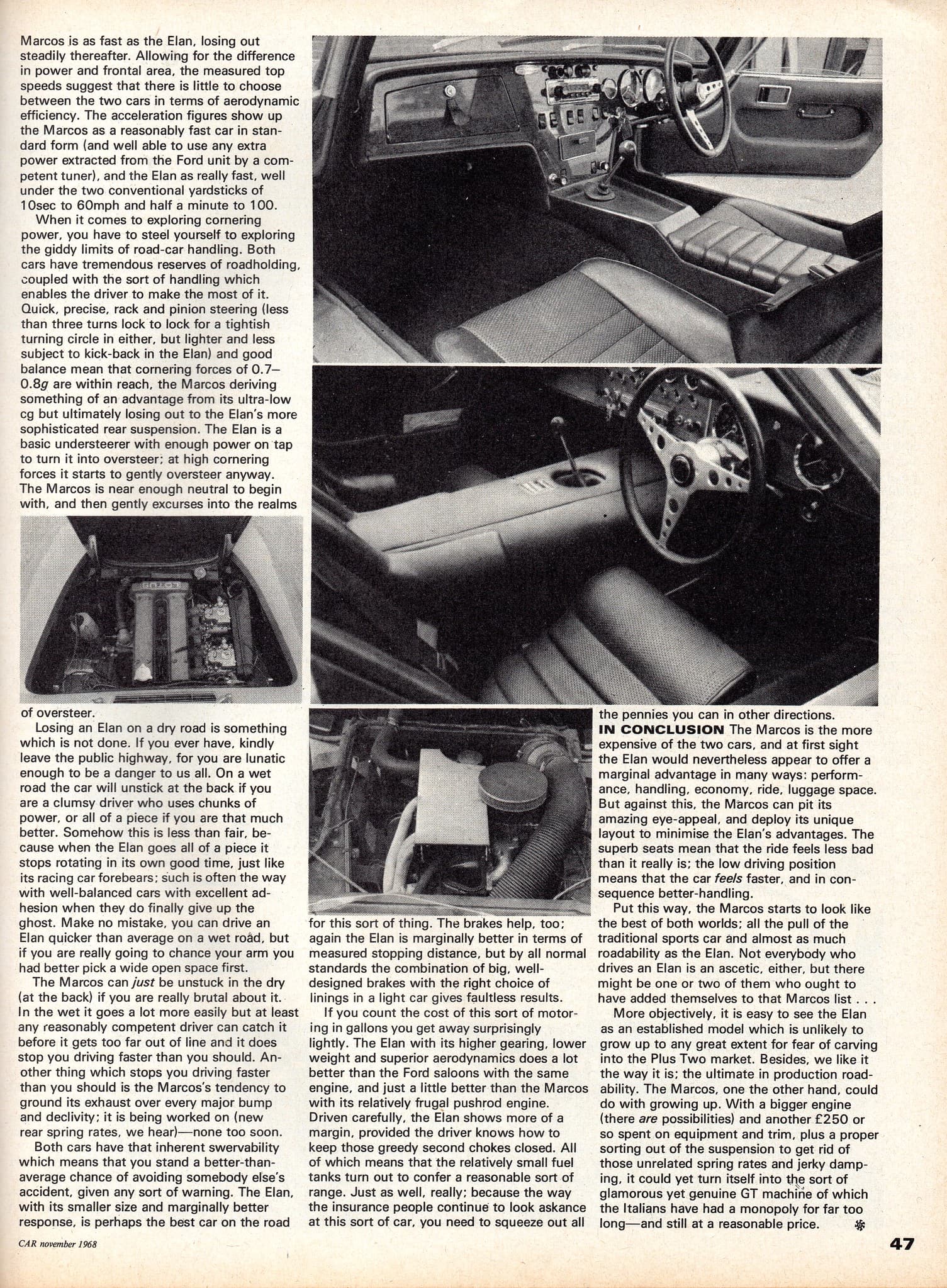
At the other end, the whole front end of the Marcos lifts to do its best for engine accessibility, even if various bits of chassis do get in the way. The twin-cam as installed in the Elan, on the other hand, perpetrates some of the original detail idiocies of the design, including the difficult-to-reach oil filler cap (now cured of its tendency to wriggle off and vanish) and the distributor virtually inaccessible beneath the forward carburettor.
Comfort and Safety
Both Lotus and Marcos have been around for long enough to know that poor detail fitting and interior finish can gain a car a bad reputation out of all proportion to the cost of doing the thing right. The result is that they offer a high standard of equipment and finish, and Lotus’s desire to see a uniformly high standard is probably one reason why they are going a bit sick on the kit car concept.
The standard of seating is very good in the Elan, and superb in the Marcos. Nor is it particularly difficult to enter an Elan with decorum, although the beast from Bradford-on-Avon is something else again, especially where the fair sex is concerned.
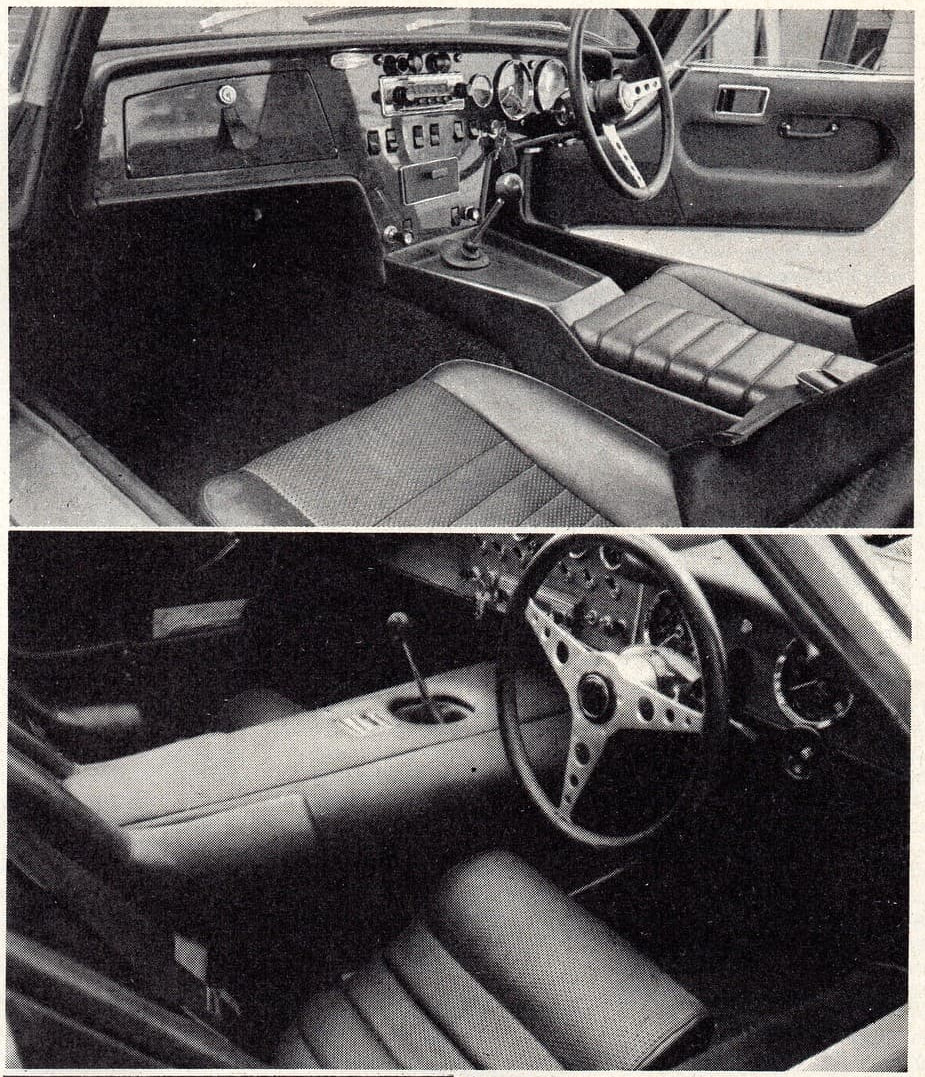
Apart from a tendency to slide some people downwards and forwards, the Elan seats hold you in an admirable compromise position, far from sit-up-and-beg but nowhere near reclining-boy-racer. Sideways location is excellent, the range of fore and aft movement surprisingly large (our largest staffman has the seat forward two or three notches from fully-aft) and the wheel is very well placed. The pedals are necessarily cramped and offset right; there is nothing you can do except try to get used to it, and in the meantime avoid treading on brake and accelerator at the same time. Headroom under the easily erected hood is good enough for anyone we know.
In the Marcos, you really lie back to it. The fixed seats are tailored to an astonishingly wide range of human body sizes like an astronaut’s couch. The wheel is so vertical that you could swear it was pointing down into your lap before you get used to it; the pedals wind back and forth down their tunnel so that you can set them up for reach — a surprisingly satisfactory way of setting up a good driving position. For those who are really small, Marcos supply a special cushion to pad out the standard seat. The whole effect is one which encourages you to lie there in the lap of luxury — not because getting out is so hard.
So comfortable is the accommodation in the Marcos that you are inclined to excuse the fact that the ride is generally vintage-type, harsh and jerky over all manner of surfaces except the very smoothest. Thumps that you would object to if you were sitting bolt upright pass you by unnoticed, and the seat cushioning seems to help a good deal.
No excuse is necessary for the Elan, which rides in a way which puts many saloons to shame and exposes as fallacious the arguments of those vintage types who argue that there can be no handling without a suspension stiff enough to ensure that the wheels stay where they were meant to be. The only time it breaks down is over really rough surfaces.
Within, all is well placed and easy to use except the handbrakes. It is always a problem to know where to put these in any car with this sort of interior layout: Lotus hide theirs away under the dash, with a warning light to stop you forgetting about it, while Marcos snuggle theirs up against the transmission hump, somewhere under the driver’s left leg.
Otherwise there is little to complain about. Marcos could do with a bit of labelling for their minor controls, especially in view of their inclusion of a couple of spare, inoperative switches. The Elan layout is the neater and tidier of the two, reflecting the work which went into adapting the S4 to meet the American safety regulations. Instruments are good in both, although the Marcos puts the minor dials in the centre where they are subject to parallax error. Good points are the inclusion as standard of a sunroof in the Marcos (which is hardtop without the option), and of electric windows in the Elan (something which would do a lot to lift the image of the Marcos as well).
Visibility is surprisingly good, even in the Marcos which from the outside looks as though it couldn’t possibly be; wiper patterns, too, are well thought out. The only slightly alarming (though unavoidable) factor is the way the nose of the Marcos hides the other side of a hump until after you get there.
Even the Marcos’s four-eyed headlamp system is barely up to the standard of lighting demanded by the performance of the car, and the Elan’s two-lamp system is decidedly deficient, quite apart from the well-publicised drawbacks of having retractable lamps (which must be why the Americans have so perversely gone overboard for them on their '68 and '69 models?).
Heating and ventilation are still not strong points, although considerable efforts have been made to improve the Elan and it is certainly a lot better than it was. Both cars deliver volumes of hot air with a will, but to the wrong places (too high up, and more or less ignoring the feet), but are less able to supply cool, fresh air at head level without opening a window — in which case things get draughty and noisy. And speaking of noise, this is still on the high side unless the cars are driven reasonably gently. They can be cruised at 70mph with a near-normal conversation going on, but driven as they ask to be driven things get a great deal worse, with engine noise as the worst offender, followed by wind noise; together, of course, with sundry rattles in the Marcos.
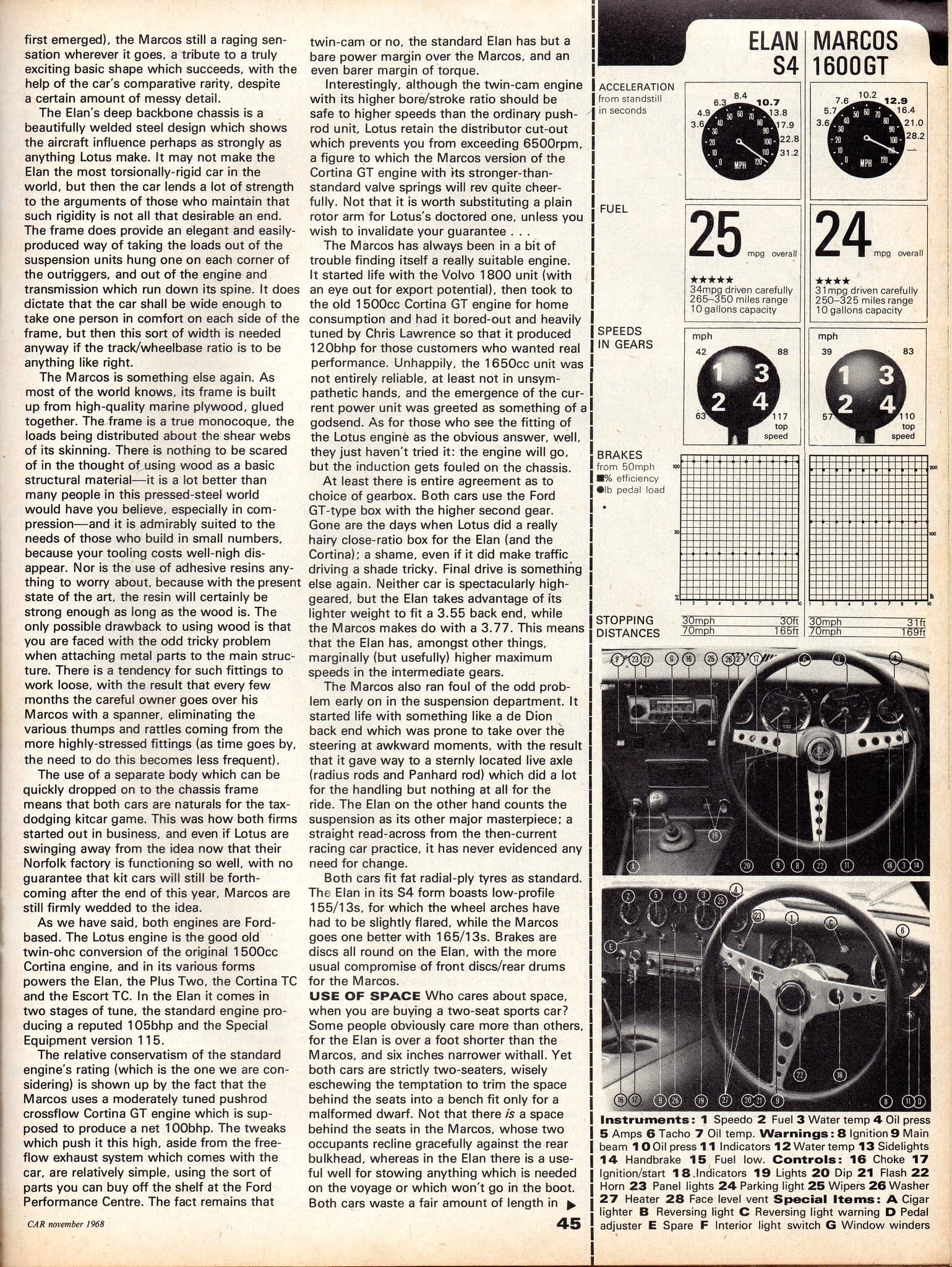
Performance Data
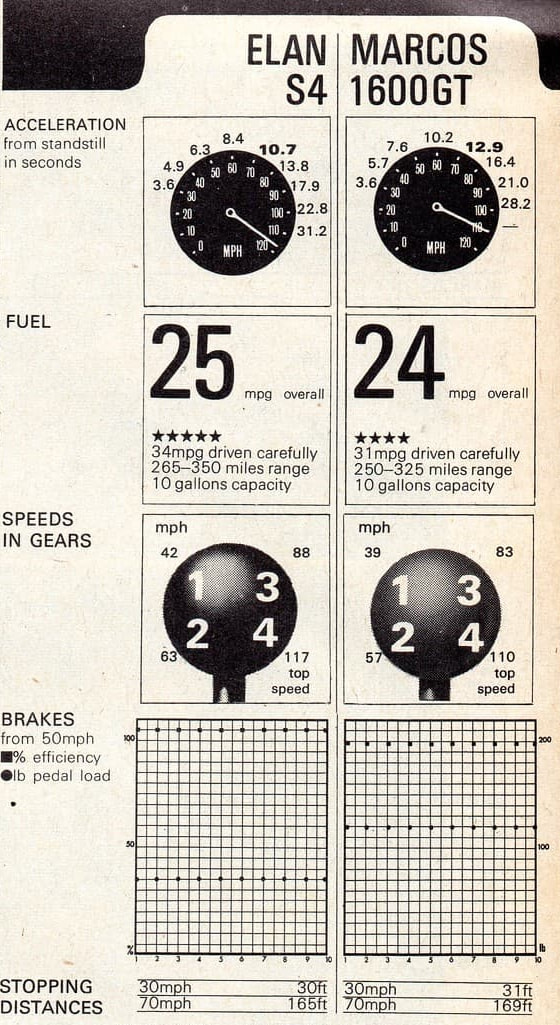
| Elan S4 | Marcos 1600GT | |
|---|---|---|
| Acceleration from standstill | ||
| 0–30 mph | 3.6 sec | 3.6 sec |
| 0–40 mph | 4.9 sec | 5.7 sec |
| 0–50 mph | 6.3 sec | 7.6 sec |
| 0–60 mph | 8.4 sec | 10.2 sec |
| 0–70 mph | 10.7 sec | 12.9 sec |
| 0–80 mph | 13.8 sec | 16.4 sec |
| 0–90 mph | 17.9 sec | 21.0 sec |
| 0–100 mph | 22.6 sec | 28.2 sec |
| Standing ¼ mile | 31.2 sec | — |
| Fuel | 25 mpg overall | 24 mpg overall |
| Driven carefully | 34 mpg | 31 mpg |
| Range | 265–350 miles | 250–325 miles |
| Tank capacity | 10 gallons | 10 gallons |
| Speeds in gears | ||
| 1st | 42 mph | 39 mph |
| 2nd | 63 mph | 57 mph |
| 3rd | 88 mph | 83 mph |
| Top speed | 117 mph | 110 mph |
| Stopping distances | ||
| From 30 mph | 30 ft | 31 ft |
| From 70 mph | 165 ft | 169 ft |
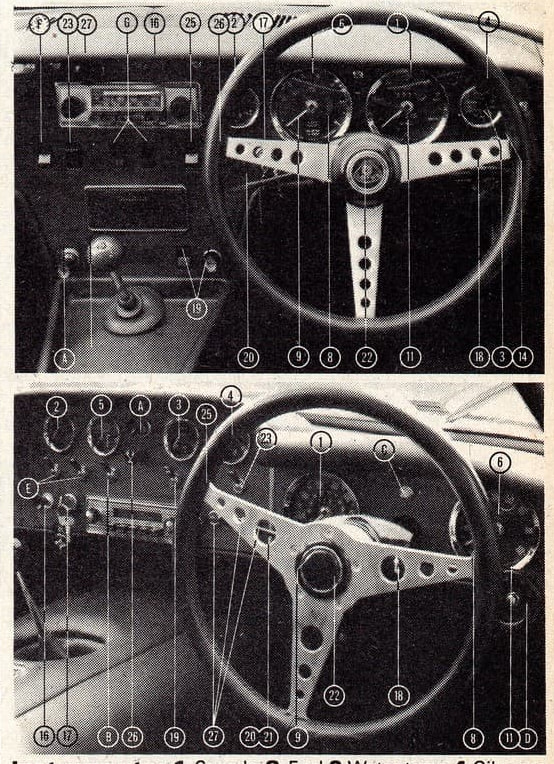
Instruments: 1 Speedo 2 Fuel 3 Water temp 4 Oil press 5 Amps 6 Tacho 7 Oil temp. Warnings: 8 Ignition 9 Main beam 10 Oil press 11 Indicators 12 Water temp 13 Sidelights 14 Handbrake 15 Fuel low. Controls: 16 Choke 17 Ignition/start 18 Indicators 19 Lights 20 Dip 21 Flash 22 Horn 23 Panel lights 24 Parking light 25 Wipers 26 Washer 27 Heater 28 Face level vent Special Items: A Cigar lighter B Reversing light C Reversing light warning D Pedal adjuster E Spare F Interior light switch G Window winders
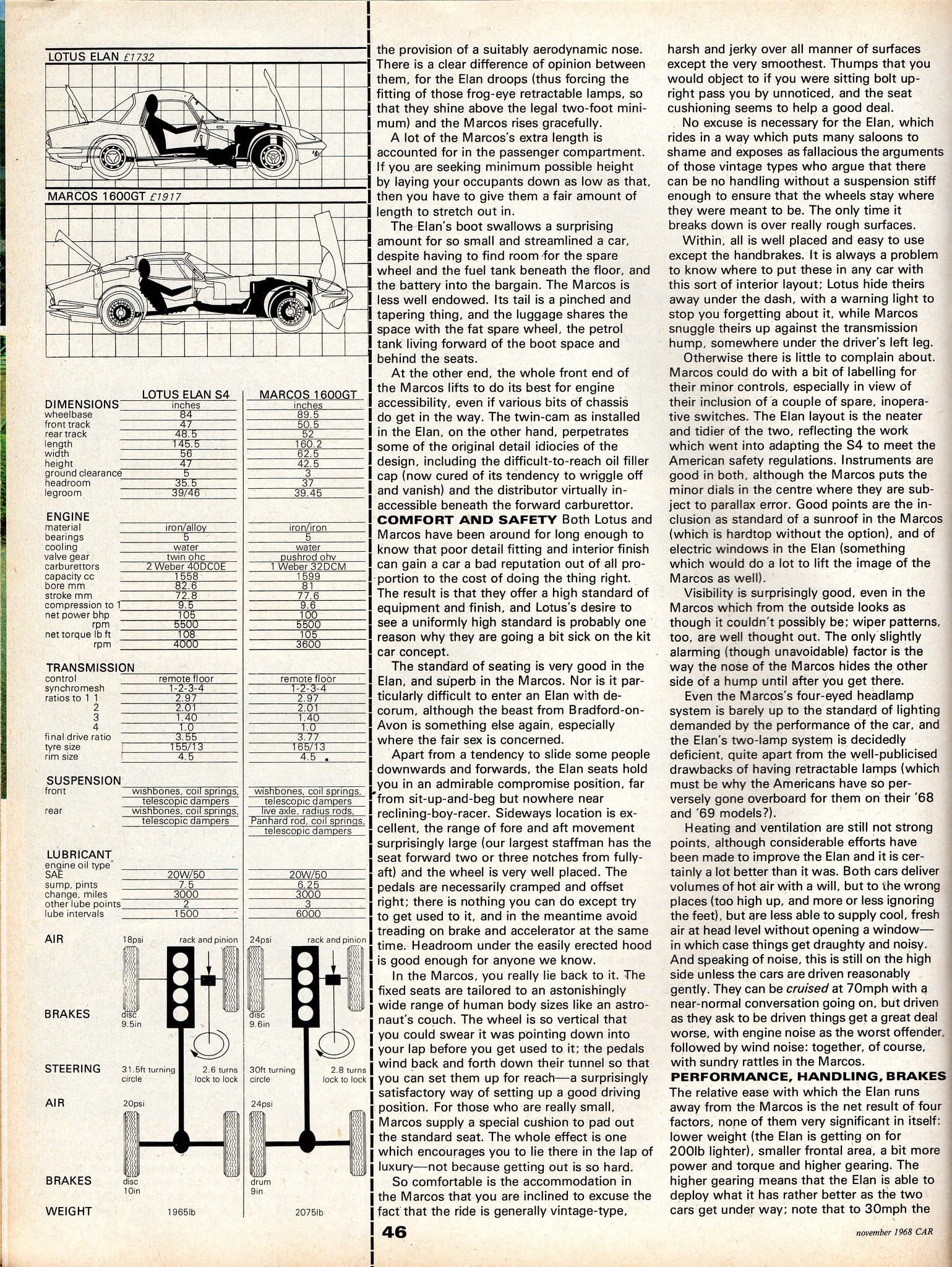
Specification
| Lotus Elan S4 | Marcos 1600GT | |
|---|---|---|
| DIMENSIONS (inches) | ||
| Wheelbase | 84 | 89.5 |
| Front track | 47 | 50.5 |
| Rear track | 48.5 | 52 |
| Length | 145.5 | 160.2 |
| Width | 56 | 62.5 |
| Height | 47 | 42.5 |
| Ground clearance | 5 | 5 |
| Headroom | 35.5 | 37 |
| Legroom | 39/46 | 39.45 |
| ENGINE | ||
| Material | iron/alloy | iron/iron |
| Bearings | 5 | 5 |
| Cooling | water | water |
| Valve gear | twin ohc | pushrod ohv |
| Carburettors | 2 Weber 40DCOE | 1 Weber 32DCM |
| Capacity cc | 1558 | 1599 |
| Bore mm | 82.6 | 81 |
| Stroke mm | 72.8 | 77.6 |
| Compression to 1 | 9.5 | 9.8 |
| Net power bhp | 105 | 100 |
| rpm | 5500 | 5500 |
| Net torque lb ft | 108 | 105 |
| rpm | 4000 | 3600 |
| TRANSMISSION | ||
| Control | remote floor | remote floor |
| Synchromesh | 1-2-3-4 | 1-2-3-4 |
| Ratios to 1 — 1st | 2.97 | 2.97 |
| 2nd | 2.01 | 2.01 |
| 3rd | 1.40 | 1.40 |
| 4th | 1.0 | 1.0 |
| Final drive ratio | 3.55 | 3.77 |
| Tyre size | 155/13 | 165/13 |
| Rim size | 4.5 | 4.5 |
| SUSPENSION | ||
| Front | Wishbones, coil springs, telescopic dampers | Wishbones, coil springs, telescopic dampers |
| Rear | Wishbones, coil springs, telescopic dampers | Live axle, radius rods, Panhard rod, coil springs, telescopic dampers |
| LUBRICANT | ||
| Engine oil type | 20W/50 | 20W/50 |
| SAE | ||
| Sump, pints | 7.5 | 6.25 |
| Change, miles | 3000 | 3000 |
| Other lube points | 100 | 100 |
| Lube intervals | 1500 | 6000 |
| BRAKES | ||
| Front | disc, 9.5 in | disc, 9.6 in |
| Rear | disc, 9.5 in | drum, 9 in |
| STEERING | ||
| Type | rack and pinion | rack and pinion |
| Turning circle | 31.5 ft | 30 ft |
| Turns lock to lock | 2.6 | 2.8 |
| AIR | ||
| Tyre pressures | 20 psi | 24 psi |
| WEIGHT | ||
| 1965 lb | 2075 lb | |
Performance, Handling, Brakes
The relative ease with which the Elan runs away from the Marcos is the net result of four factors, none of them very significant in itself: lower weight (the Elan is getting on for 200lb lighter), smaller frontal area, a bit more power and torque and higher gearing. The higher gearing means that the Elan is able to deploy what it has rather better as the two cars get under way; note that to 30mph the Marcos is as fast as the Elan, losing out steadily thereafter. Allowing for the difference in power and frontal area, the measured top speeds suggest that there is little to choose between the two cars in terms of aerodynamic efficiency. The acceleration figures show up the Marcos as a reasonably fast car in standard form (and well able to use any extra power extracted from the Ford unit by a competent tuner), and the Elan as really fast, well under the two conventional yardsticks of 10 sec to 60mph and half a minute to 100.
When it comes to exploring cornering power, you have to steel yourself to exploring the giddy limits of road-car handling. Both cars have tremendous reserves of roadholding, coupled with the sort of handling which enables the driver to make the most of it. Quick, precise, rack and pinion steering (less than three turns lock to lock for a tightish turning circle in either, but lighter and less subject to kick-back in the Elan) and good balance mean that cornering forces of 0.7–0.8g are within reach, the Marcos deriving something of an advantage from its ultra-low cg but ultimately losing out to the Elan’s more sophisticated rear suspension. The Elan is a basic understeerer with enough power on tap to turn it into oversteer; at high cornering forces it starts to gently oversteer anyway. The Marcos is near enough neutral to begin with, and then gently excurses into the realms of oversteer.
Losing an Elan on a dry road is something which is not done. If you ever have, kindly leave the public highway, for you are lunatic enough to be a danger to us all. On a wet road the car will unstick at the back if you are a clumsy driver who uses chunks of power, or all of a piece if you are that much better. Somehow this is less than fair, because when the Elan goes all of a piece it stops rotating in its own good time, just like its racing car forebears; such is often the way with well-balanced cars with excellent adhesion when they do finally give up the ghost. Make no mistake, you can drive an Elan quicker than average on a wet road, but if you are really going to chance your arm you had better pick a wide open space first.
The Marcos can just be unstuck in the dry (at the back) if you are really brutal about it. In the wet it goes a lot more easily but at least any reasonably competent driver can catch it before it gets too far out of line and it does stop you driving faster than you should. Another thing which stops you driving faster than you should is the Marcos’s tendency to ground its exhaust over every major bump and declivity; it is being worked on (new rear spring rates, we hear) — none too soon.
Both cars have that inherent swervability which means that you stand a better-than-average chance of avoiding somebody else’s accident, given any sort of warning. The Elan, with its smaller size and marginally better response, is perhaps the best car on the road for this sort of thing. The brakes help, too; again the Elan is marginally better in terms of measured stopping distance, but by all normal standards the combination of big, well-designed brakes with the right choice of linings in a light car gives faultless results.
If you count the cost of this sort of motoring in gallons you get away surprisingly lightly. The Elan with its higher gearing, lower weight and superior aerodynamics does a lot better than the Ford saloons with the same engine, and just a little better than the Marcos with its relatively frugal pushrod engine. Driven carefully, the Elan shows more of a margin, provided the driver knows how to keep those greedy second chokes closed. All of which means that the relatively small fuel tanks turn out to confer a reasonable sort of range. Just as well, really; because the way the insurance people continue to look askance at this sort of car, you need to squeeze out all the pennies you can in other directions.
Interiors and Engines
In Conclusion
The Marcos is the more expensive of the two cars, and at first sight the Elan would nevertheless appear to offer a marginal advantage in many ways: performance, handling, economy, ride, luggage space. But against this, the Marcos can pit its amazing eye-appeal, and deploy its unique layout to minimise the Elan’s advantages. The superb seats mean that the ride feels less bad than it really is; the low driving position means that the car feels faster, and in consequence better-handling.
Put this way, the Marcos starts to look like the best of both worlds: all the pull of the traditional sports car and almost as much roadability as the Elan. Not everybody who drives an Elan is an ascetic, either, but there might be one or two of them who ought to have added themselves to that Marcos list . . .
More objectively, it is easy to see the Elan as an established model which is unlikely to grow up to any great extent for fear of carving in to the Plus Two market. Besides, we like it the way it is; the ultimate in production roadability. The Marcos, one the other hand, could do with growing up. With a bigger engine (there are possibilities) and another £250 or so spent on equipment and trim, plus a proper sorting out of the suspension to get rid of those unrelated spring rates and jerky damping, it could yet turn itself into the sort of glamorous yet genuine GT machine of which the Italians have had a monopoly for far too long — and still at a reasonable price. 

Notes
1: The Giant Test of the Elan and Elite referred to in the opening paragraph appeared in the January 1966 issue of CAR magazine.
2: Prices quoted: Lotus Elan S4 — £1,732; Marcos 1600GT — £1,917.
3: Both test cars were dealers’ demonstrators: the Elan from Parkes of Bristol; the Marcos from Octagon Motors of London.
4: “Bradford-on-Avon” refers to the location of the Marcos factory in Wiltshire.