Is anyone else experiencing frequent alternator failures.
When I bought my Sylva Striker last summer it came with a failed alternator, which must have just recently failed as the previous owner had been running the car for a month with no issues (I trust him). I replaced it with one from eBay.
When I bought my Plus 2 this spring, the alternator failed shortly afterwards. It couldn’t have done more than 2,000 miles as it looks like it was fitted at the rebuild or later. I replaced it with one from a local reputable motor spares company (came in a NAPA box).
Today, on the way in to work the alternator on the Striker failed again. That’s three failures in a total of maybe 2,000 miles.
Although you didn’t tell us how it’s failing (ignition light coming on?, squealing?, etc) check belt alignment with the other pulleys and make sure belt tension is not too tight.
In all three cases the alternator has simply stopped charging. No noises, no bearing failures, no squealing belts. It’s as if the rectifiers/regulators are failing or something. In all cases, the charge light has not come on.
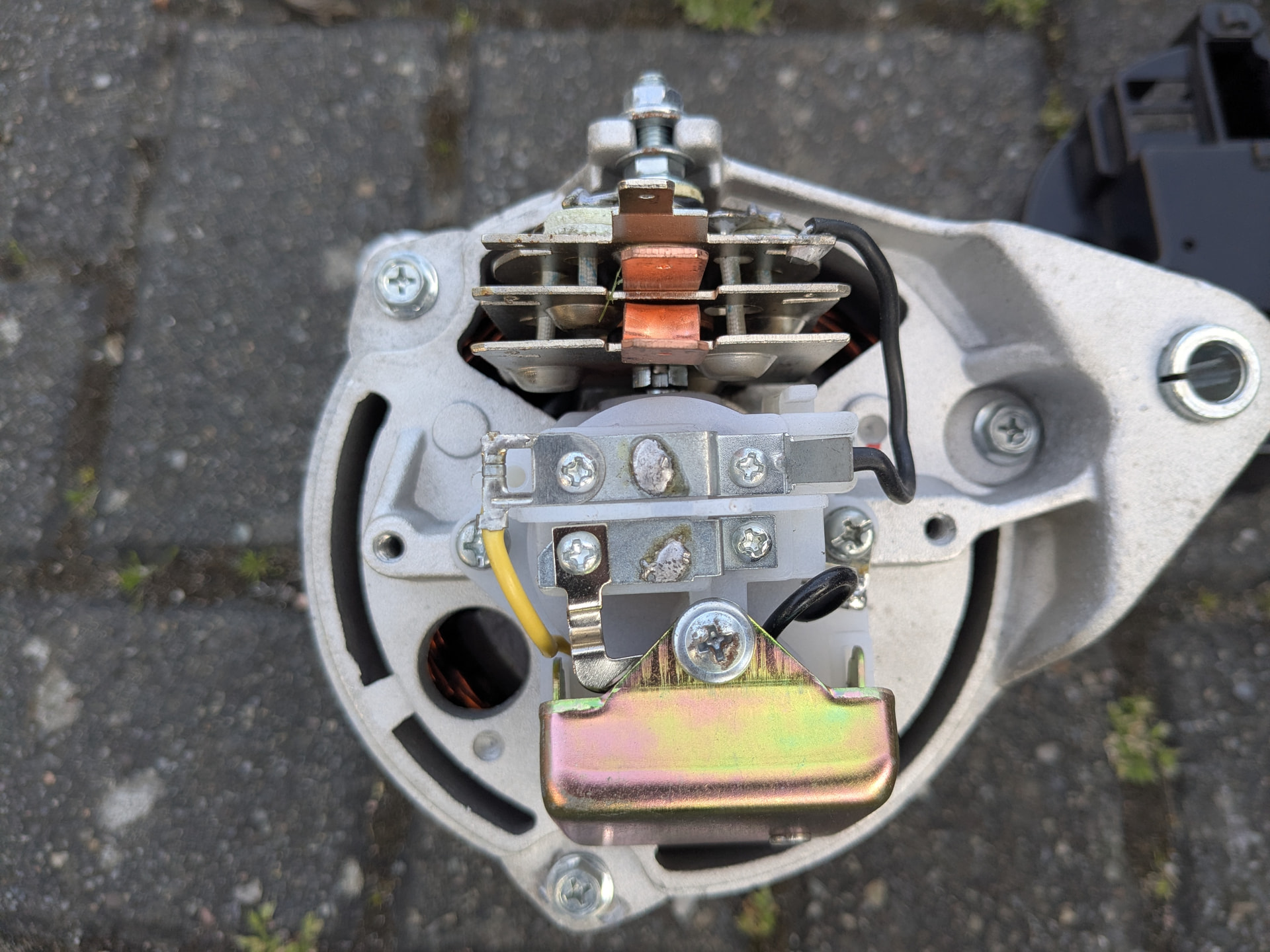
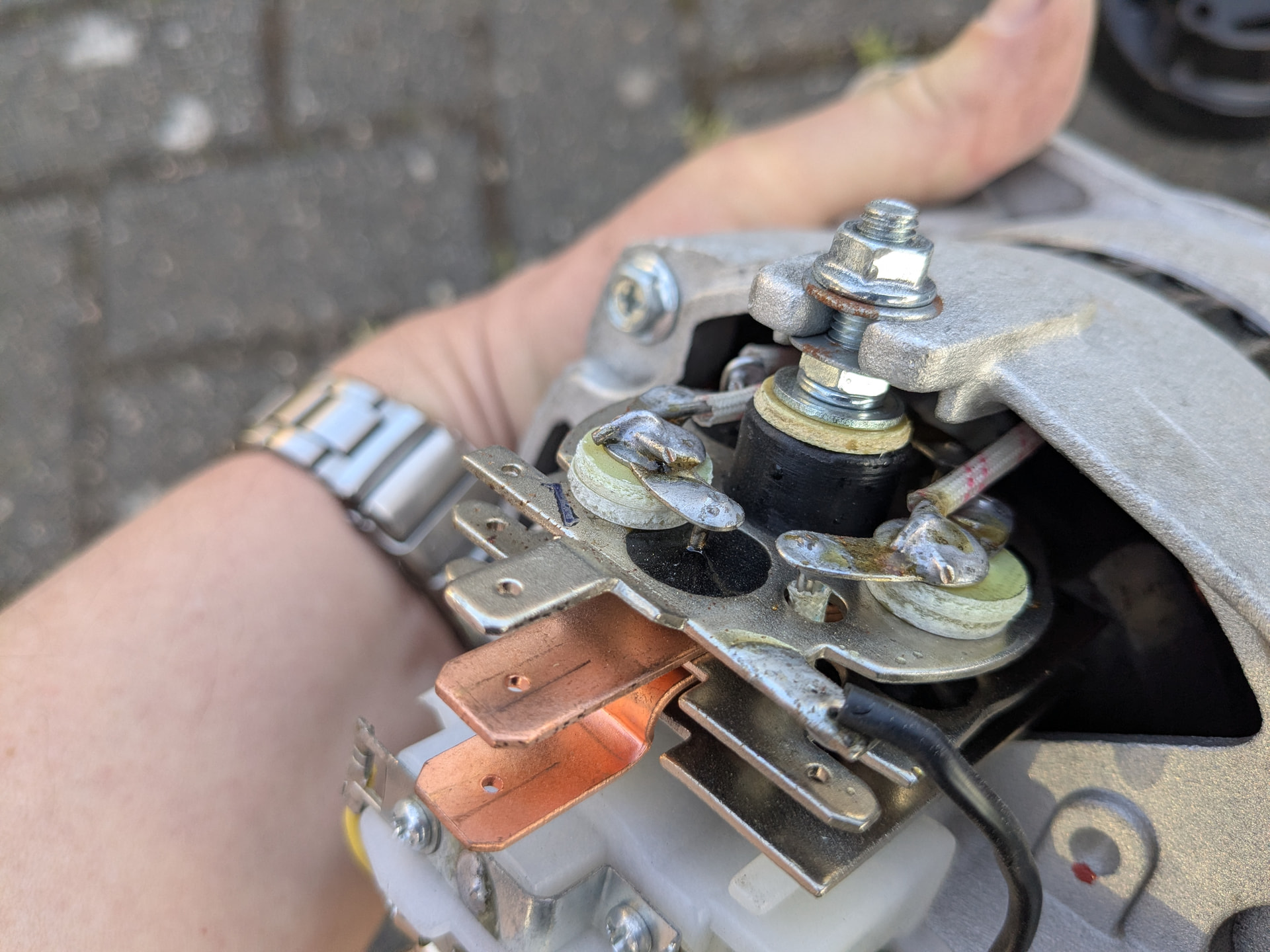
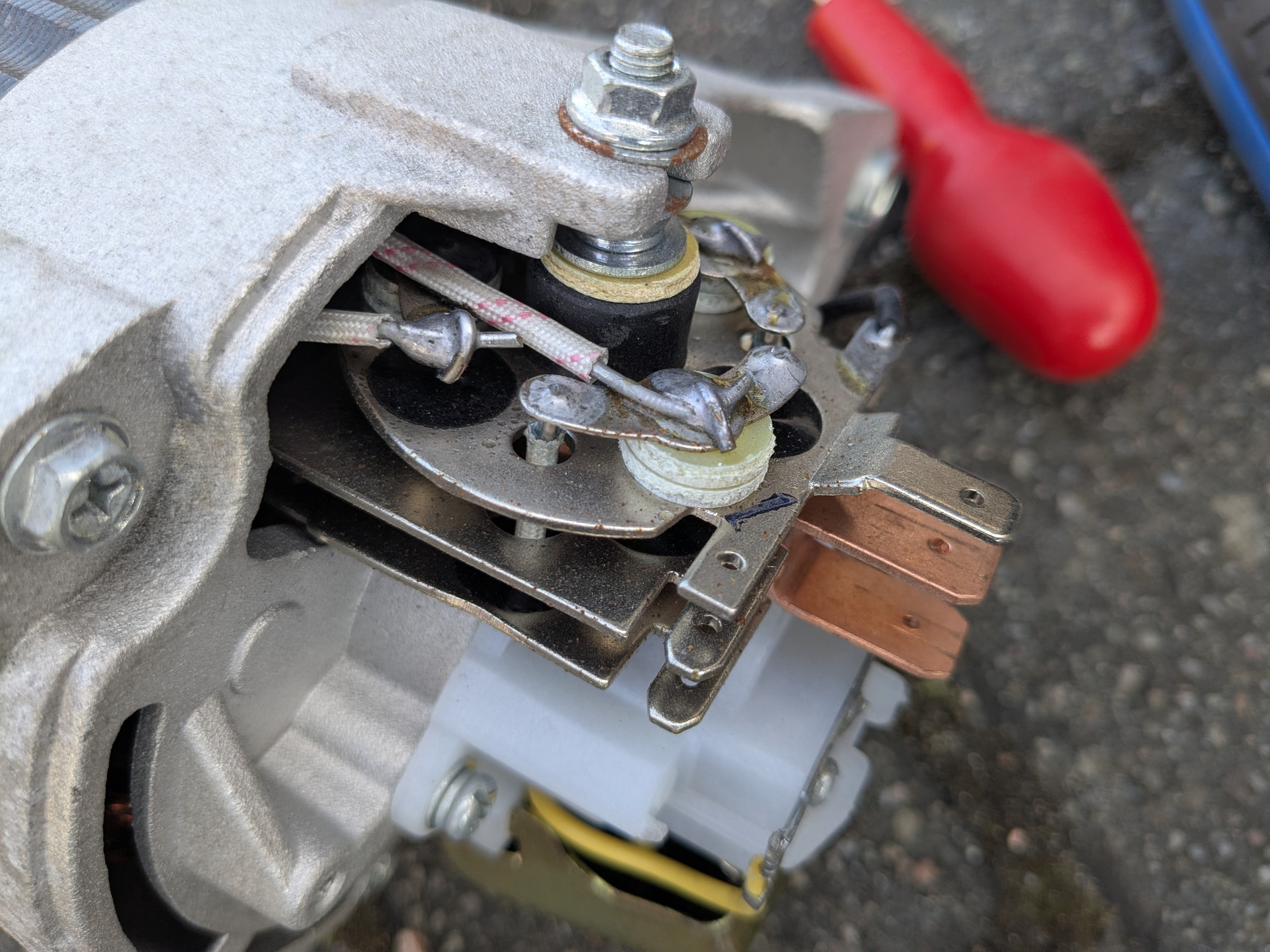
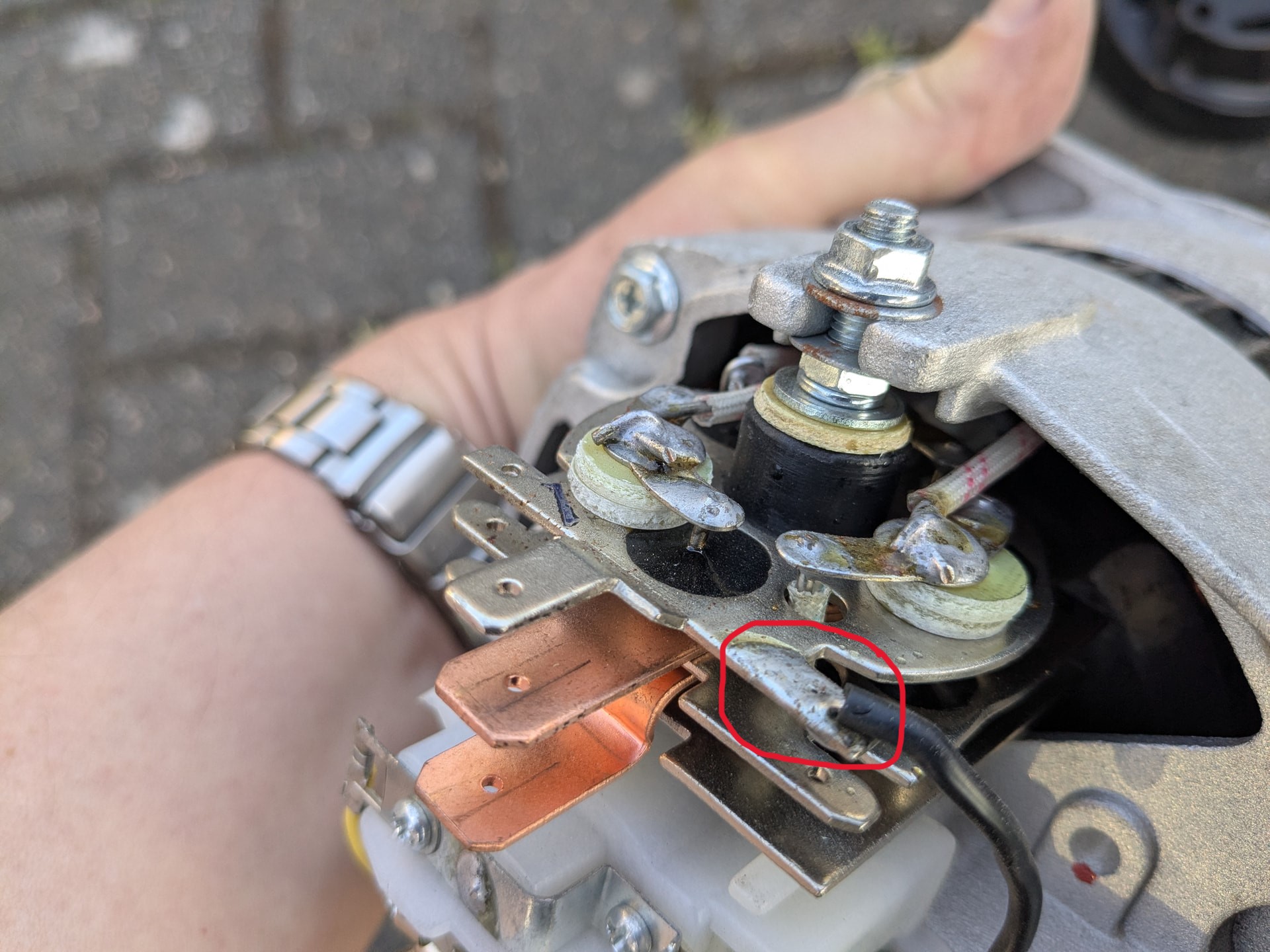
I had similar experience . The charge light sporadically glimmering and battery not charging . I bought a new alternator from one of the usual supplier (probably SJS ) and all good for about 6 months then exactly the same symptoms again. I wasted hours checking every connection I could find because it couldn’t possibly be the almost new alternator could it? Finally concluded it must be the alternator so bought another. All good for a few months then same symptoms again. This time the alternator was the first suspect rather than the last. On close inspection I found a small (8mm?) nut partially under the plastic cover on the connector end of the alternator had come loose. This holds an internal subassembly carrying the rectifier diodes etc and i guess the nut earthed it. Tightened the nut up and all has been fine for a couple of years. I also went back to the first failed alternator (held in stock - just in case ) and found the same nut was loose on that too.
I’ve had a similar problem with new aternators a long time ago - a small wire inside that I think is green/yellow known as the “exciter(?)” wire if memory serves me correctly. I seem to think it fastens on to one of the rectifier plates. It just needed re-securing by crimping the spade connector a little tighter.
The charge light does not come on, but there is 12v at the exciter terminal on the connector block when I turn the ignition on, so to me this suggests the exciter circuit has gone inside the alternator. Interestingly, this is the same failure mode as the one that was in my Plus 2, and might easily be the same fault as the previous one in the Striker as I don’t remember the charge light coming on then either.
There’s no pressing rush to get the Striker back on the road, apart from to take advantage of the lovely sunny weather we’re having, so I shall take the alternator off and have a look at that small nut inside. Hopefully that’s all it is, and thanks to Baggy and promotor for suggesting it.
An issue I have had in the past which either gave the impression that the alternator had failed or actually killed the alternator was the lack of a decent earth.
On my stag the earth to the chassis came loose and the charge from the alternator became quite erratic. I tightened the earth and all was good. Given the notoriously tricky earthing of the elan perhaps check that all earth straps are present and in good nick.
All 3 of your pictures (specially the middle one ) clearly show the nut that was loose on my two alternators . Sorry it wasn’t your problem but maybe it will be helpful to others ?
All diodes regulators and electronic parts are made in the East. Quality or lack there of control is the issue for many parts. Thermal problems are the main fault, so if you can help them cool it will help
All of those parts are replaceable. I would find whichever model of Mercedes or Audi etc that use that specific type rectifier regulator whatever you got. And get quality from a quality supplier.
Of course the windings are junk these days too, I would much prefer an original rebuilt than new. Then add better OEM diodes rectifier regulators whatever
I would be checking the integrity of the internal wiring. The wire between the diode pack and brush box is normally done using crimped connectors not solder.
I’m going to get another NAPA one from the local parts shop this afternoon. More expensive than the eBay ones but hopefully better made and will last longer.
It wasn’t the NAPA one that failed this time, it was the eBay one. The one on my Plus 2, and the one I’ve just ordered, are NAPA. Let’s see how they hold up. I’m guessing they get a bit roasted by the exhaust manifold.
Do not have a part number. But here in states they are standard fitment on GM Metro Geos or Suzuki Swifts. As well as many small tractors, Kubota, Yanmar, etc, in 55 amp form.