Giant Test: Capri RS3100 · Lotus +2 130/5 · MGB V8
CAR, January 1974
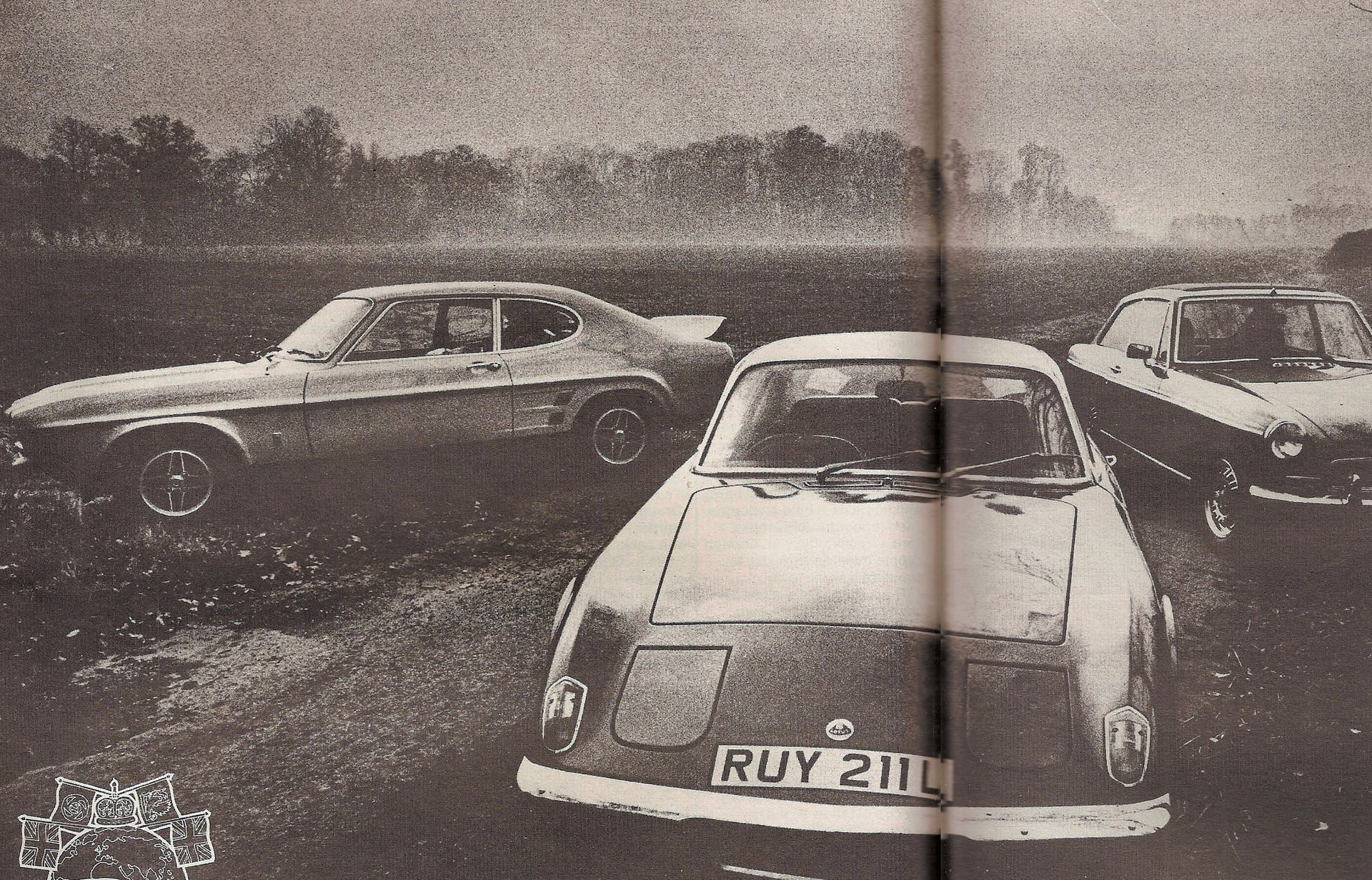
SUDDENLY IT’S ALL HAPPENING IN the over-£2000 sporting car market. Until recently, the fort was held firmly by the Lotus Plus 2S and Datsun’s 240Z, carving up the buyers between them despite a fair price gap. Then, for better or for worse, came British Leyland’s contribution, the MGB V8. And now it is Ford’s turn to get into the act — enter the Ford Capri RS3100.
You can view the creation of the RS3100 in several ways. Are Ford boosting run-out sales of the soon-to-be-replaced current Capri with an impressive image-maker? Are they, at the same time, creating a more dynamic image to set the scene for the introduction of the new Capri? Are they creating a car specifically to take on the popular 240Z, a move that will get underway properly when the new body arrives early this year? Or is it all these things, with the basis for a new production race car thrown in as well?
Whatever it is, everyone welcomes this well-developed £2412 version of the Capri GT3000 — any new offering from Ford’s Advanced Vehicles Operations, creator and maker of the Escort RS1600s and RS2000s, is something to look forward to. Leyland, however, with a less roomy and less trendy car in the £2309 MGB V8 may not be quite so pleased with the new arrival.
The heading on this story says ‘Giant Test’. But in this instance ‘Giant Impression’ is more appropriate; the Capri was so hot off the FAVO production line (in fact, there were only three in existence) that we could not test it in our normal manner. Ford did us a great favour by making it available so quickly in order that we could make this issue. So we could not record performance figures or top speed. Our all-too-brief drive did, however, prove that the RS3100 is a well-balanced and most desirable package and we very much look forward to running it through a full test later on.
Such short notice and tight deadlines also meant that Leyland could not lend us an MGB V8, and University Motors of Boston Rd, Hanwell, W7, came to the rescue. Our Lotus came from London Sports Car Centre, the Lotus and MG specialists in the High Street, Edgware, Middlesex.
If the Datsun 240Z is the main opponent of all these cars, why did we not include a Z in this story? Easy. The 240Z will be superseded any day now by an updated version called the 260Z which runs a bigger 2.6-litre engine and has minor modifications in other areas. Had we included a 240Z, the car — and this story — would have been out of date by the time we appeared. A 260Z, of course, was not available. Really, the Lotus is out on its own too, thanks to a recent price rise that now takes it up to £3390 for the 5-speed version.
Styling, Engineering
From conception the Capri has had the image of an anglicised Mustang (except that the new Capri will be more powerful and much faster than the new Mustang II). It was given all the markings of the pony car; long bonnet, stubby tail and an overall air of aggressiveness. For Ford, the shape and the car have been a tremendous success. So successful, in fact, that the designers of the new body were told to maintain a strong identity with the current body. Our scoop pictures of the new car elsewhere in this issue show just how greatly this is true.
Ford have stuck so rigidly to the successful formula of the Capri that you could almost say the new car isn’t so much a new model as running improvements made to the old one. The main news is better vision, better room and comfort and a hatchback rear. Which all affects the RS3100 we are now talking about very little — the accent is on how it goes and not so much how it looks, and presumably there will be no mechanical changes of consequence to upset its packaging in the new body. At the moment, the body is thoroughly familiar, as are the MGB’s and Lotus’. The Capri is dressed up by the giant spoiler on the back and air dam under the nose.
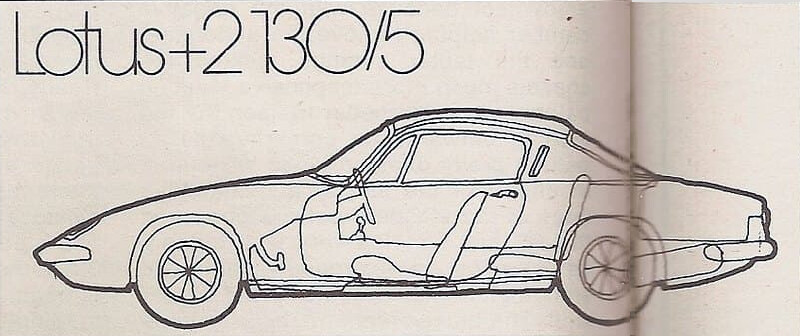
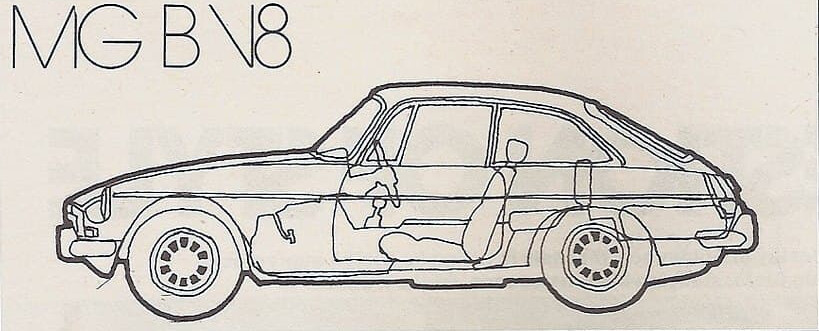
The Capri sits on a 100.8-inch wheelbase, nearly five inches longer than the Lotus’ and nine inches longer than the MGB’s. But in overall length it is the Lotus that is fractionally bigger, but by a mere .2 of an inch. The long tail on the Lotus is what makes the difference. The MGB is a foot shorter than the other two, and it is much narrower as well, spreading slightly less than five feet when the Capri and the Lotus stretch out to five feet six inches. The Capri, of course, is taller than the other two, standing at four ft four against the MG’s four ft two and the Lotus’ three ft 11.
Following the narrowness of its body, the MGB has by far the skinniest track — 49 inches. But it is not the Capri but the Lotus that has the widest track of the others. The Capri’s wheels are only 52 inches apart compared with the Lotus’ fat 55-inch tread at the rear. At the front, the Capri’s track is 53 inches and the Lotus’ 54 inches.
In specification, the MGB and Capri are somewhat similar, running live rear axles located by leaf springs. The MGB is the most conventional, using wishbones, coil springs, an anti-roll bar and ancient lever-arm shockers at the front. At the back it has multi-leaf springs and lever-arm shockers once more. Its steering, like the Capri’s and the Lotus’, is rack and pinion.
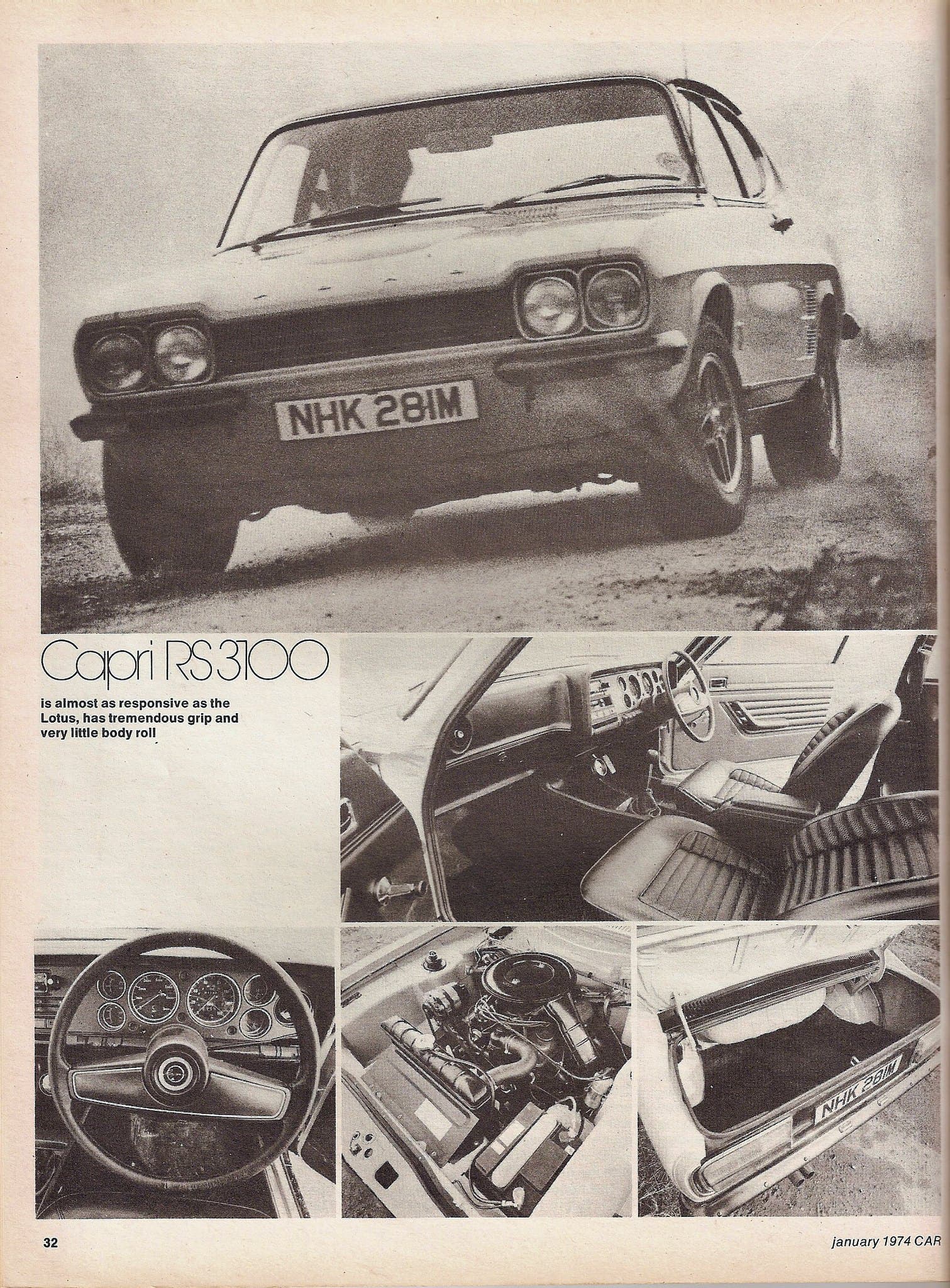
The RS3100, though starting life with only little more sophistication than the MG, ends up with a far more interesting specification thanks to FAVO’s development. To start with, the FAVO engineers dropped the Capri’s suspension by more than an inch and stiffened up the spring rates in the MacPherson struts. Following that, gas/oil shock-absorbers are used in place of the ordinary fluid shockers of the standard Capri GT, and the track control arms are relocated to give a decent nudge of negative camber. Taking it all to the road, there are six-inch wide 13-inch wheels made of alloy and wearing fat radials. At six inches, the Capri’s wheels are fatter than the Lotus’ 5.5 inch (by 13) and the MG’s five inch (by 14) efforts. You notice this “fat look” very much when the car is coming straight at you, or following in the rear-view mirror. It looks very powerful.
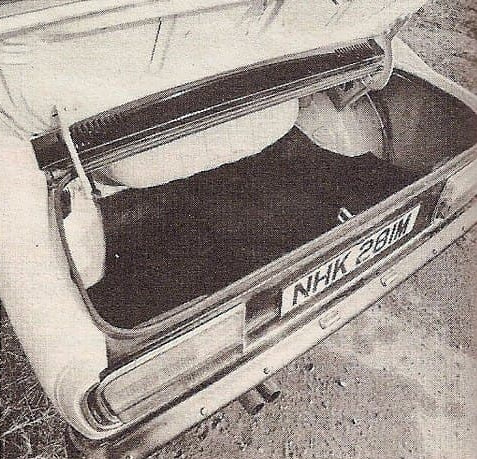
Gas/oil shockers are used at the back in the Capri too. Another difference over the standard Capri is that the springs have been brought down from multi-leaf to single-leaf. Other changes include bigger and ventilated 9.75 inch discs at the front, flared front wheel arches to cover the fat wheels, the air dam under the nose and the spoiler on the boot; front quarter bumpers painted matt black (along with the spoilers, boot lid and air extractor vents) and four halogen lights.
Worthy though the Capri’s well-developed suspension may be, it does not match the fully-independent set-up of the Lotus. It is a glass-fibre reinforced plastic car with a steel backbone chassis with ‘tuning fork’ ends to take the double wishbone and coil-spring front suspension and the MacPherson strut rear end with its wishbones. It embodies all the breeding of a company whose cars have won Grand Prix after Grand Prix. It uses the Big Valve Lotus twin-cam four-cylinder engine which, at 1558cc, is about half the size of the Capri engine and only a third as big as the MG’s V8. Quite intriguing really, that the engines of these three cars are so different in type and size — and a tribute to the Lotus that it more than holds its own with the big brutes it is up against.
From its 1558cc, the Lotus gets 126 bhp at 6500 rpm and 113lb/ft of torque at 5500 rpm. As well as twin cams, the sweet little engine has twin Dellorto twin-choke carburettors and a high compression ratio of 10.3 to one. The power goes through a four- or five-speed gearbox, depending on your choice, to a diff with a ratio of 3.77 that gives 22.4 mph per 1000 rpm in fifth (a true overdrive).
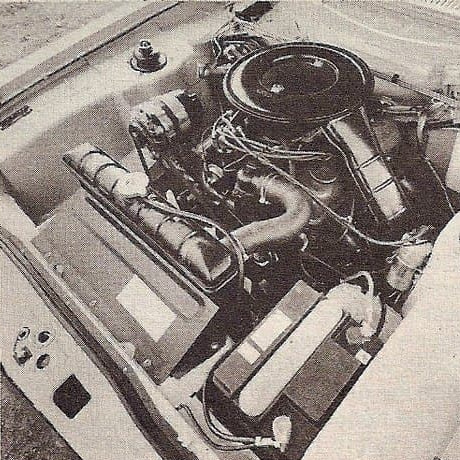
The Capri’s engine is the well-known and thoroughly proven Ford V6, but its capacity is increased thanks to the extra .060 inches in the bores, a slightly higher compression ratio of 9.0 to one and careful hand polishing of the inlet and exhaust ports. The bhp is up by 10 over the standard 3-litre engine, giving 148 bhp (DIN) at 5200 rpm but the same 174lb/ft at 3000 rpm. This more powerful — and much more lively — V6 mates up to the normal Capri four-speed gearbox and drives to the 3.09 to one diff, giving 21.9 mph/1000 rpm in top.
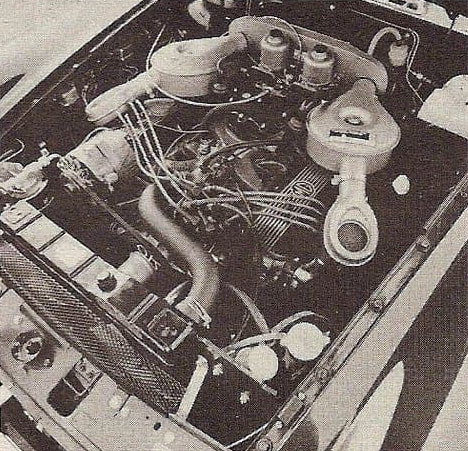
The MGB, of course, has two more cylinders and 400 more ccs than the Capri. Oversquare in its bore/stroke dimensions, like the other two engines, it is fed by twin SU carburettors (the Capri has one twin-choke) and has a low 8.23 to one compression ratio. But for all its size, the V8 isn’t much more powerful than the tiny Lotus engine and at 137 DIN bhp (at 5000 rpm) it is 11 down on the Capri. As recompense, it has bags and bags of torque — 193lb/ft at a mere 2900 rpm. It too, runs a four-speed gearbox developed especially for it from the MGC ratios, but it has electric overdrive on fourth to give a very relaxing 28 mph/1000 rpm. The diff is a leisurely 3.07 to one.
Performance
All the difference in the engine sizes are reduced to nothing when it comes to getting the three cars out on the road. To start with, their power-to-weight ratios work out to be quite similar, with the lightweight Lotus having the best at 15.5 lb/bhp, the Capri next with 16.4 lb/bhp and the MGB trailing with 17.4 lb/bhp.
There is very little between the Lotus and MG in acceleration. Low-down, it is the Lotus that is the faster: it snaps to 60 mph in 7.5 seconds, compared with the B’s 7.7 seconds. However, all that torque of the MG’s tells as it keeps up its pull with sustained strength and once past 80 mph slowly overhauls the Lotus to lead by just two-tenths of a second in the race to 100mph. It seems to depend which MGB V8 you get, but some will wind out to 125mph in overdrive if the conditions are right, thus shading the Lotus by four mph. What happens in this tremendously willing little car is that it revs out to its electric rev-cut out at 6800 rpm and 121mph in fourth, so that you just can’t go any faster. And then you change into fifth, dropping your revs in this overdrive ratio and maintaining your speed but not able to achieve more.
We do not yet know what the Capri RS 3100 will do; but Ford quote a 0 to 60mph time of 7.6 seconds, which just puts it ahead of the MGB and so close to the Lotus that it hardly matters. The quoted top speed is 125mph and from the feel of things there is no reason in the world to disbelieve that. Thus the Capri securely matches the MGB V8 (and the Datsun 240Z, which is rated at 125mph) and outpaces the Lotus.
For a long time now the smoothness and flexibility of the Lotus Big Valve engine has been amazing people. We are no exception; it sets us marvelling each time we re-acquaint ourselves. Starting without the choke even on frozen mornings, it warms quickly and sets about its thoroughbred business without fuss. It pulls smoothly from such low revs that you think of it as being at least 2-litres. You rarely have to make concessions, lugging down quite low in the high gears if you are lazy enough. It doesn’t grumble. So, this delightful little engine doesn’t give away much at all to the V6 and V8 in terms of flexibility although it obviously won’t come right down to the levels that the MG, in particular, will. In the Lotus, the real urge doesn’t start until the tacho needle is around 3000rpm, whereas you get it from a little over 2000rpm in the Capri and just past 1500rpm in the MG. On the other hand, the Lotus engine revs out so willingly that you run right into the cut-out at 6800rpm until you fall into tune with it perfectly after a few miles. It is smooth, but of course not as silky as the multi-cylindered lumps of the others and it is noisier than they are when it revs right out.
The development work that has gone into the RS3100 V6 makes it a lot more pleasant to use than before. Smoother right through its range and decidedly sweeter and more willing at the top end, it offers as much low-down lugging as the MG (in feel as well as performance). Most people would not know that the V6 has two cylinders less than the MG; to all intents and purposes it might as well be a V8 of similar dimensions — the Capri’s lower weight and better power-to-weight ratio allows the engine to get cracking just as strongly as the B’s.
Redlined at 5500rpm, the MGB V8 doesn’t rev out as far as either the V6 or the Lotus; and nor does it need to. We are pleased to say this latest car was stronger and more willing above 4000 rpm than the first one we tested. It felt, in fact, quite potent in the upper range. All three engines are pleasant units that give the driver enjoyment as he uses them. Theoretically (and perhaps in practice too, so far as dyed-in-the-wool enthusiasts are concerned) the Lotus is the most endearing because of its keenness to rev out. The new Ford V6 strikes a compromise — a very happy compromise — between the peppiness of the Lotus four and the cubes and low-down pull of the MG’s V8. There is plenty of each characteristic in this engine to keep buyers from both spheres happy. The development Ford have done on it has not been very extensive, but our early acquaintance with the engine indicates that it has been very good work.
There is little to criticise in the way the gearboxes of the respective cars do their jobs. The five-speed box in the Lotus is effectively the four-speed unit with fifth added in as an overdrive, and placed forward and to the right in the shift pattern so that you use the other four more often than you do fifth. The shift is short and sharp and once you get to understand some occasional baulking quirks it has you can really whip it through, your hand barely moving because the throws are so short. It is nice. The clutch is light and informative and suits the entire drive-train well. In the Capri, the change is the usual excellent Ford shift, light and capable of moving just as quickly as the driver can flick it. The ratios are good enough, letting you use the performance the engine offers well; but in this company the lack of fifth or overdrive means that the V6 is turning a lot harder at 100 or even 120 mph than the Lotus or the MGB.
The MGB’s drive train is extremely smooth, although the shift of the gearstick itself is a little notchy albeit short and direct. It is not as characterful as the Lotus’ and not as effortless as the Capri’s, though it is easier to reach than the Ford’s.
In the years to come it seems certain that the concept of the Lotus — a very light car powered by a small but highly efficient engine — will be more popular, and for one very important reason: fuel consumption. The Lotus is way ahead of the bigger cars here, coming down to an average of better than 25mpg in a variety of conditions. Driven quietly you can keep the figure around 30mpg. Ford say the RS3100 will give you 25.8 mpg overall but that would seem to be very optimistic since the standard car, admittedly less efficient, will not give you anything like that. The MG, overall, will give you 20 mpg although it does it on three-star fuel and therefore saves a few pence.
Tuning Potential
All the things we’ve said before about so many hot-up bits being available for the Ford V6 apply again. Tuning shops willing to work over your 3-litre abound, and there are some excellent conversions all the way up to things like Broadspeed’s turbochargers. But in this case Ford do it for you, and since the car has enough performance already to match anything else in its class it hardly seems worthwhile looking for more.
Same applies to the MGB, but you could simply match Ford’s job on the Capri by polishing and porting the heads and even going on to different manifolding and carburation. Sports-minded Leyland dealers or Leyland special tuning will help you find out how to go about it.
It is all done for you in the Lotus, too. The little engine is taken about as far as it can go while retaining good roadability. There is nothing lacking in its performance right now, but if you do want more Lotus or Ford tuning shops will do it for you.
Spares and Maintenance
It has to be a toss-up between the MGB and the Capri for ease of maintenance. Both are backed by huge dealer organisations (although with the Ford, you really should go through the special Rallye Sport dealers). Capri spares prices weren’t available as we went to press so we can’t tell you which of the two is cheaper. Both need servicing only every 6000 miles and the rates for them are quite normal and therefore not as expensive as one might expect for high-performance cars. Getting spares for either should not be a bother, although it may take a while for the gas/oil shockers in the Capri to reach the dealers’ shelves. The MG, of course, is noted for its ruggedness and reliability and there is little to suggest that the V8 version will give any more trouble than its little brother ever did. The B has a lot going for it in this area. Drive it and forget it, almost. Like the Capri, the MG has a 12-months or 12,000-mile warranty.
The Lotus has only a six-months or 10,000-mile warranty. Servicing comes every 5000 miles, taking 3.5 hours for the 5000 service and five hours every 10,000 miles. A big advantage of owning the Lotus is that its plastic body can’t rust but because of its nature it obviously requires more mechanical maintenance than either the Capri or the MG.
Handling, Steering, Brakes
The Lotus has always been known for its truly superb handling; it is not knocked off its pedestal by either of its two challengers here. If you haven’t driven a Lotus before, it is something of an awakening. You get in, and for a while you are all ham-fisted with it, unused to its instant responsiveness and almost delicate gentility. You have to learn to adjust to its sensitivity in pressing the throttle, moving the gearstick and most especially in turning the wheel and understanding how the chassis responds to your inputs or outputs with the throttle. If you don’t take the time to learn and get in tune with the car you will find it annoying; it is not a car to be degraded and abused by being used in heavy traffic day after day by an unfeeling sod. It will take this treatment, but it will not give of its best and thick-skinned drivers may get sick of having to go to the trouble to drive it properly. As we said, a car of thoroughbred background and purpose.
The handling is neutral; plain and simple. Back off a fraction, turn the wheel a fraction and the nose will whip into the line you want so quickly it is hard to keep up with it for the first few times. The responses are as good as it is possible to get in a front-engined vehicle. It all centres around balance on the throttle, giving you the choice of the slightest understeer if you want to keep a little throttle on as you come into the bend and then oversteer if you tramp hard on the power in a slowish gear as you touch and pass the exit. Or, if you back off sharply as you come into the bend you will go into an oversteer situation and you take over then with a little steering correction and some throttle to hold the car right there on line and still cocked just a little sideways. Beautiful stuff; the stuff the world’s most enjoyable cars are made of. Not surprisingly, the Lotus’ steering is very light with absolutely no slack and just 2.6 turns lock to lock. It is smooth too, and it matches the chassis responsiveness of the car perfectly to make you seek out the longest series of bends you can find for the pleasure of flicking the car through them.
As the only car of the trio with four-wheel discs and the lightest weight as well, the Lotus has the quickest and surest stopping power. The brakes on our car had a touch of sponginess initially, but once the pedal had gone through the first part of its movement they gave you superb feel. The pedal pressure is not high.
We would, of course, have liked many more miles in the Capri. But those we did have indicate that Ford have sorted the suspension as capably as they have developed the engine. The car now sits down on the road better, with far better control of that long nose. Because the whole car is tighter, response is quicker and the car goes into bends with much less understeer than the normal Capri and there is none of that annoying wavering of the front that you get in the standard car either. Placement is very accurate and with little body roll it is easy to keep the car right on line, not possible so often in the standard car. You go around corners very much quicker in this one, and with real enjoyment because with the negative camber helping remove the understeer and the tauter settings making the chassis much more responsive you can balance it all out better to keep the tail inching outwards for cornering that is getting pretty damned close to neutral. In short, all the sloppy and annoying bugs of the standard car are gone and the RS just handles very well indeed. Its steering is extremely light and smooth. It blends with the rest of the car well. The brakes feel fine, but of course we don’t known yet how they hold up under severe strain.
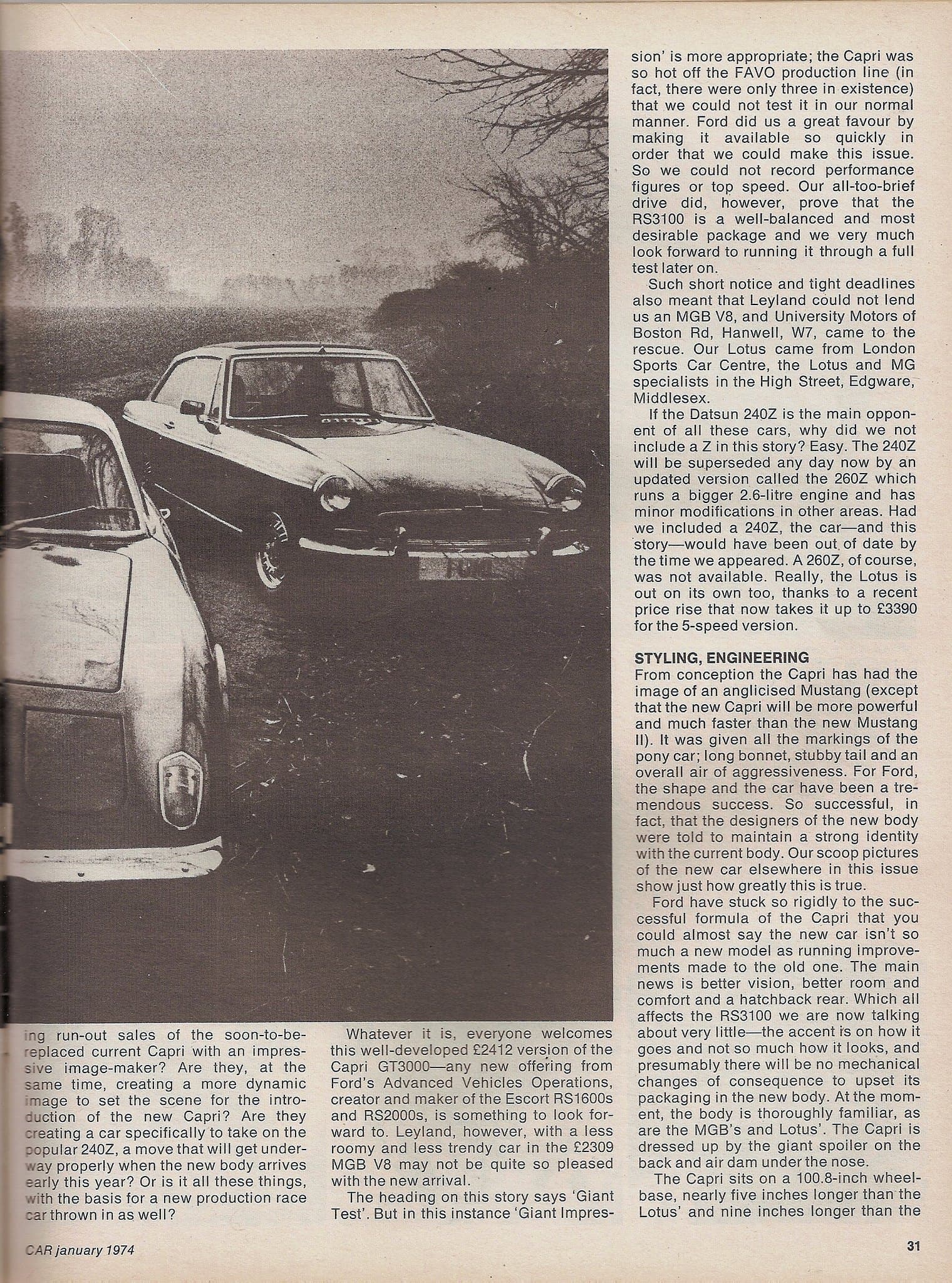
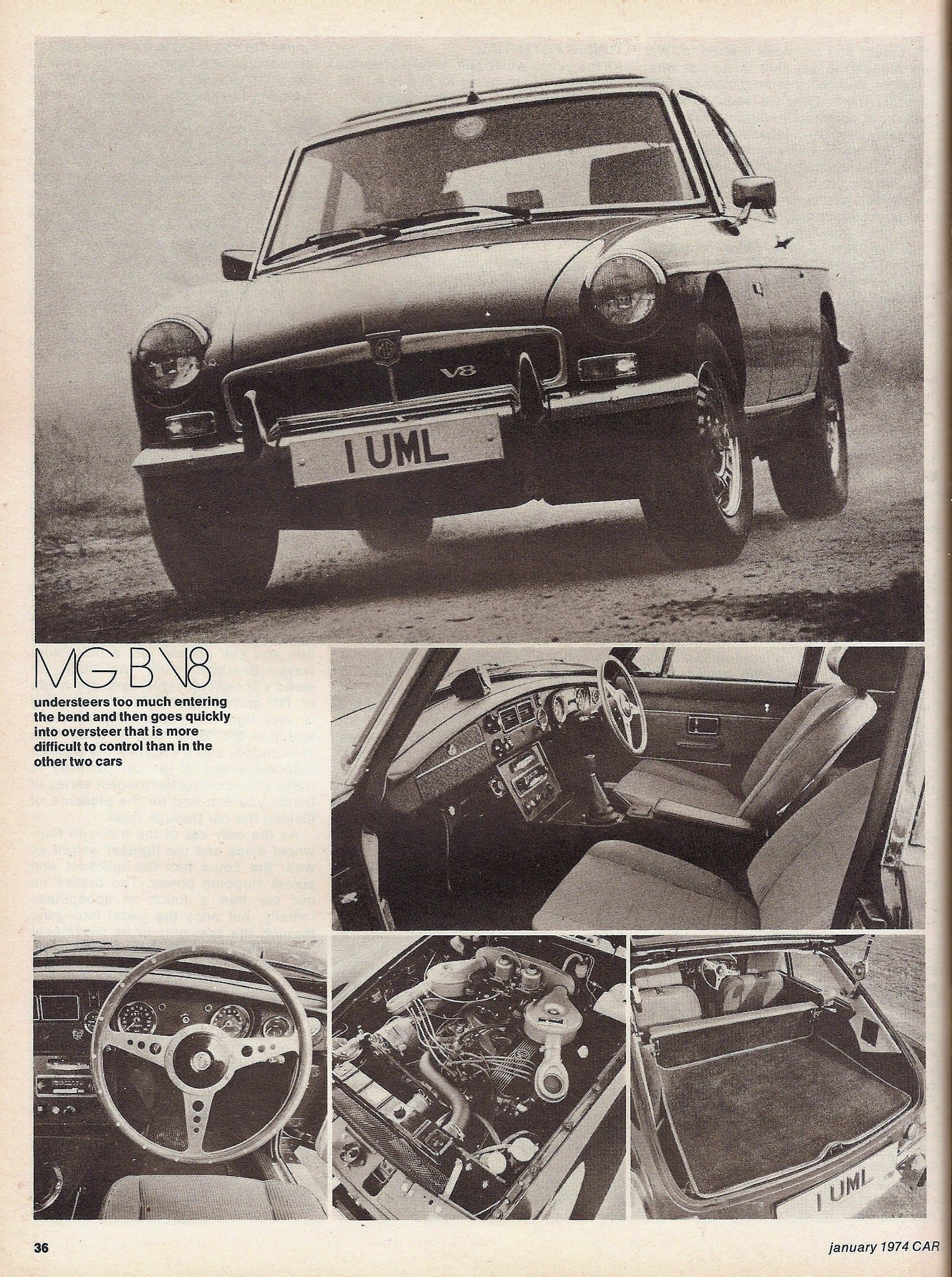
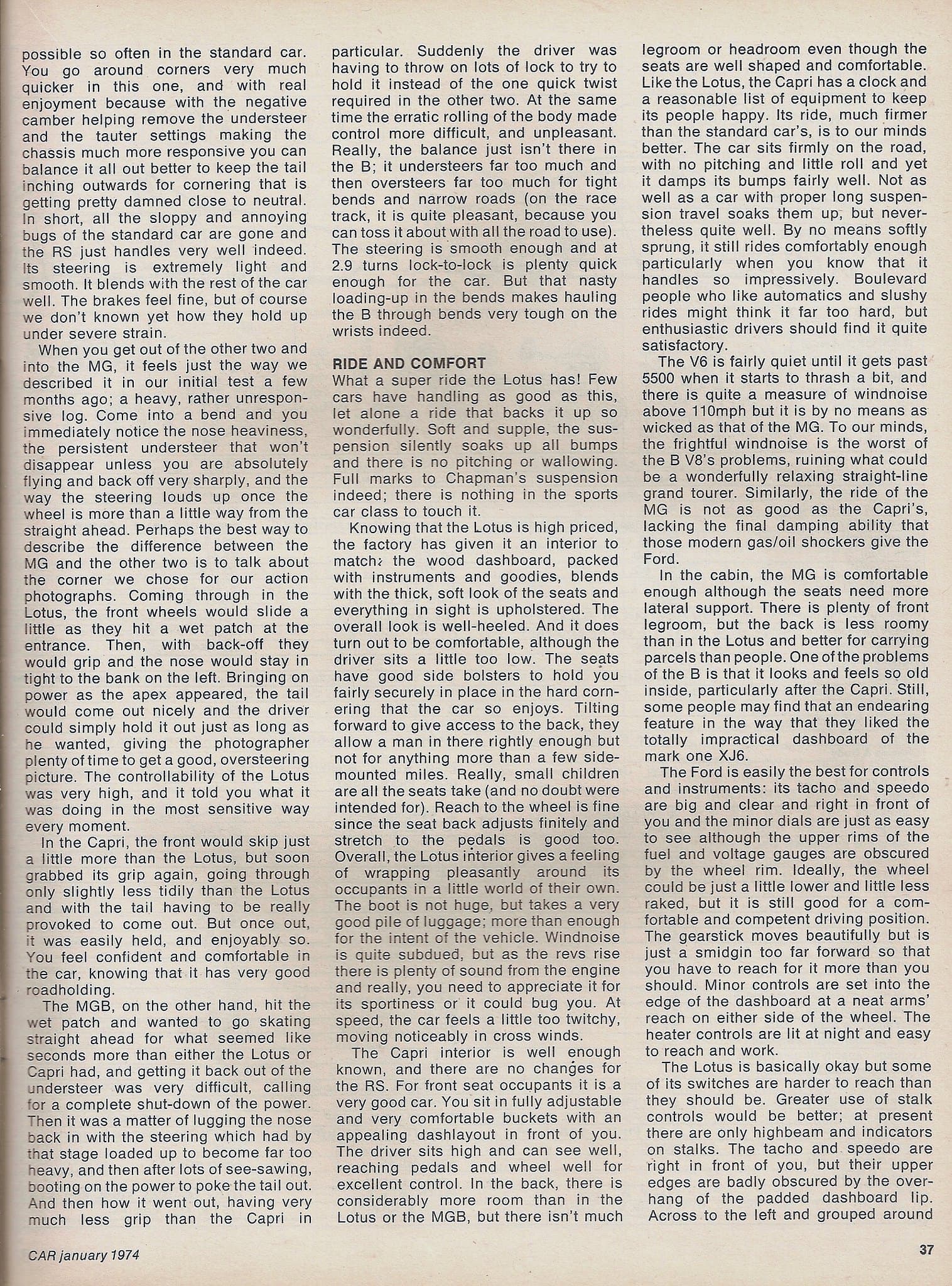
When you get out of the other two and into the MG, it feels just the way we described it in our initial test a few months ago; a heavy, rather unresponsive log. Come into a bend and you immediately notice the nose heaviness, the persistent understeer that won’t disappear unless you are absolutely flying and back off very sharply, and the way the steering loads up once the wheel is more than a little way from the straight ahead. Perhaps the best way to describe the difference between the MG and the other two is to talk about the corner we chose for our action photographs. Coming through in the Lotus, the front wheels would slide a little as they hit a wet patch at the entrance. Then, with back-off they would grip and the nose would stay in tight to the bank on the left. Bringing on power as the apex appeared, the tail would come out nicely and the driver could simply hold it out just as long as he wanted, giving the photographer plenty of time to get a good, oversteering picture. The controllability of the Lotus was very high, and it told you what it was doing in the most sensitive way every moment.
In the Capri, the front would skip just a little more than the Lotus, but soon grabbed its grip again, going through only slightly less tidily than the Lotus and with the tail having to be really provoked to come out. But once out, it was easily held, and enjoyably so. You feel confident and comfortable in the car, knowing that it has very good roadholding.
The MGB, on the other hand, hit the wet patch and wanted to go skating straight ahead for what seemed like seconds more than either the Lotus or Capri had, and getting it back out of the understeer was very difficult, calling for a complete shut-down of the power. Then it was a matter of lugging the nose back in with the steering which had by that stage loaded up to become far too heavy, and then after lots of see-sawing, booting on the power to poke the tail out. And then how it went out, having very much less grip than the Capri in particular. Suddenly the driver was having to throw on lots of lock to try to hold it instead of the one quick twist required in the other two. At the same time the erratic rolling of the body made control more difficult, and unpleasant. Really, the balance just isn’t there in the B; it understeers far too much and then oversteers far too much for tight bends and narrow roads (on the race track, it is quite pleasant, because you can toss it about with all the road to use). The steering is smooth enough and at 2.9 turns lock-to-lock is plenty quick enough for the car. But that nasty loading-up in the bends makes hauling the B through bends very tough on the wrists indeed.
Ride and Comfort
What a super ride the Lotus has! Few cars have handling as good as this, let alone a ride that backs it up so wonderfully. Soft and supple, the suspension silently soaks up all bumps and there is no pitching or wallowing. Full marks to Chapman’s suspension indeed; there is nothing in the sports car class to touch it.
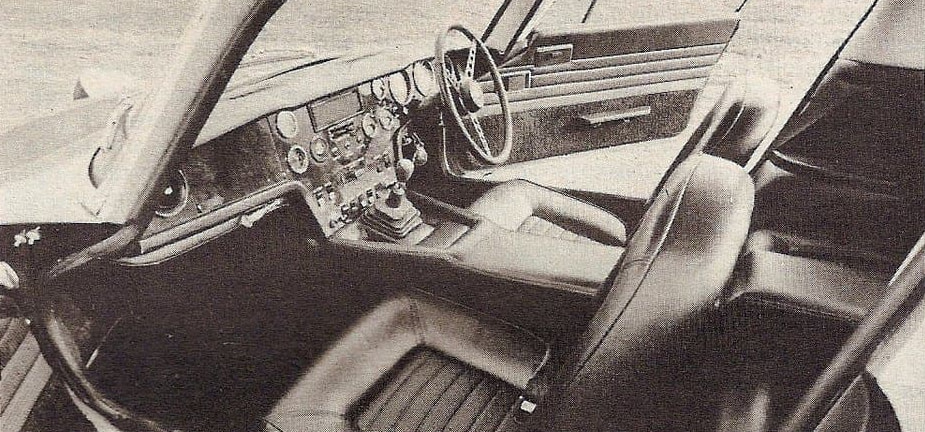
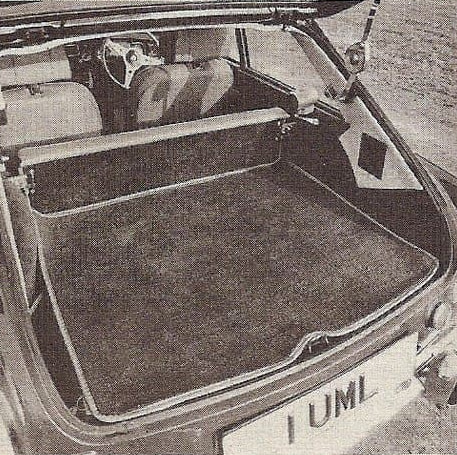
Knowing that the Lotus is high priced, the factory has given it an interior to match; the wood dashboard, packed with instruments and goodies, blends with the thick, soft look of the seats and everything in sight is upholstered. The overall look is well-heeled. And it does turn out to be comfortable, although the driver sits a little too low. The seats have good side bolsters to hold you fairly securely in place in the hard cornering that the car so enjoys. Tilting forward to give access to the back, they allow a man in there rightly enough but not for anything more than a few sidemounted miles. Really, small children are all the seats take (and no doubt were intended for). Reach to the wheel is fine since the seat back adjusts finitely and stretch to the pedals is good too. Overall, the Lotus interior gives a feeling of wrapping pleasantly around its occupants in a little world of their own. The boot is not huge, but takes a very good pile of luggage; more than enough for the intent of the vehicle. Windnoise is quite subdued, but as the revs rise there is plenty of sound from the engine and really, you need to appreciate it for its sportiness or it could bug you. At speed, the car feels a little too twitchy, moving noticeably in cross winds.
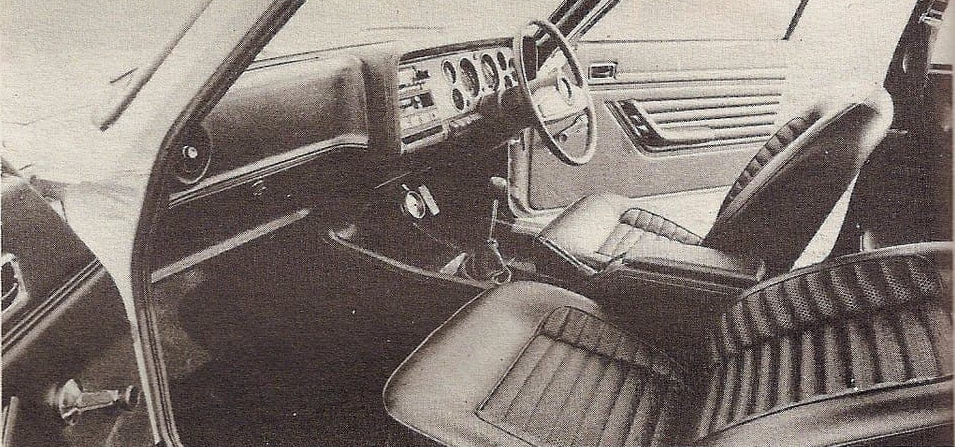
The Capri interior is well enough known, and there are no changes for the RS. For front seat occupants it is a very good car. You sit in fully adjustable and very comfortable buckets with an appealing dashlayout in front of you. The driver sits high and can see well, reaching pedals and wheel well for excellent control. In the back, there is considerably more room than in the Lotus or the MGB, but there isn’t much legroom or headroom even though the seats are well shaped and comfortable. Like the Lotus, the Capri has a clock and a reasonable list of equipment to keep its people happy. Its ride, much firmer than the standard car’s, is to our minds better. The car sits firmly on the road, with no pitching and little roll and yet it damps its bumps fairly well. Not as well as a car with proper long suspension travel soaks them up, but nevertheless quite well. By no means softly sprung, it still rides comfortably enough particularly when you know that it handles so impressively. Boulevard people who like automatics and slushy rides might think it far too hard, but enthusiastic drivers should find it quite satisfactory.
The V6 is fairly quiet until it gets past 5500 when it starts to thrash a bit, and there is quite a measure of windnoise above 110mph but it is by no means as wicked as that of the MG. To our minds, the frightful windnoise is the worst of the B V8’s problems, ruining what could be a wonderfully relaxing straight-line grand tourer. Similarly, the ride of the MG is not as good as the Capri’s, lacking the final damping ability that those modern gas/oil shockers give the Ford.
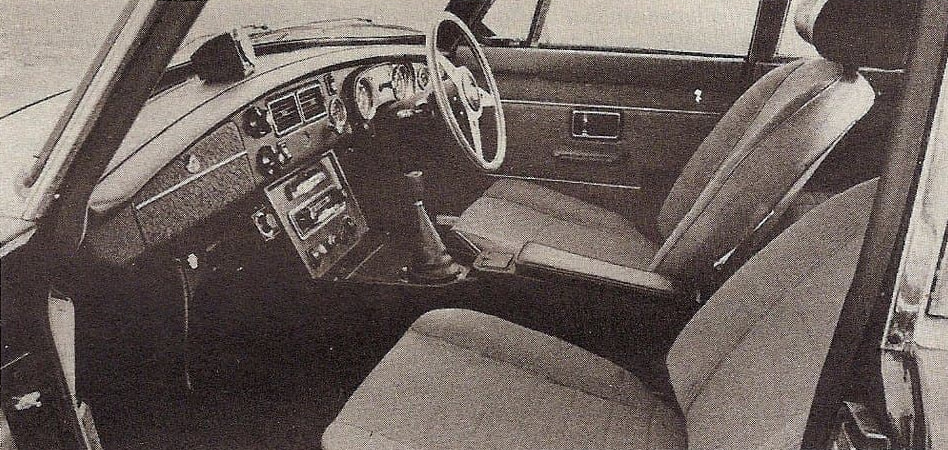
In the cabin, the MG is comfortable enough although the seats need more lateral support. There is plenty of front legroom, but the back is less roomy than in the Lotus and better for carrying parcels than people. One of the problems of the B is that it looks and feels so old inside, particularly after the Capri. Still, some people may find that an endearing feature in the way that they liked the totally impractical dashboard of the mark one XJ6.
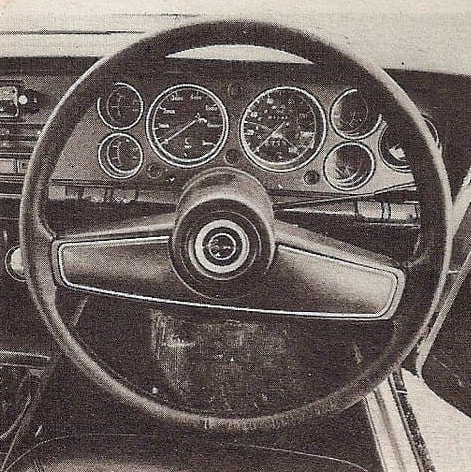
The Ford is easily the best for controls and instruments: its tacho and speedo are big and clear and right in front of you and the minor dials are just as easy to see although the upper rims of the fuel and voltage gauges are obscured by the wheel rim. Ideally, the wheel could be just a little lower and little less raked, but it is still good for a comfortable and competent driving position. The gearstick moves beautifully but is just a smidgin too far forward so that you have to reach for it more than you should. Minor controls are set into the edge of the dashboard at a neat arms’ reach on either side of the wheel. The heater controls are lit at night and easy to reach and work.
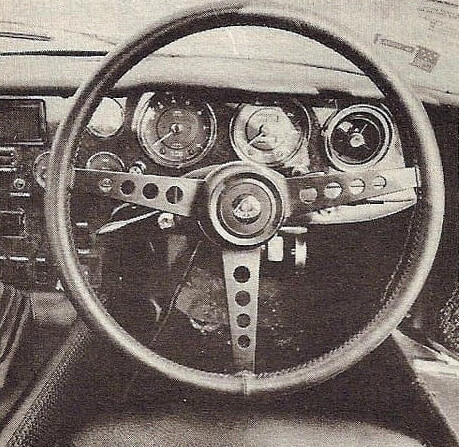
The Lotus is basically okay but some of its switches are harder to reach than they should be. Greater use of stalk controls would be better; at present there are only highbeam and indicators on stalks. The tacho and speedo are right in front of you, but their upper edges are badly obscured by the overhang of the padded dashboard lip. Across to the left and grouped around the radio position are six small dials that even run to an ambient temperature gauge. Under them come warning lights for the choke, handbrake, heated rear window and low fuel. And under them are the row of tumbler switches that are confusing at night because you can’t see their markings. Easier to find and use is the lights on/off switch, which you twist for parkers and then pull to bring up the retractable headlight and turn them on. Its just a matter of learning to know where they all are, although you can never really reach them quickly (the switches for the electric window are in among them).
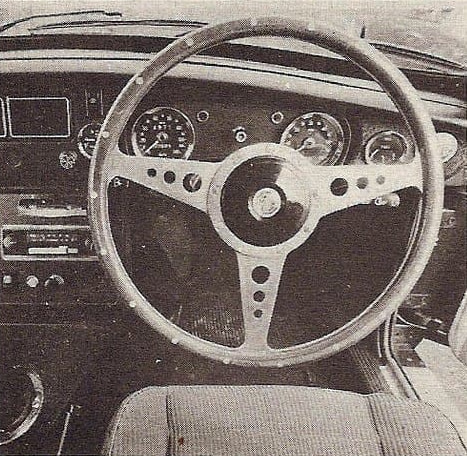
The MGB makes better use of stalk controls, having its washers and wipers on there as well as its overdrive switch (you pull it towards you to engage O/D). The rest of the minor controls are a mixture of pull out switches and tumblers. The speedo and tacho look old, and rather too small after the Capri, although they don’t reflect at all. The driving position in general is good with the pedals and gearshift easy to reach after you’ve found the position you want in relation to the wheel (which is too big). Worst part of the control layout is the frightfully old-fashioned arrangement of the heater and ventilation controls.
Conclusions
Really, once you’ve driven all three cars the poor old MG has nowhere near the appeal of the other two. Its main attributes are its very good performance and big, lazy and smooth engine, its strong construction and good finish, its taken-for-granted reliability and the MG name itself. No mean set of virtues really; but the driver appeal simply isn’t there to back it all up.
In one quick bound, Ford has leaped deftly over the top of the MGB V8, giving us a car with well-balanced and properly developed handling and roadholding. A predictable thing to say, but it is perhaps the car that the MGB V8 should be. Naturally, the Capri is in a lower league than the Lotus in overall handling and ride; it doesn’t have that inbred temperament that stands a car like the Lotus above most others. But then Lotus costs so very much more than either the Capri or the MG — more than £1000 more than the B. At this price it will only be the very well-heeled enthusiast or businessman indeed who can afford to own it.
And back in the market where we started out, that leaves the Capri as the value for the money. If, in the under £3000 category, Britain was looking for a challenger to the 240Z, Ford has just provided it, and with more than £200 left over as well. Some people may not like the garish sporters, but for others they will be all the more reason to buy it.
Capri RS3100
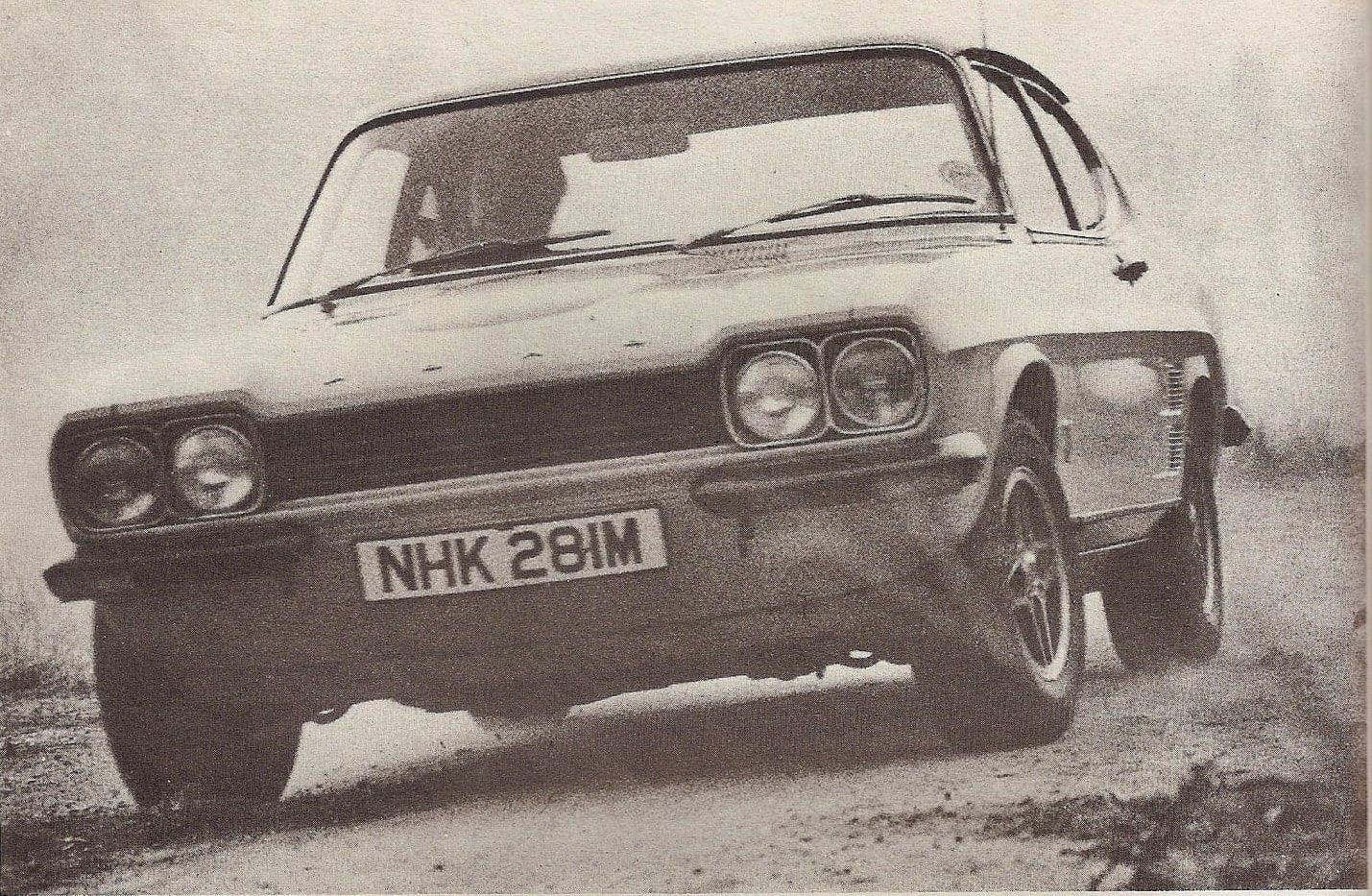
Capri RS3100 is almost as responsive as the Lotus, has tremendous grip and very little body roll
Lotus +2 130/5
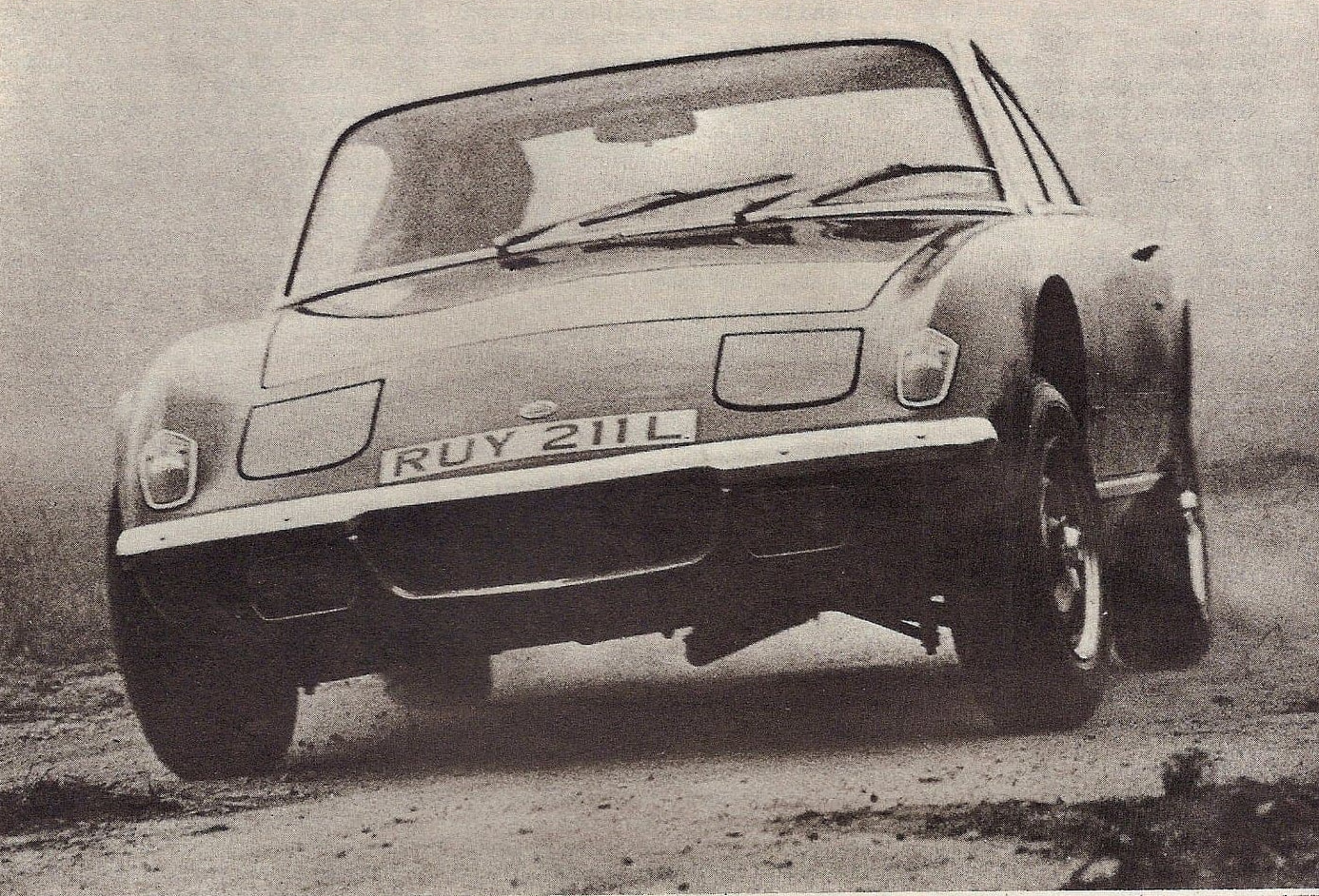
Lotus +2 130/5 understeers very little and then goes into oversteer at the driver’s command. Responses are superb

MGB V8
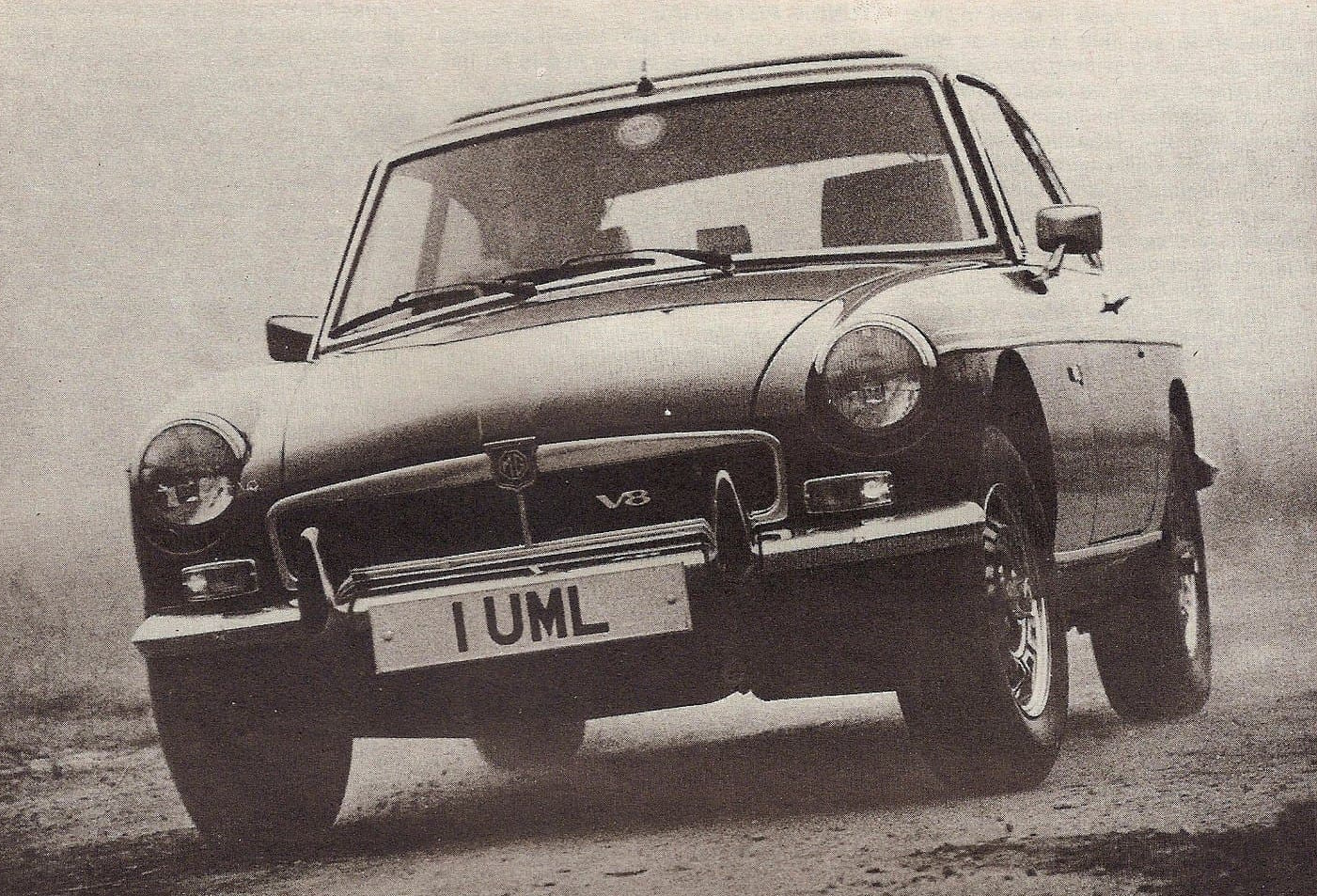
MGB V8 understeers too much entering the bend and then goes quickly into oversteer that is more difficult to control than in the other two cars
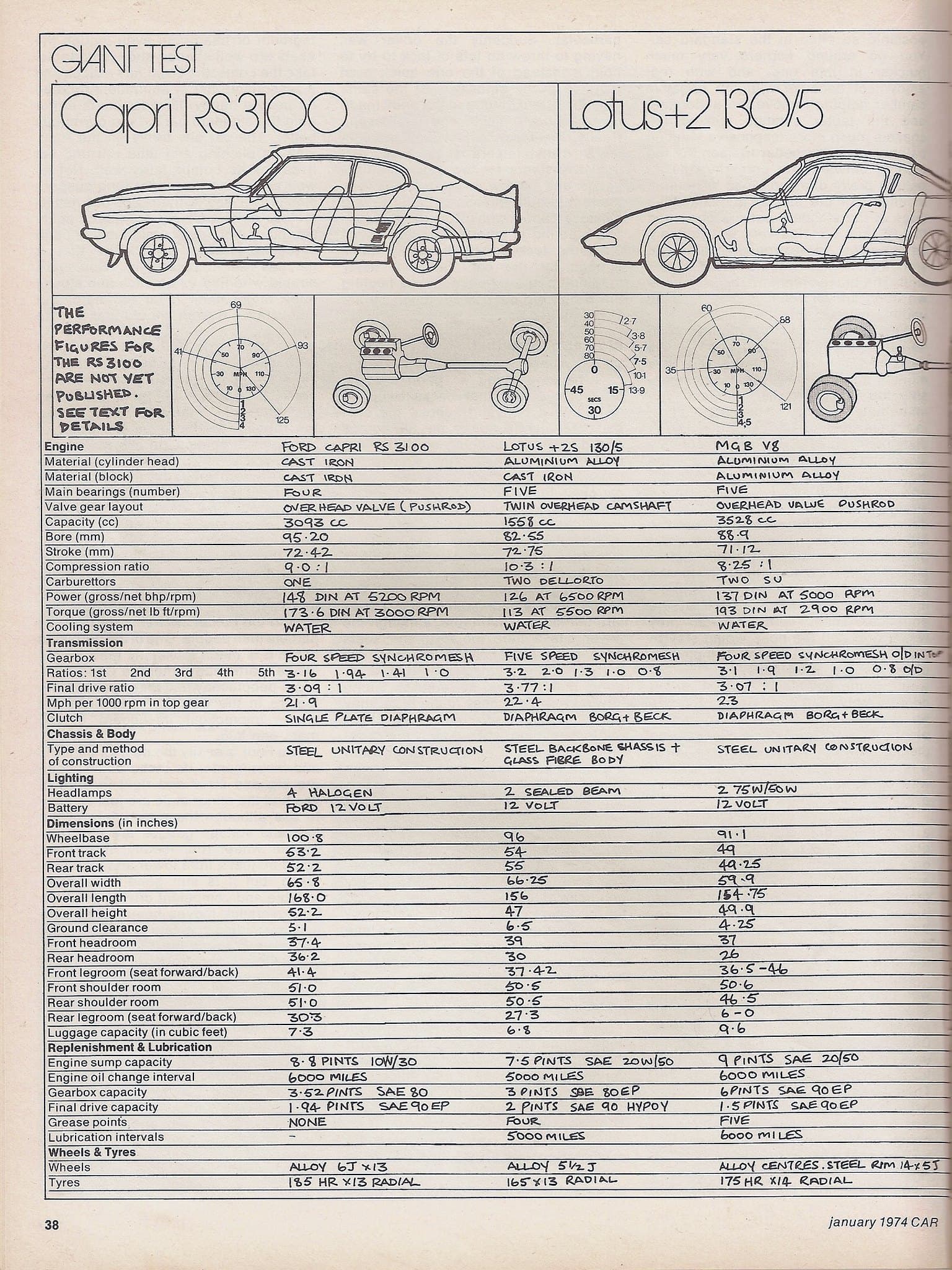
Giant Test — Specifications
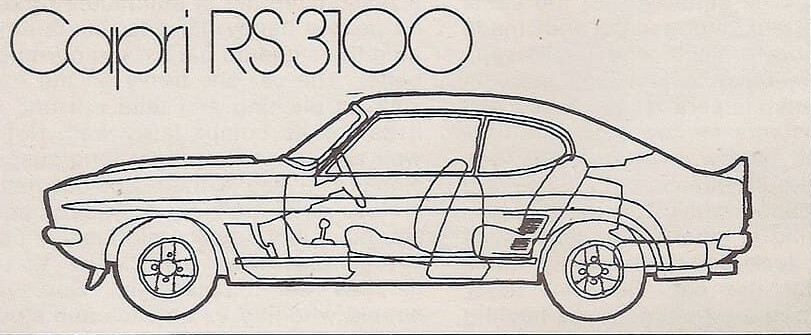
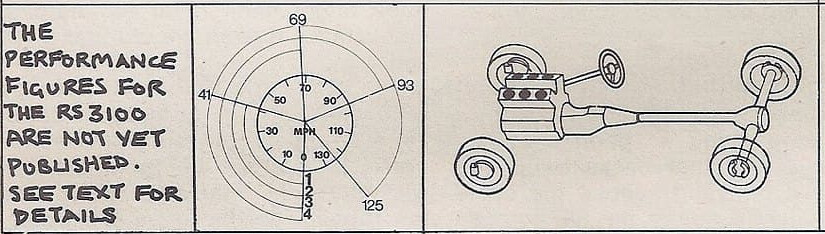
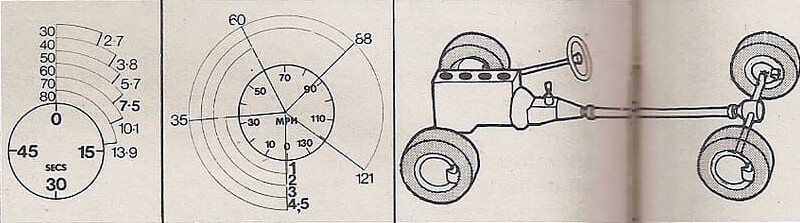
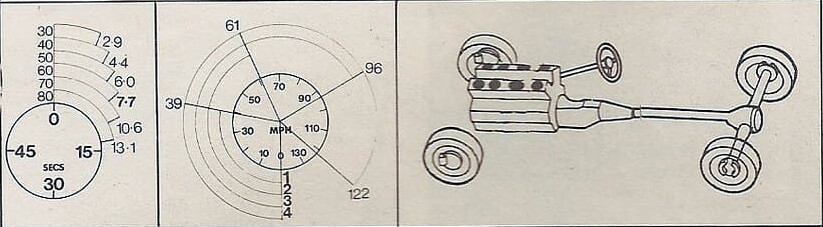
Performance figures for the RS3100 were not yet published at time of print; see text for details. The RS3100 performance diagram area on the specification page is replaced by a note to this effect.
| Ford Capri RS3100 | Lotus +2S 130/5 | MGB V8 | |
|---|---|---|---|
| Engine | |||
| Material (cylinder head) | Cast iron | Aluminium alloy | Aluminium alloy |
| Material (block) | Cast iron | Cast iron | Aluminium alloy |
| Main bearings (number) | Four | Five | Five |
| Valve gear layout | Overhead valve (pushrod) | Twin overhead camshaft | Overhead valve pushrod |
| Capacity (cc) | 3093 cc | 1558 cc | 3528 cc |
| Bore (mm) | 95.20 | 82.55 | 88.9 |
| Stroke (mm) | 72.42 | 72.75 | 71.12 |
| Compression ratio | 9.0 : 1 | 10.3 : 1 | 8.25 : 1 |
| Carburettors | One | Two Dellorto | Two SU |
| Power (gross/net bhp/rpm) | 148 DIN at 5200 rpm | 126 at 6500 rpm | 137 DIN at 5000 rpm |
| Torque (gross/net lb ft/rpm) | 173.6 DIN at 3000 rpm | 113 at 5500 rpm | 193 DIN at 2900 rpm |
| Cooling system | Water | Water | Water |
| Transmission | |||
| Gearbox | Four speed synchromesh | Five speed synchromesh | Four speed synchromesh O/D int. |
| Ratios: 1st | 3.16 | 3.2 | 3.1 |
| 2nd | 1.94 | 2.0 | 1.9 |
| 3rd | 1.41 | 1.3 | 1.2 |
| 4th | 1.0 | 1.0 | 1.0 |
| 5th | — | 0.8 | 0.8 O/D |
| Final drive ratio | 3.09 : 1 | 3.77 : 1 | 3.07 : 1 |
| Mph per 1000 rpm in top gear | 21.9 | 22.4 | 23 |
| Clutch | Single plate diaphragm | Diaphragm Borg+Beck | Diaphragm Borg+Beck |
| Chassis & Body | |||
| Type and method of construction | Steel unitary construction | Steel backbone chassis + glass fibre body | Steel unitary construction |
| Lighting | |||
| Headlamps | 4 halogen | 2 sealed beam | 2 75W/60W |
| Battery | Ford 12 volt | 12 volt | 12 volt |
| Dimensions (in inches) | |||
| Wheelbase | 100.8 | 96 | 91.1 |
| Front track | 53.2 | 54 | 49 |
| Rear track | 52.2 | 55 | 49.25 |
| Overall width | 65.8 | 66.25 | 59.9 |
| Overall length | 168.0 | 156 | 154.75 |
| Overall height | 52.2 | 47 | 49.9 |
| Ground clearance | 5.1 | 6.5 | 4.25 |
| Front headroom | 37.4 | 39 | 37 |
| Rear headroom | 36.2 | 30 | 26 |
| Front legroom (seat forward/back) | 41.4 | 37–42 | 36.5–46 |
| Front shoulder room | 51.0 | 50.5 | 50.6 |
| Rear shoulder room | 51.0 | 50.5 | 46.5 |
| Rear legroom (seat forward/back) | 30.3 | 27.3 | 6–0 |
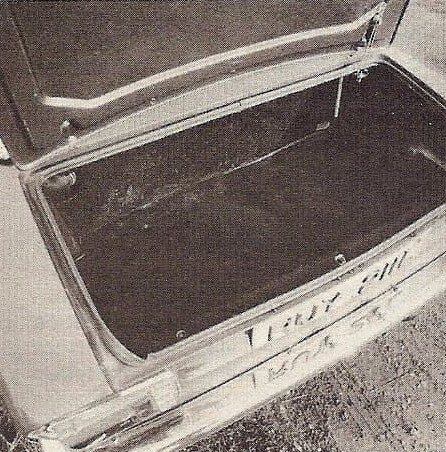
| Luggage capacity (in cubic feet) | 7.3 | 6.8 | 9.6 |
| Replenishment & Lubrication | |||
| Engine sump capacity | 8.8 pints 10W/30 | 7.5 pints SAE 20W/50 | 9 pints SAE 20/50 |
| Engine oil change interval | 6000 miles | 5000 miles | 6000 miles |
| Gearbox capacity | 3.52 pints SAE 80 | 3 pints SAE 80EP | 6 pints SAE 90EP |
| Final drive capacity | 1.94 pints SAE 90EP | 2 pints SAE 90 Hypoy | 1.5 pints SAE 90EP |
| Grease points | None | Four | Five |
| Lubrication intervals | — | 5000 miles | 6000 miles |
| Wheels & Tyres | |||
| Wheels | Alloy 6J × 13 | Alloy 5½ J | Alloy centres, steel rim 14 × 5J |
| Tyres | 185 HR × 13 radial | 165 × 13 radial | 175 HR × 14 radial |
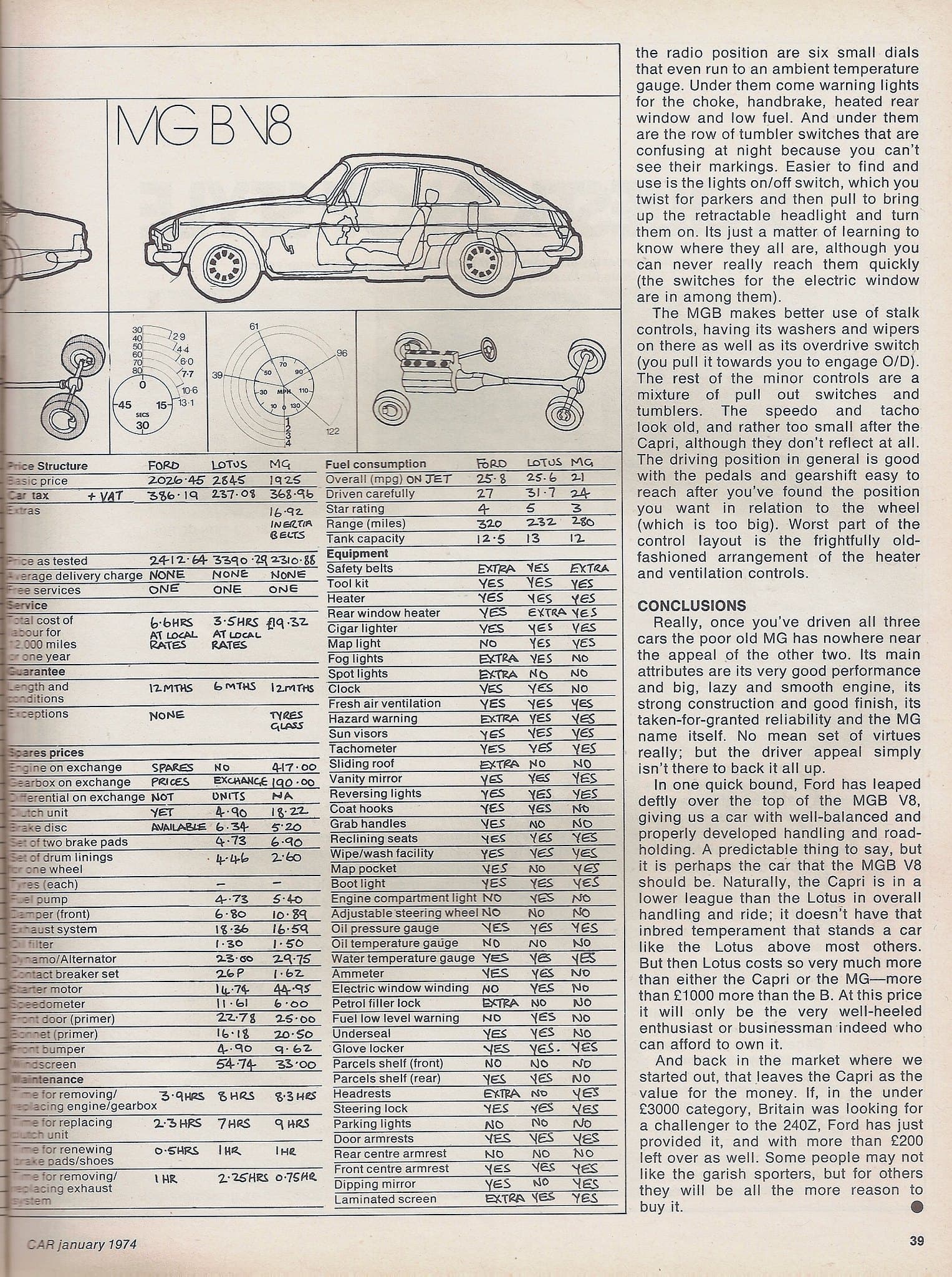
Price Structure & Equipment
| Ford | Lotus | MG | |
|---|---|---|---|
| Basic price | £2026.45 | £2845 | £1925 |
| Car tax + VAT | £386.19 | £237.08 | £368.96 |
| Extras | — | — | £16.92 inertia belts |
| Price as tested | £2412.64 | £3390.29 | £2310.88 |
| Average delivery charge | None | None | None |
| Free services | One | One | One |
| Service | Ford | Lotus | MG |
|---|---|---|---|
| Total cost of labour for 12,000 miles or one year | 6.6 hrs at local rates | 3.5 hrs at local rates | £19.32 |
| Guarantee — Length and conditions | 12 mths | 6 mths | 12 mths |
| Exceptions | None | — | Tyres, glass |
| Fuel Consumption | Ford | Lotus | MG |
|---|---|---|---|
| Overall (mpg) on JET | 25.8 | 25.6 | 21 |
| Driven carefully | 27 | 31.7 | 24 |
| Star rating | 4 | 5 | 3 |
| Range (miles) | 320 | 232 | 280 |
| Tank capacity | 12.5 | 13 | 12 |
| Spares Prices | Ford | Lotus | MG |
|---|---|---|---|
| Engine on exchange | Spares prices exchange units | No | £417.00 |
| Gearbox on exchange | — | — | £190.00 |
| Differential on exchange | Not yet available | N/A | N/A |
| Clutch unit | — | £4.90 | £18.22 |
| Brake disc | — | £6.34 | £5.20 |
| Set of two brake pads | — | £4.73 | £6.90 |
| Set of drum linings for one wheel | — | £4.46 | £2.60 |
| Tyres (each) | — | — | — |
| Fuel pump | — | £4.73 | £5.40 |
| Damper (front) | — | £6.80 | £10.89 |
| Exhaust system | — | £18.36 | £16.59 |
| Oil filter | — | £1.30 | £1.50 |
| Dynamo/Alternator | — | £23.00 | £29.75 |
| Contact breaker set | — | 26p | £1.62 |
| Starter motor | — | £14.74 | £44.95 |
| Speedometer | — | £11.61 | £6.00 |
| Front door (primer) | — | £22.78 | £25.00 |
| Bonnet (primer) | — | £16.18 | £20.50 |
| Front bumper | — | £4.90 | £9.62 |
| Windscreen | — | £54.74 | £33.00 |
| Maintenance | Ford | Lotus | MG |
|---|---|---|---|
| Time for removing/replacing engine/gearbox | 3.9 hrs | 8 hrs | 8.3 hrs |
| Time for replacing clutch unit | 2.3 hrs | 7 hrs | 9 hrs |
| Time for renewing brake pads/shoes | 0.5 hrs | 1 hr | 1 hr |
| Time for removing/replacing exhaust system | 1 hr | 2.25 hrs | 0.75 hr |
| Equipment | Ford | Lotus | MG |
|---|---|---|---|
| Safety belts | Extra | Yes | Extra |
| Tool kit | Yes | Yes | Yes |
| Heater | Yes | Yes | Yes |
| Rear window heater | Yes | Extra | Yes |
| Cigar lighter | Yes | Yes | Yes |
| Map light | No | Yes | Yes |
| Fog lights | Extra | Yes | No |
| Spot lights | Extra | No | No |
| Clock | Yes | Yes | No |
| Fresh air ventilation | Yes | Yes | Yes |
| Hazard warning | Extra | Yes | Yes |
| Sun visors | Yes | Yes | Yes |
| Tachometer | Yes | Yes | Yes |
| Sliding roof | Extra | No | No |
| Vanity mirror | Yes | Yes | Yes |
| Reversing lights | Yes | Yes | Yes |
| Coat hooks | Yes | Yes | No |
| Grab handles | Yes | No | No |
| Reclining seats | Yes | Yes | Yes |
| Wipe/wash facility | Yes | Yes | Yes |
| Map pocket | Yes | No | Yes |
| Boot light | Yes | Yes | Yes |
| Engine compartment light | No | Yes | No |
| Adjustable steering wheel | No | No | No |
| Oil pressure gauge | Yes | Yes | Yes |
| Oil temperature gauge | No | Yes | No |
| Water temperature gauge | Yes | Yes | Yes |
| Ammeter | Yes | Yes | No |
| Electric window winding | No | Yes | No |
| Petrol filler lock | Extra | No | No |
| Fuel low level warning | No | Yes | No |
| Underseal | Yes | Yes | No |
| Glove locker | Yes | Yes. | Yes |
| Parcels shelf (front) | No | No | No |
| Parcels shelf (rear) | Yes | No | No |
| Headrests | Extra | No | Yes |
| Steering lock | Yes | Yes | Yes |
| Parking lights | No | No | No |
| Door armrests | Yes | Yes | Yes |
| Rear centre armrest | No | No | No |
| Front centre armrest | No | Yes | Yes |
| Dipping mirror | Yes | No | Yes |
| Laminated screen | Extra | Yes | Yes |