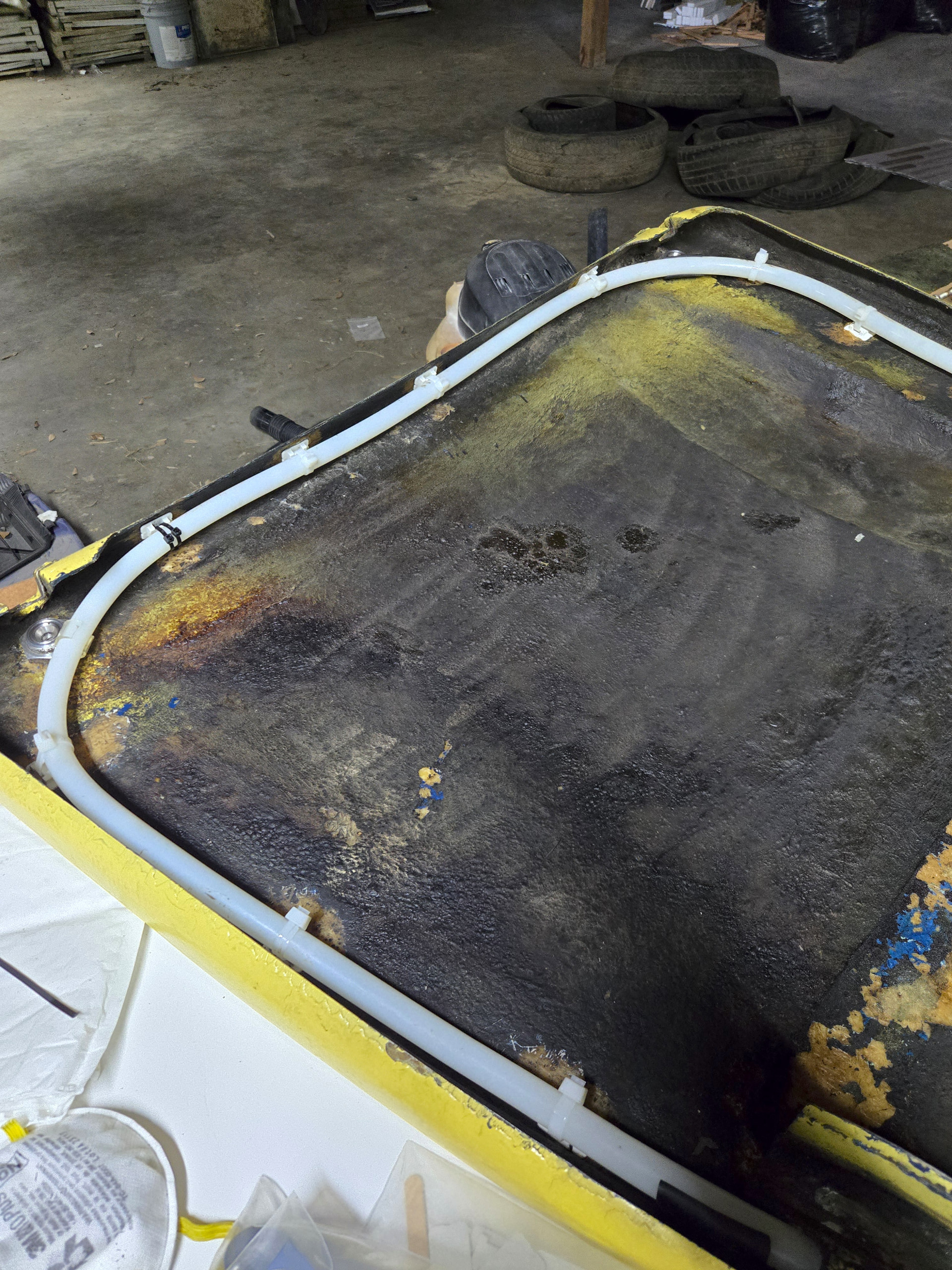
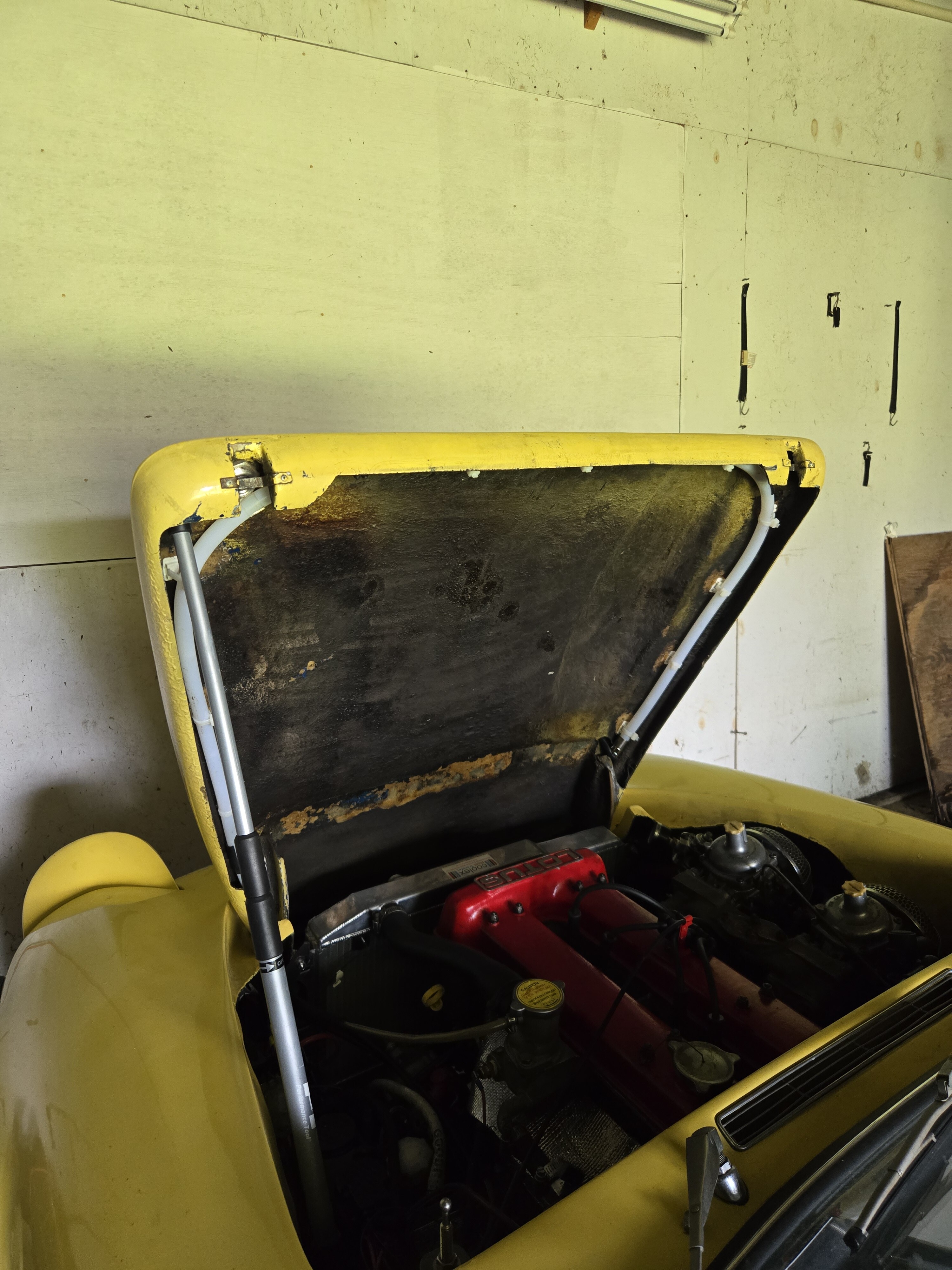
I have been thinking about a better way to do fire suppression. I was already carrying a traditional fire extinguisher, so thinking what could I do next. Two items got my attention. The small Element fire extinguisher and then these tube fire suppression for under the hood. Something a lot of the air cooled VW folks use. There are two main players. BlazeCut and FireSlayer. I went with the 6’ Fireslayer. Next was to figure out how to attach it to the underside of the hood. I used some fiberglass boat products to epoxy zip tie attachments under the hood. So far so good. Hopefully this is a product I never have to use but if it buys me a few seconds to save the car then all the better. I am also going to mount a few Element fire extinguishers around the car. Right now I have one in the trunk. Pics attached.
Thank you for sharing. It looks like an interesting product. Especially as I recently suffered an engine bay fire.
From a quick search online it looks to have a 3-5 year shelf life so might be worth marking it in such a way to remind you to replace it at a later date.
And although it gives peace of mind as a backup I would definitely still want to carry a fire extinguisher with the car. The video on this page shows it is very effective but took a lot longer to activate than I would expect even with quite an intense fire:
The Fire Safety Stick seems have a good self life, 10-15 years
A few of my car enthusiast friends keep these.
( note to self)
At the minute I carry a small powder extinguisher
Jason
I carry a couple of those Fire Safety Sticks also, I just didn't put them in the pictures. I bought them under the Element brand name. Apparently they are the same thing, just different brand names. I have one in the trunk and one behind the seats. The nice thing about the sticks is I can move those car to car, for my other classics, and they are easy to mount.
FEROSTICKER?
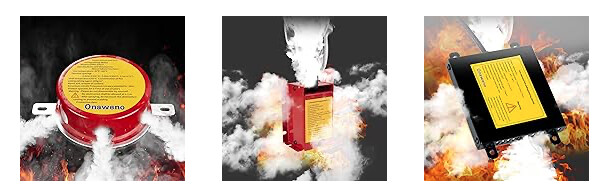
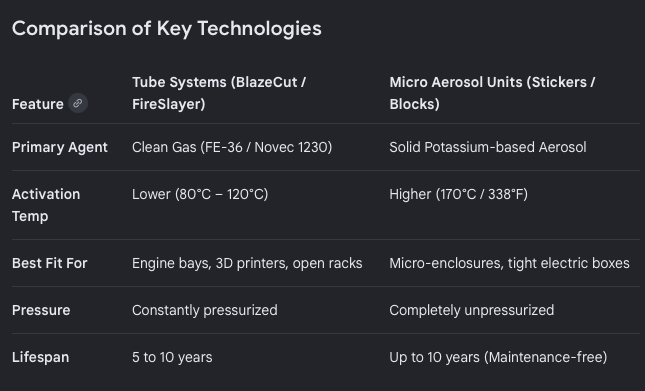
BlazeCut is a “one-and-done” system that can struggle against high moving airflow on the road, so supplement it with a **2.5 lb H3R HalGuard Halotron?
edit: I wonder if the clutch slave hose and fuel line under the carbs could have a separate system…
That is a neat product. Thank you for sharing. After seeing a few Elan’s burned to the ground, I have become extra diligent.
maybe off a bit here again, so sorry
I get to thinking, that airflow for suppressant is also good for cabin (cockpit) air-quality.
To pull hot air out of your engine bay and redirect it toward the front, you must manage aerodynamic pressure differentials. Air naturally moves from high-pressure zones to low-pressure zones. [1]
1. Harness Airflow Direction
- The Problem: The natural airflow of a moving vehicle usually pushes air into the engine bay from the front grille, which creates a high-pressure zone and traps heat inside the engine compartment. [1, 2, 3, 4, 5]
- The Solution: To reverse or direct air out the front, you must create an aerodynamic low-pressure zone at the front of the hood or bumper so that air is actively sucked out. [1, 2]
2. Physical Modifications for Heat Extraction
- Vents and Louvers: Install hood vents, louvers, or extractors just behind the leading edge of the hood. This area acts as a natural low-pressure zone, which will pull hot air out of the engine bay while the car is in motion. [1, 2]
- Gurney Flaps: Attach gurney flaps (small raised lips) directly in front of your hood vents to disrupt high-pressure air and amplify the vacuum effect that pulls the hot air out. [1]
- Front Spoilers/Air Dams: A front splitter or spoiler will force air downward, creating a low-pressure area under the car that helps draw hot under-hood air out and down. [1]
3. Managing Airflow Traps
- Avoid Hood Spacers: While some modify their cars by lifting the rear of the hood, this generally introduces high-pressure air from the windshield into the engine bay, fighting your cooling goals and sometimes causing air to flow the wrong way. [1, 2]
- Seal the Engine Bay: Ensure that air only enters the engine bay through the radiators or designated air ducts. Using seals around your heat exchangers forces all the air to travel in the exact direction you want. [1, 2]
To get the most efficient cooling, it helps to understand how to optimize the placement and efficiency of your heat exchangers: [1]
For tips on how to efficiently pull heat from heat exchangers and manage under-hood pressure:
Those ferosticker units look good
Might help
The fitting you need is called a 1/4 inch compression to 8mm hose. Often referred to as a Fulham LPG fitting.
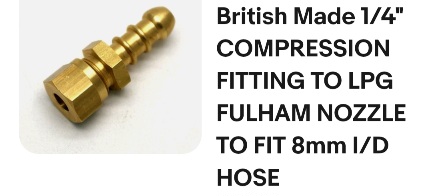
Tony
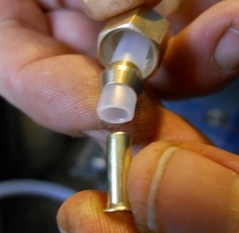
That may be, but I think there is a feral inside the compression which is missing.
Or a sleeve inside for compression
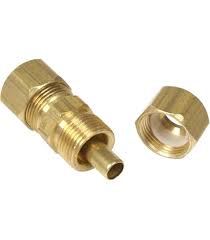
This seems to be the most correct.
But also as others have posted, Updating the fuel line might be the correct way to go. I have bought stainless steel line to go for tank to engine. I’ve also bought nylon. I don’t know what I’m gonna do yet…
One thing I have done, in the prevention realm, is to safety wire the bolts that connect the fuel banjos to the inlet ports on my Weber carbs. I was always concerned they might vibrate loose and dumpfule on the distributor.
I fought an engine fire on my 912 with those fire sticks. Went through four of them and then two dry powder extinguishers. I wasn’t able to put the fire out until I disconnected the battery. The fire melted the positive cable and kept re-igniting the fire. Just turning off the key isn’t enough.
Install a battery disconnect switch first if you don’t already have one.
I believe I could’ve had that fire whipped in a minute if I had a battery disconnect switch.
This happened to me. The front banjo bolt fell out, fuel everywhere. Fortunately the fuel didn’t ignite. Pre-drilled banjo bolts are available.
Most fire extinguishers are too small. For motorsport in the UK, a system with at least 2kg of extinguishant is required. That’s a decent size bottle as you need space for propellant as well.
To be fair, that is to extinguish a fire with a potentially trapped and incapacitated driver, but the little hand held extinguishers (while better than nothing) aren’t going to cope with much more than a carb fire.
Andy,
Thanks for that information. I did not know about the predrilled bolts. I had drilled mine on my drill press. Who was the supplier for the predrilled bolts?
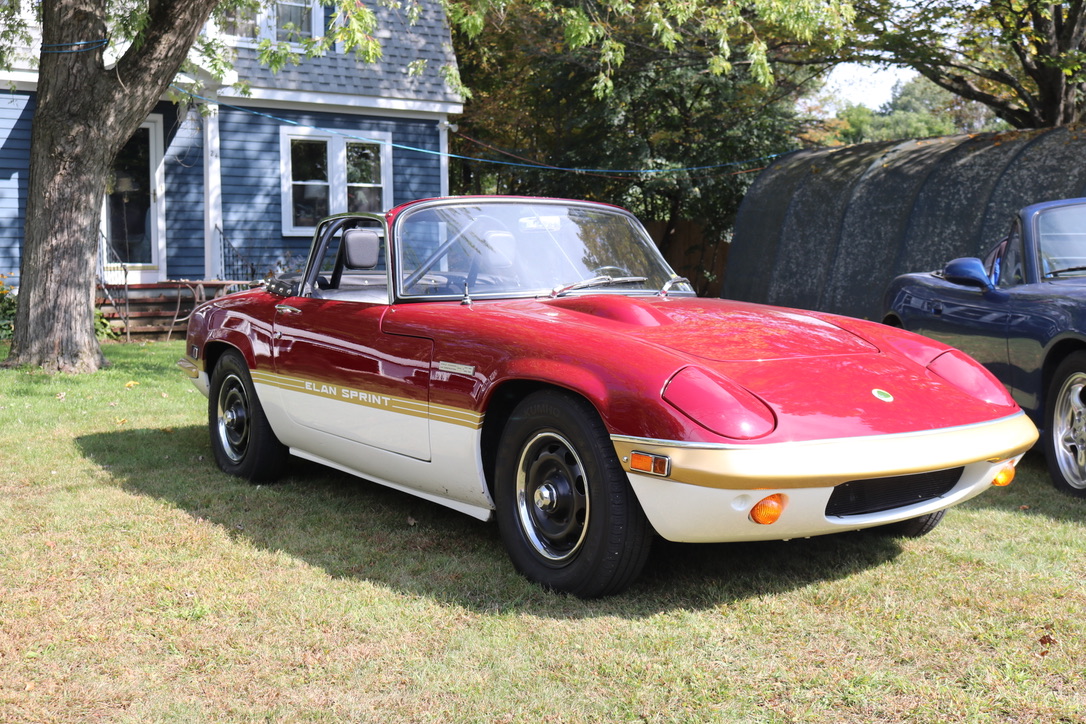
Larry -1973 Elan Sprint-original owner-USA
I believe that most of the problems can be saved with a little bit of PTFE or fuel resistant pipe dope.
I believe the original pictures of the weber carburetters showed The banjo Pointing at about a 5 o’clock position. This, in fact, when the engine vibrates only produces force of a clockwise motion or forward, thrust to inherently tighten and not loosen the banjo.
Of course there is fuel resistant Loctite, but any amount of fuel resistant glue is sufficient to keep the bolt tight after you torque correctly?
A second battery disconnect switch in the rocker trim panel, easily accessible from the driver’s seat and a Halotron fire extinguisher mounted behind passenger seat so that driver can reach it, saved my S4 from going up in smoke when fire started in Webers being tuned with airbox off. Luckily damage was limited to fuel lines, coolant hose to heater and some electrical wires. Halotron extinguishers are very expensive but amazingly effective. Powder extinguishers don’t work well make huge mess, and not what you want sucked into carburetors. Large C02 extinguishers are inexpensive, clean and perfect for the garage. Now I’ve got two.
It is amazing how cheap fire extinguishers are. I got 6 extinguishers delivered for under £100. A range of sizes and types so that the lotus always has 2 in it (1 in boot and 1 behind passenger seat), and there are 2 more in the garage and 1 in the kitchen and then a token one in the boot of the i3.
Like the defibrillator at work, I hope I never need to use it but gives peace of mind.