BOXED & MINT
Classic Cars - September 1993
Greg Bray’s Elan S2 was restored from boxes of bits over seven years. John Williams reports
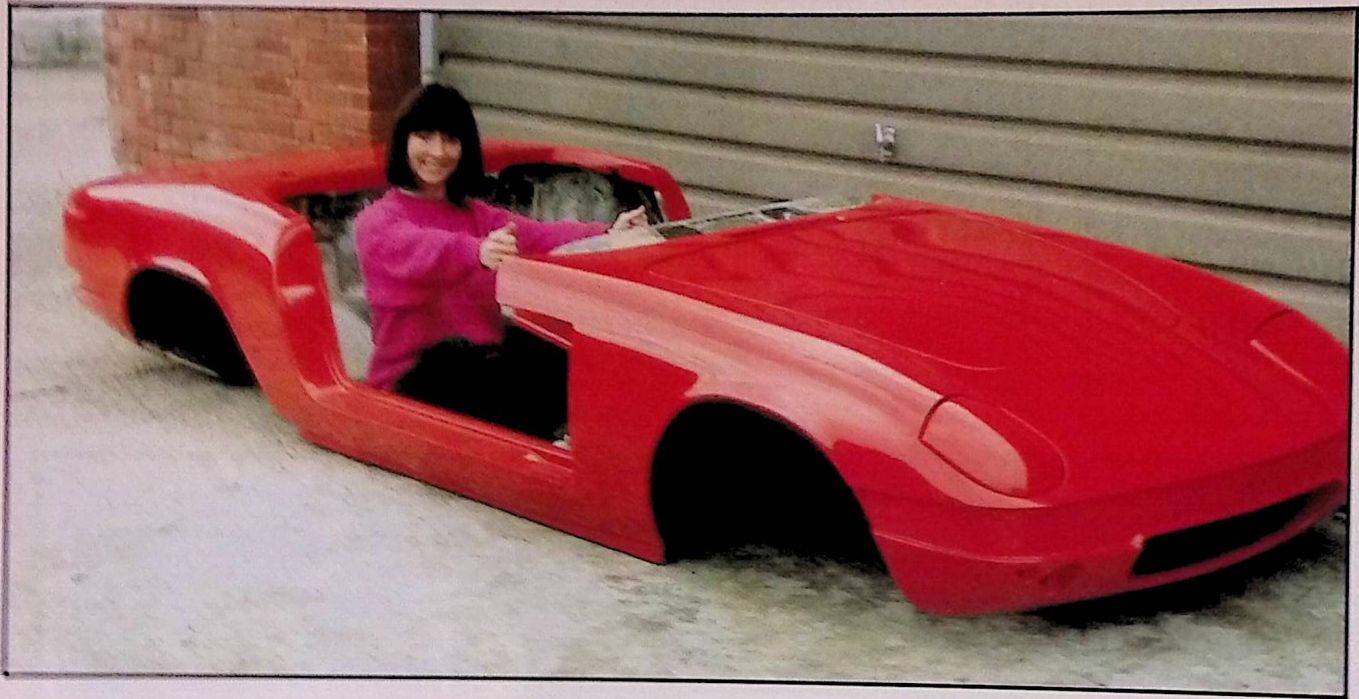
Who needs wheels? Greg’s wife, Chris, tries the newly painted Elan bodyshell for size
BUYING totally dismantled cars cannot be recommended, certainly not to first-time restorers or to the faint-hearted. It is so much more difficult to ascertain the completeness and condition, while reassembly can be a nightmare if one has not undertaken the dismantling and had the opportunity to make notes and sketches and take photographs. Greg Bray’s 1965 Lotus Elan S2 was such a car. It had been dismantled completely in 1975 and put into boxes by its previous owner. No doubt the intention had been to restore the car but in 1985, and still in boxes, Greg bought the bits for £150 and set about its restoration.
Greg was no novice. He used to be a British Leyland mechanic at Wadham Stringer but has his own business these days, the Bray Motor Company of Southsea, Hampshire, which undertakes mechanical work on all types of cars but specialises in Jaguars.
Having owned several cars over the years, Greg bought his first Lotus, a silver S3 Elan SE fixed-head coupé, 18 years ago when it was six years old. Over the first couple of years of ownership he rebuilt all the mechanical assemblies and even raced it during 1975; even now he is not keen to part with it. Needless to say, Greg expected the mechanical aspects of the restoration to be easy.
He started the restoration by scrapping the original chassis, which had not been galvanised but simply painted. It had been plated extensively and was well beyond any hope of recovery. A new, genuine, galvanised Lotus chassis was obtained from Miles Wilkins of Fibreglass Services. Greg brush-painted the new one, finishing it in red Dulux non-drip gloss paint so that it would wipe clean easily and the rebuild started from there.
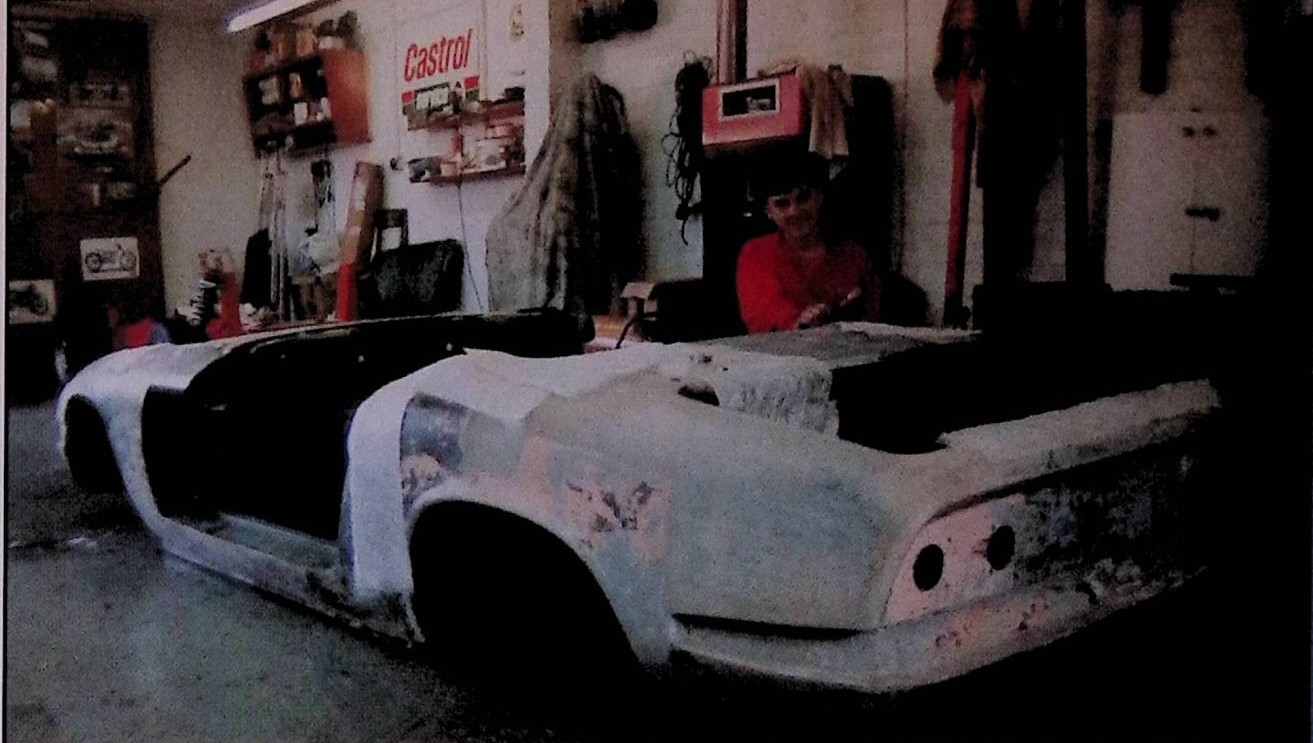
The bodyshell undergoing repair - the body was cracked and crazed all over
Greg saved what he could of the original suspension, brake and steering components. He de-rusted them by wire brushing, then applied Jenolite followed by red oxide primer and black or silver Hammerite. All bearings and bushes were renewed, new pistons were fitted to the brake calipers and the steering rack was cleaned, re-bushed and fitted with new gaiters.
The first task on the body was to clean it thoroughly all over, including its underside, and this took a great deal of time. Then the paint was stripped, using all-purpose Nitromors. It was vital to ensure that no trace of the stripper was allowed to remain on the bodyshell, much less to soak into it and attack the glassfibre, so Greg worked quickly on a very small area, about six inches square, at a time. The loosened paint was scraped away and the stripper washed off with copious quantities of clean water as soon as it had done its jobs. Each small patch was wiped dry before moving on to the next.
The Elan’s shell is compact but this is the sort of job which tries one’s patience and takes a very long time, around 100 hours in this instance. It was during this work that Greg discovered the extent of earlier body repairs, all of which called for more work because they had not been done well.
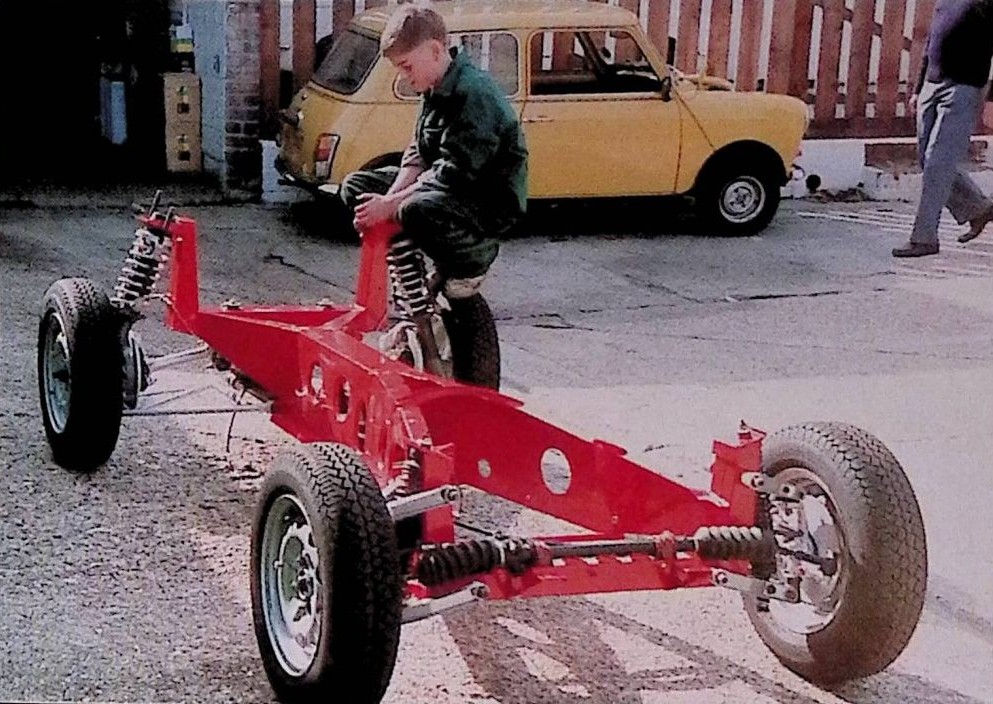
Daniel Bray admires his father’s handiwork, as the chassis sees sunshine for the first time in years
It is not unusual for Elans to catch fire, because of the location of the distributor and coil under the carburettors at the right-hand side of the engine compartment. Many Elans are run without air filters, so when fuel is blown back through the carburettors, as happens from time to time, the potential for excitement

The interior as found
Damage to the offside of the engine compartment called for a lot of glassfibre repair work and the body was generally cracked and crazed all over. The only way to deal with such problems adequately is to excavate serious cracks until you are down to sound material and then rebuild the bodywork in that area layer by layer. General crazing is dealt with in a similar way, rebuilding the contour with thin glassfibre matting. The aim should be to restore the strength of the body with glassfibre then use no more than a light skim of filler to restore the contours.
The bodywork had deteriorated to such an extent that the steel sill frames had rusted and broken and they had to be dug out, rebuilt and laminated back into the sill areas. Apart from their structural importance, these frames also carry the seatbelt anchorages.
Eventually the stage was reached when there was new glassfibre matting all over the car. Greg had done as much to the body as he could and enlisted the help of a friend and fellow professional, Gerry Bell, of Airport Bodyshop, Fareham, Hampshire, to tackle the final shaping and painting. The latter comprised a sealing coat followed by etch primer and two-pack paint. Gerry specialises in this type of work and Greg carries out mechanical overhauls for him from time to time.
Interior trimming is hardly an easy undertaking for the inexperienced but Greg was determined to have a go. Seat kits from Paul Matty Sportscars saved him the trouble of actually making new covers but even so the seats had to be rebuilt from scratch and the covers fitted. The results are well up to professional standards.
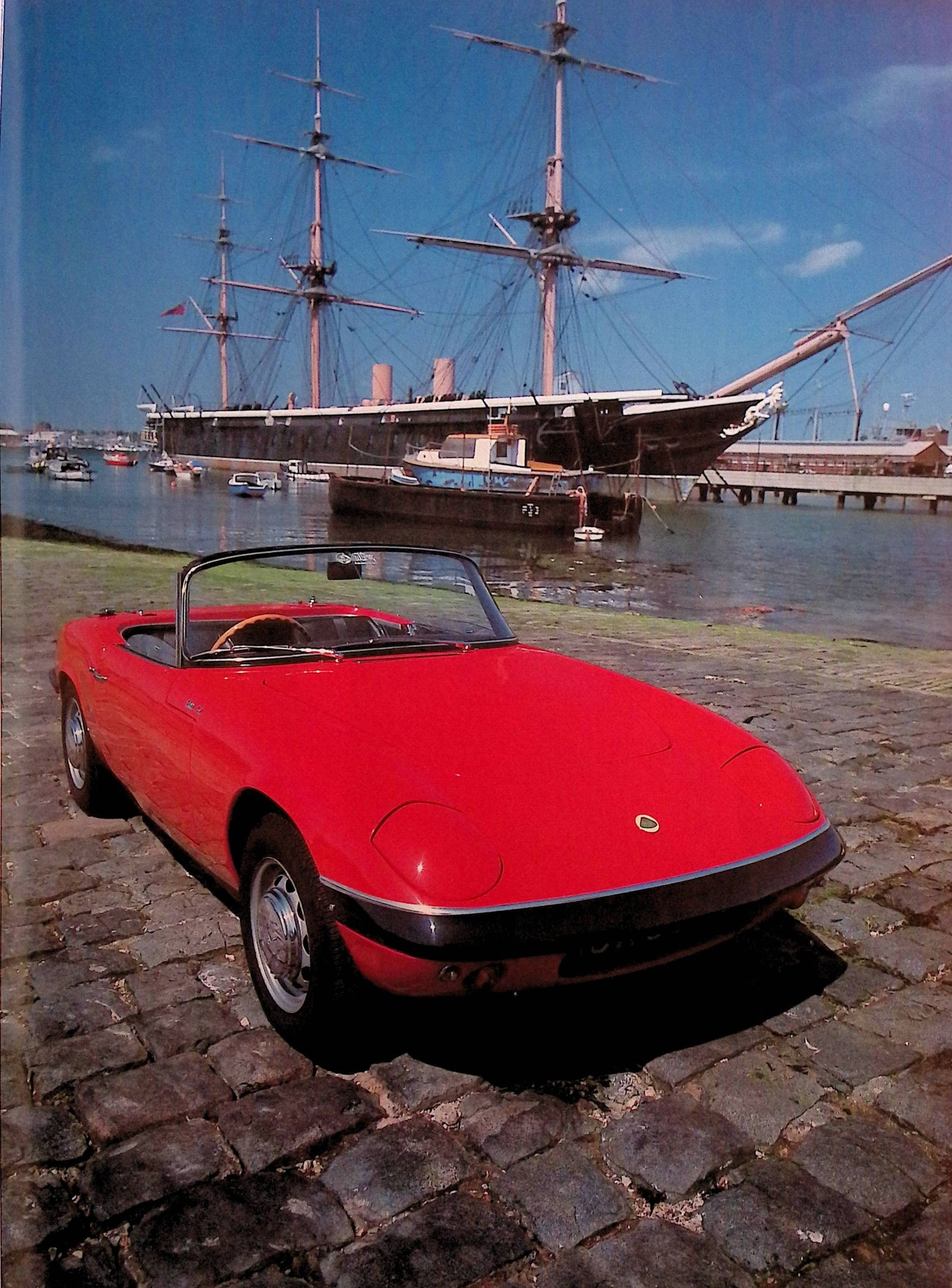
A red Lotus Elan convertible parked on a cobblestone quay with a large three-masted sailing ship in the background.
Greg also made a very neat job of fitting the new carpets, although he now admits that it took him far too long. This was because he applied the adhesive by brush instead of obtaining the aerosol type for sticking the underfelt to the inside of the body and the carpet itself to the felt. A roll of felt had been obtained and although a ready-made set of carpets saved him the trouble of making them from scratch, several modifications were needed.
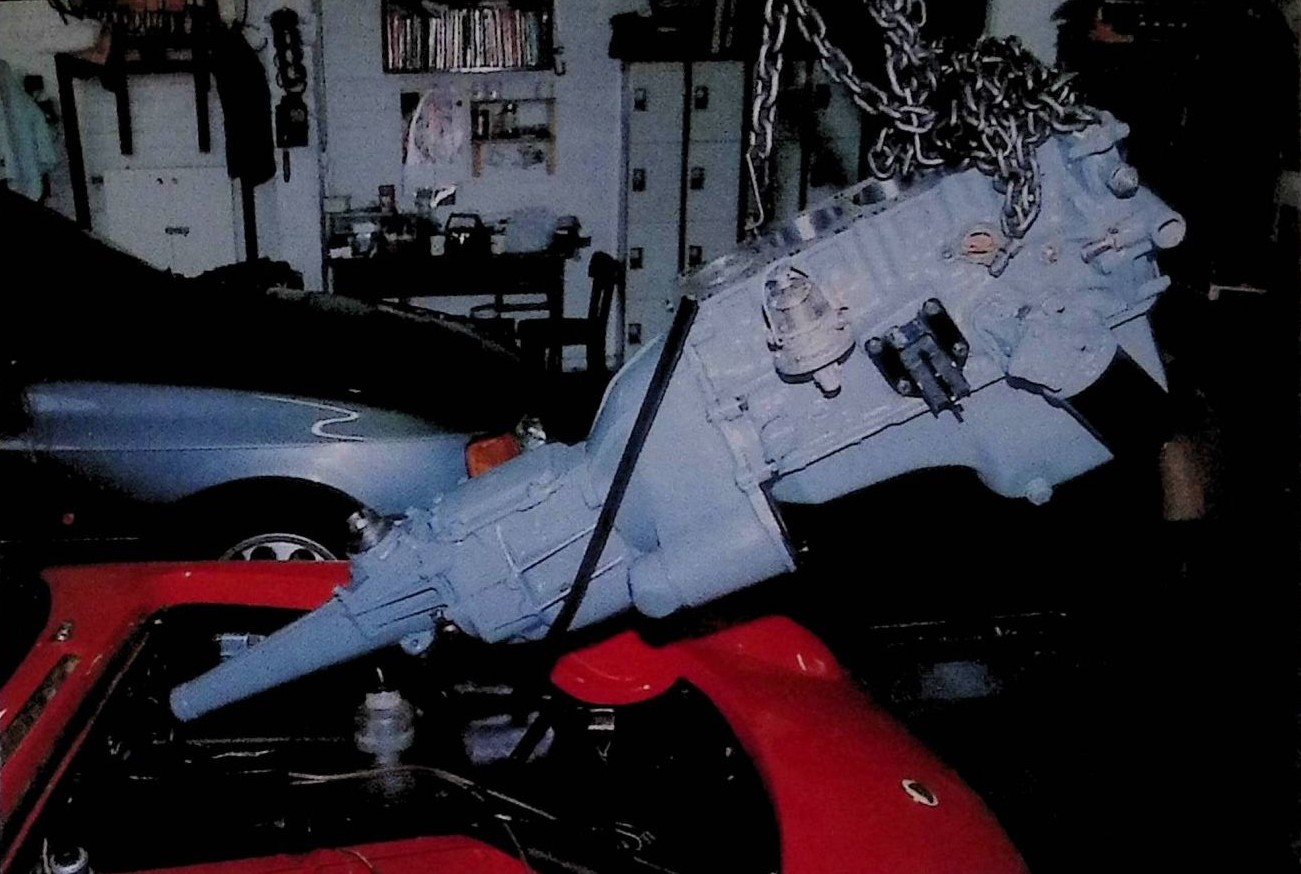
The easiest way to install the engine is to put the block and the gearbox into the car together and fit the twin-cam head afterwards
New inner sill trim panels were made from hardboard and carpet and new door trim panels were built from scratch as the old ones, like the chassis, were beyond recovery. The structure of the door trims is basically simple, leathercloth over hardboard, but they are not a straightforward shape and neither are they available from Lotus specialists.
Restoration of the dashboard called for the removal of all the lacquer but fortunately the underlying veneer was sound. A Black & Decker paint-stripping gun proved effective for softening the lacquer which was then removed with a scraper. The gun had to be kept moving to avoid scorching the veneer. This was rubbed down with medium sandpaper and ten coats of yacht varnish (an appropriate choice for an open car) were applied with further rubbing down between each coat. The final coat of diluted lacquer was sprayed on in the dust-free, heated environment of Gerry’s low-bake oven.
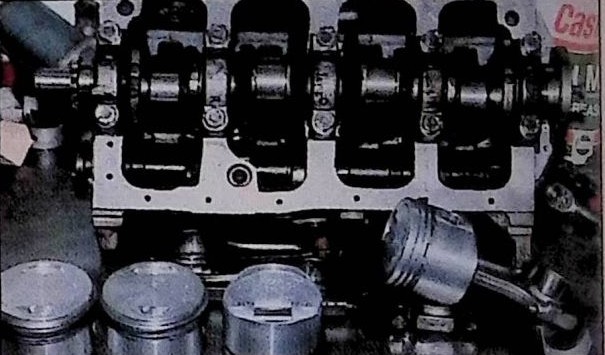
The later, stronger con-rods with the bigger bolts were fitted

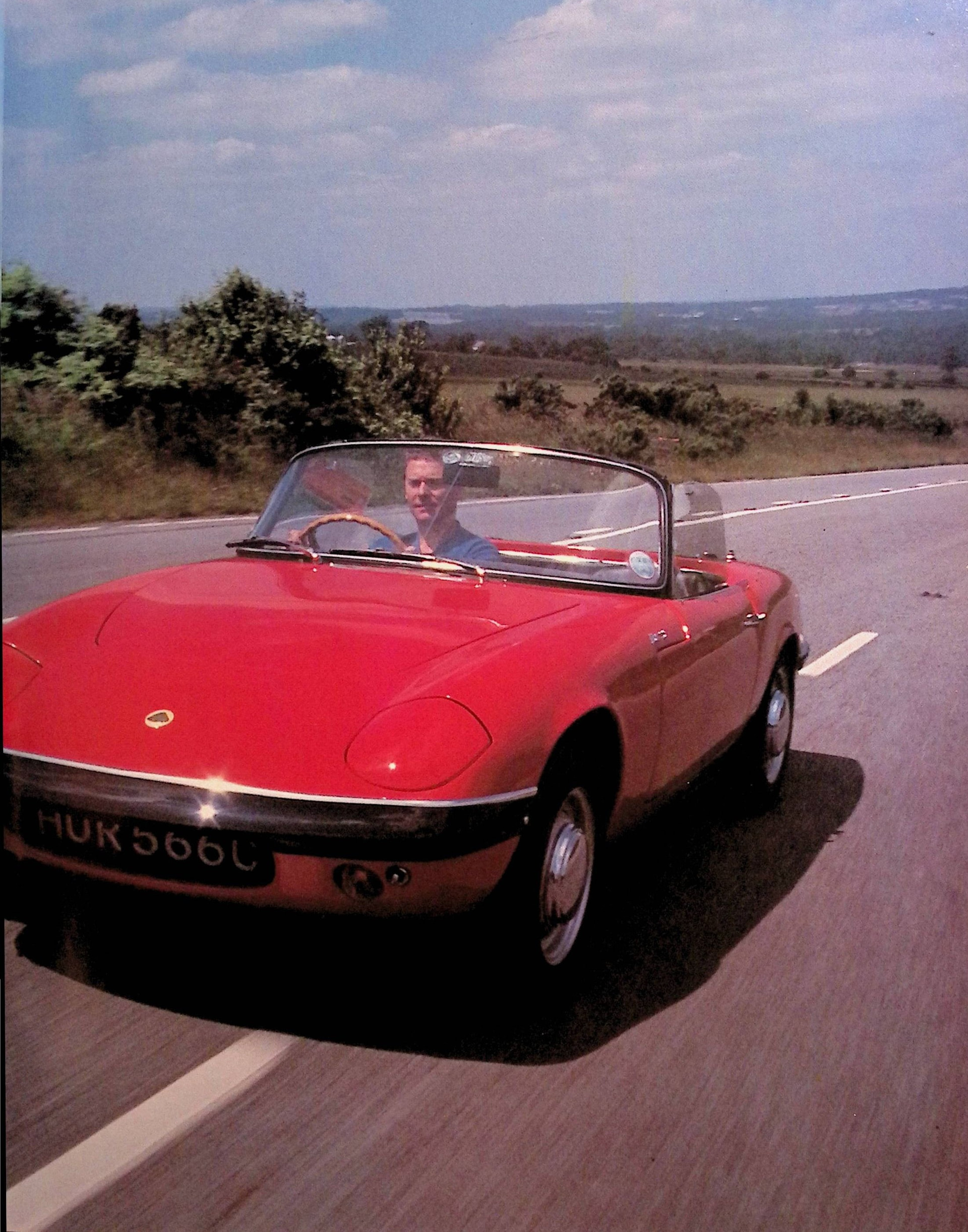
Greg at the wheel of his restored Elan**
The gauges had to be dismantled and cleaned but otherwise they presented no particular problems and the wiring loom needed only cleaning and refitting.
A new tonneau cover was needed but surprisingly, the hood needed nothing more than thorough cleaning plus repairs and some fresh paint to the frame. The Elan S2’s four-cylinder 1,558cc engine was based on the 116E 1,498cc unit used in the Ford Consul Classic and Cortina MkI but bored out and fitted with a Lotus twin-cam head. This engine was in a terrible condition because it had been dismantled and left in boxes for ten years without any protection against rust. The block and crank were very rusty but Greg was very lucky in that they had never been rebored or ground. Days were spent cleaning the rust off the block with emery cloth and scrapers. Then, after a rebore to 20thou oversize, the unit was rebuilt and painted in the original Lotus grey.
The engine cleaned up very well but it required a lot of work. A couple of the waterways had corroded and needed rebuilding with aluminium before the head could be re-faced. Fortunately it had never been skimmed.
The carburettors were in a dreadful state and a lot of time was spent cleaning them before they were rebuilt using kits of new gaskets. The radiator was cleaned and pressure tested; it was found to be leak-proof except for two small holes in the header tank which had been caused by the bonnet rubbing. Small steel plates were welded into the header tank to repair these holes and Greg took steps to separate the radiator from the bonnet during the reassembly of the car.
Greg made a front exhaust pipe specially for the original cast-iron exhaust manifold. These pipes are not available and many owners avoid this supply problem by fitting a later type of manifold.
A complete new Borg and Beck clutch was fitted and the close-ratio gearbox (which was not used in later models) gained new bearings, seals and gaskets and a fresh application of Lotus grey paint. The original 3.9-to-1 final drive was changed to 3.7-to-1 by fitting a different crownwheel and pinion into the exquisite aluminium casing and Elan Sprint inner driveshafts were adopted for their extra strength. The road wheels were sandblasted, rubbed down and given the Jenolite treatment followed by an undercoat before Gerry sprayed the top coats.
There are few supply problems for Elan restorers as 95% of the car is still being made, either by Lotus or by specialists. Nearly everything for this restoration came from Paul Matty Sportscars or from Fibreglass Services. Greg estimates that £4,000 was spent on spares and that Gerry’s contribution to the project could well have cost him a further £3,000 had he not been able to offer his skills as a mechanic in return. The restoration took Greg seven years in all, working on it mainly in his spare time and with a long break following a removal to new garage premises.
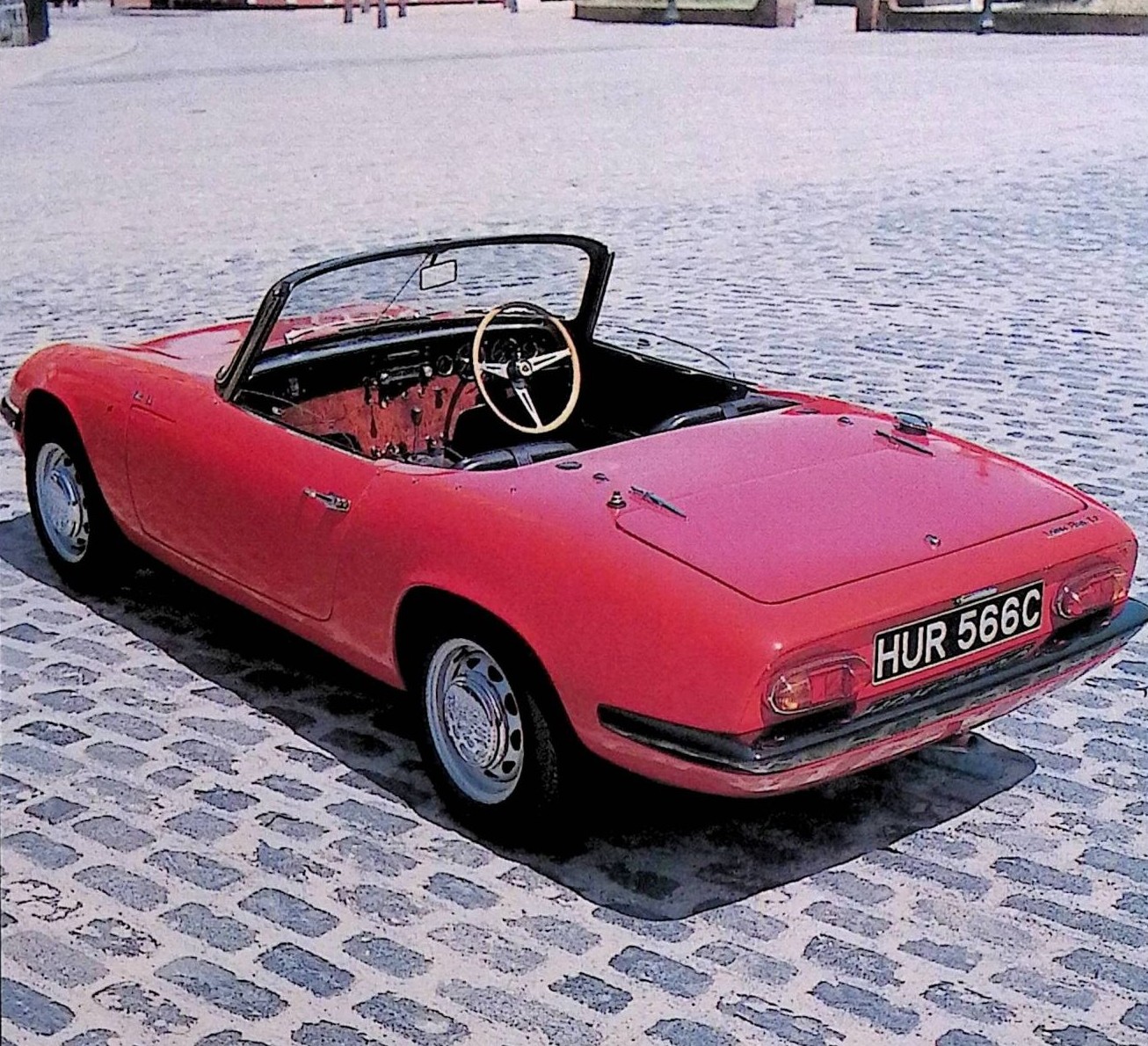
Red Lotus Elan S2 parked on cobblestones, license plate HUR 566C
Greg’s silver Elan Coupé is a much modified car and his aim was to keep this one original as far as possible. However, the vision of the finished car in its original BMC Spruce Green left him cold and did nothing for his motivation, especially during the long hours of tedious bodyshell cleaning and stripping. The green had to go but choosing a new colour wasn’t easy either because so many Elans had been changed to red. That was his eventual choice, too.
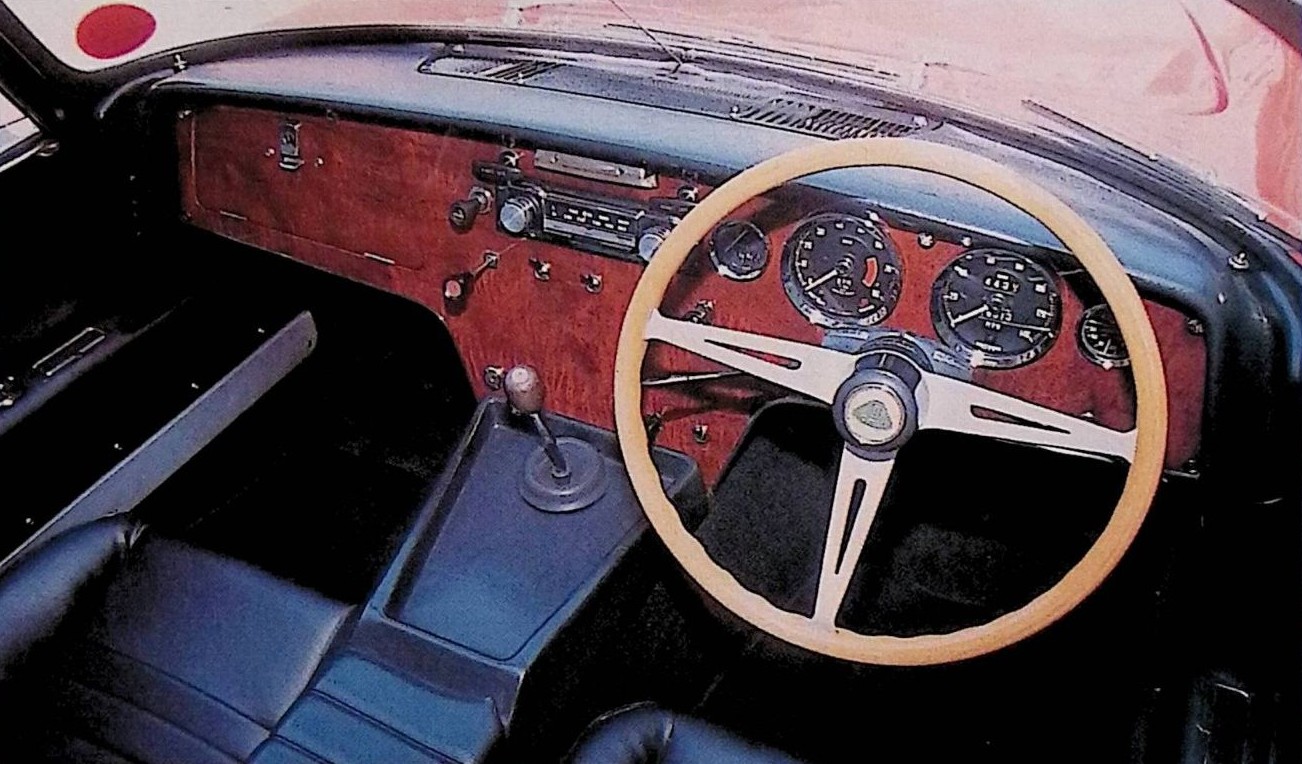
Interior view of the Lotus Elan showing the wooden dashboard and steering wheel
The Elan was completed towards the end of 1992 and it is superb. Greg readily acknowledges that he couldn’t have done it without the co-operation of his family, especially his wife, Chris. When I asked whether he would tackle another car of his own in his spare time, I was too late. He had already started work on a twin-cam Lotus Europa. You don’t see many of those nowadays.
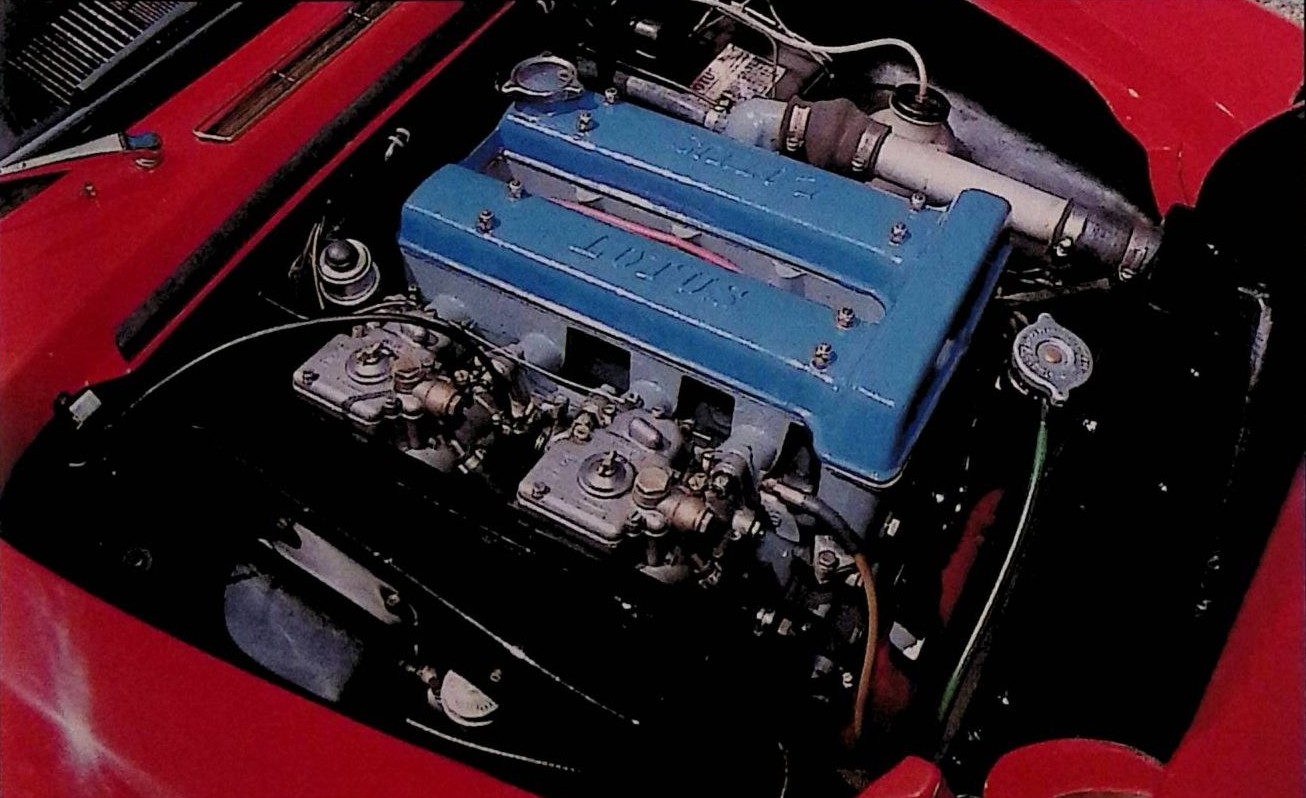
Engine bay of the Lotus Elan showing the blue cam cover
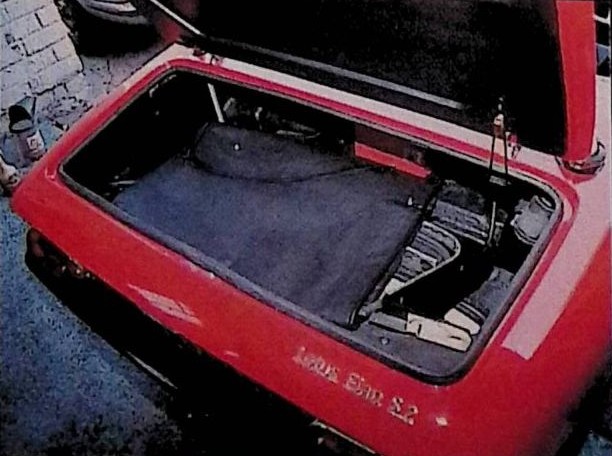
Open boot of the red Lotus Elan