Lotus Elan — A Car with Style & Vigour
Has this car stood the test of time?
Old Car, December 1988, pp. 90–97
During its long production run of nigh on 12 years the Lotus Elan has earned a “Jekyll and Hyde” reputation. On the one hand its “Doctor Jekyll” face was presented as being one of the finest handling and most admired sports cars of all time; a car that could transport one or two people across give and take roads faster than any other production car, a car with a tremendous power-to-weight ratio that could and would annihilate many other sports cars with twice as many c.c.'s as its own 1600. Conversely, its “Mr. Hyde” characteristics earned it a reputation as an unreliable car, the main areas of contention being electrics, engines going out of tune very quickly, chassis rot, crazing of the fibreglass body and, of course, bits falling off here and there. Understandably this caused concern with some owners as did badly fitting hoods and water seeping into the body.
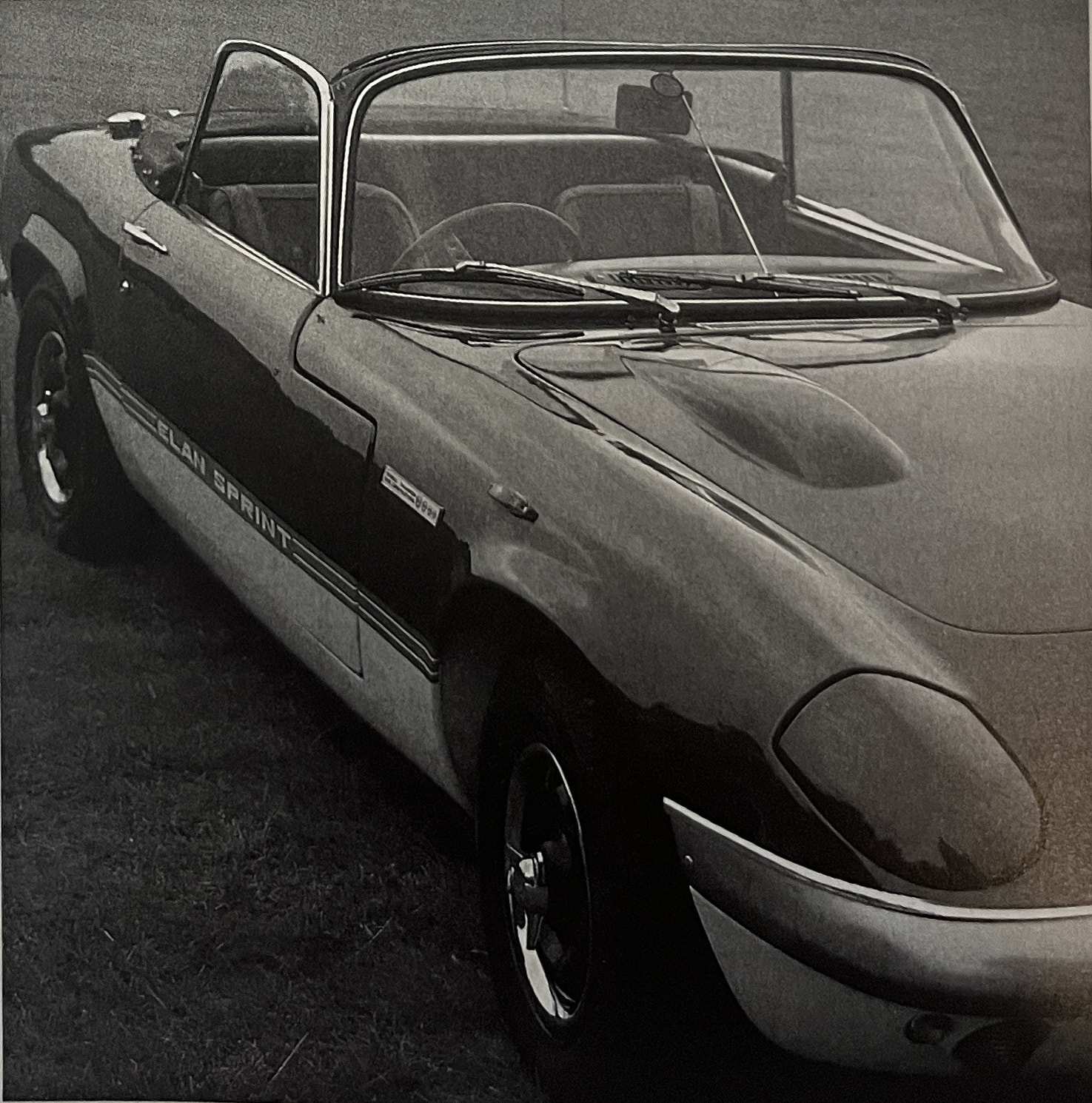
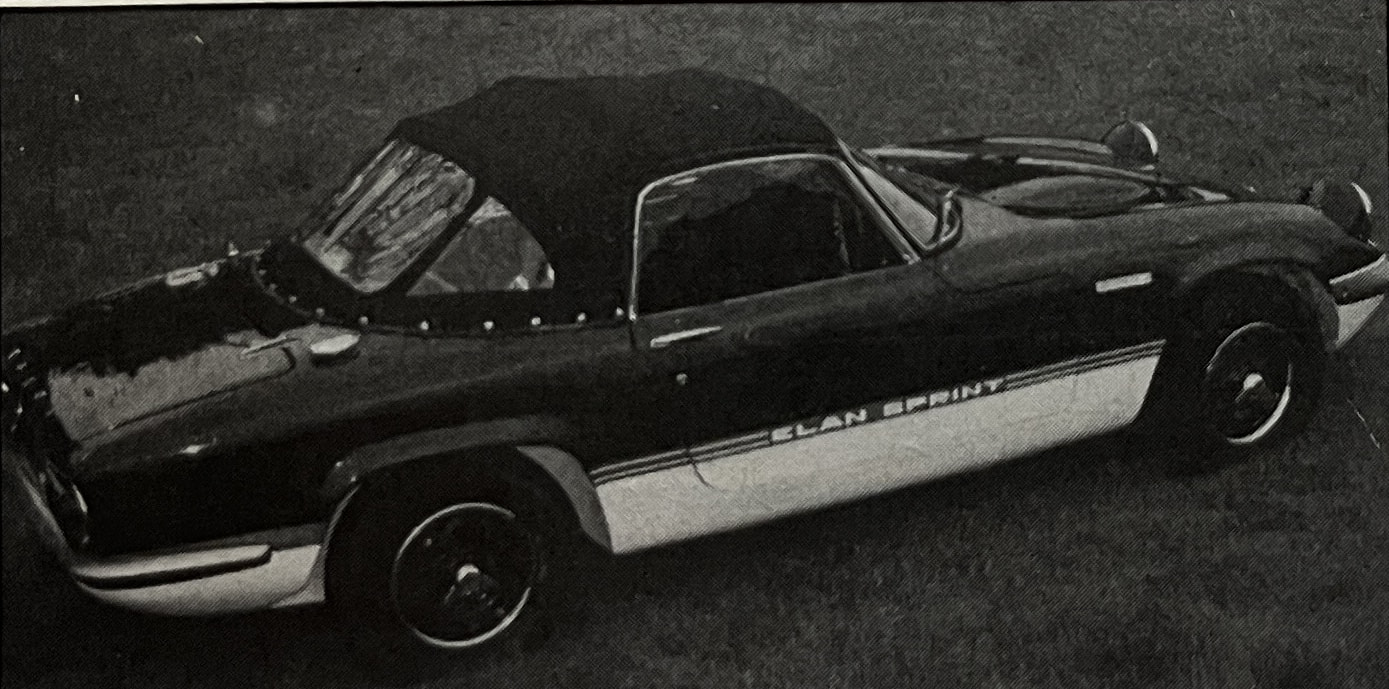
The Elan Sprint was the final version of the two-seater series that lasted a decade.
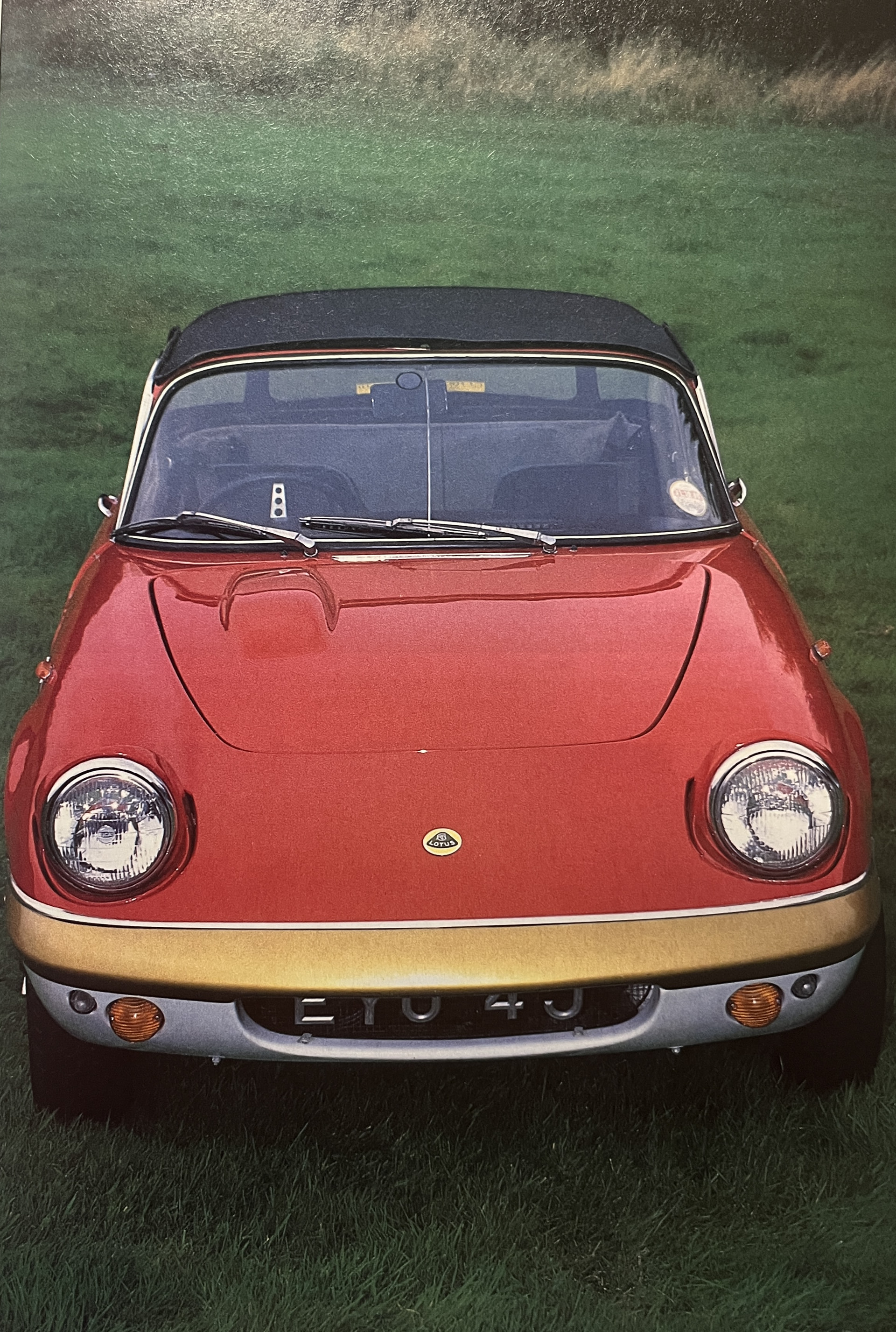
It is now 15 years since the Elan went out of production and 14 for the Plus 2 during which time the old car movement has grown by leaps and bounds, as has the affection for the Elan. When in production they were probably used by most of their owners as everyday cars and may or may not have been properly serviced and looked after. Today, old cars usually shower much more love and affection on them and the cars tend to be very much in the mould of the pampered pet.
With all of this in mind I decided to try to find out how the Elan (and its bigger brother the Plus 2) shaped up today. I wanted to know if it was practical to use in the 1980s and if it had overcome its reputation for unreliability. The best way to achieve this was to ask a known expert in the field and to test drive a few examples of the marque.
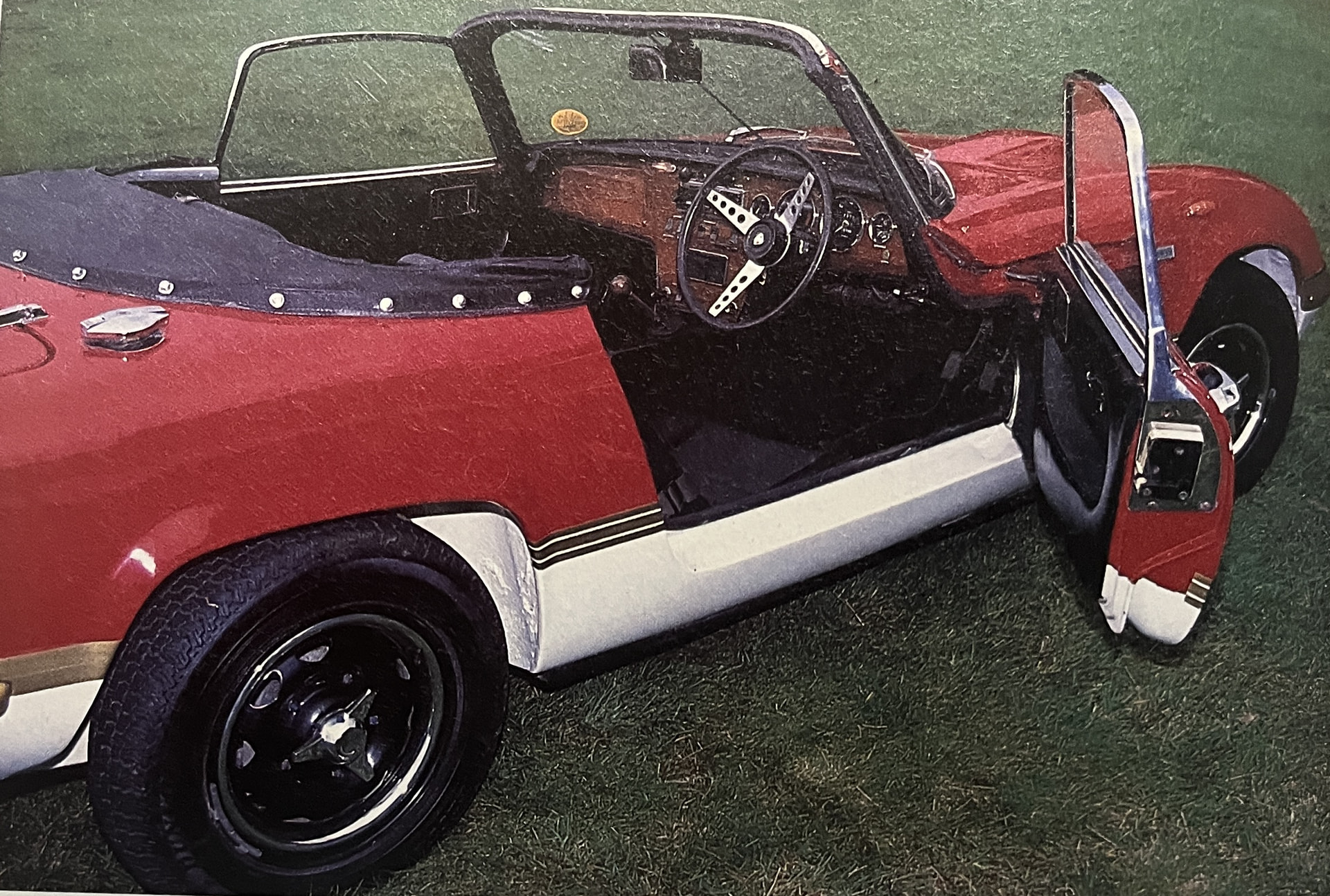
The Sprint interior, although quite small, could seat most people quite comfortably. Doors are wide enough for easy access.
To learn about its virtues and foibles we contacted C.J. Foulds Limited, a company in the North of England who specialise in Lotus cars, particularly Elans. This company is not recognised by the factory, but has earned a great reputation amongst Lotus owners during the past 10 years and has won the “Club Lotus Heritage” Specialist Service award for 1986/1987.
During our conversation with the owner, Chris Foulds, we discussed the various areas which have been known to cause problems in the Elan. Chris told us that the Elan chassis was prone to rot, although it must be pointed out that corrosion here wasn’t really evident until the late 70’s, then suddenly it seemed that every Elan on the road had it! The worst and most frequent place is the four “turrets” that jut upwards from the backbone. Apparently mud builds up in the turrets and, as the one drain hole originally provided does not allow all of the moisture and water to drain away, it causes terminal rot in this vital part of the chassis. If this happens, don’t repair the old chassis, “get a new one” is Chris’s advice. “Even if the best welder in the world repairs it, it will never be right,” he says. He is also adamant about getting a proper Lotus replacement chassis. These apparently flex slightly and this is a characteristic that helps the Elan’s handling. Some non-factory replacement chassis, although very well made, do not have this characteristic and it makes the cars very harsh to drive. The latest factory chassis are galvanised and have been modified with extra drainage holes to help overcome the rot problem.
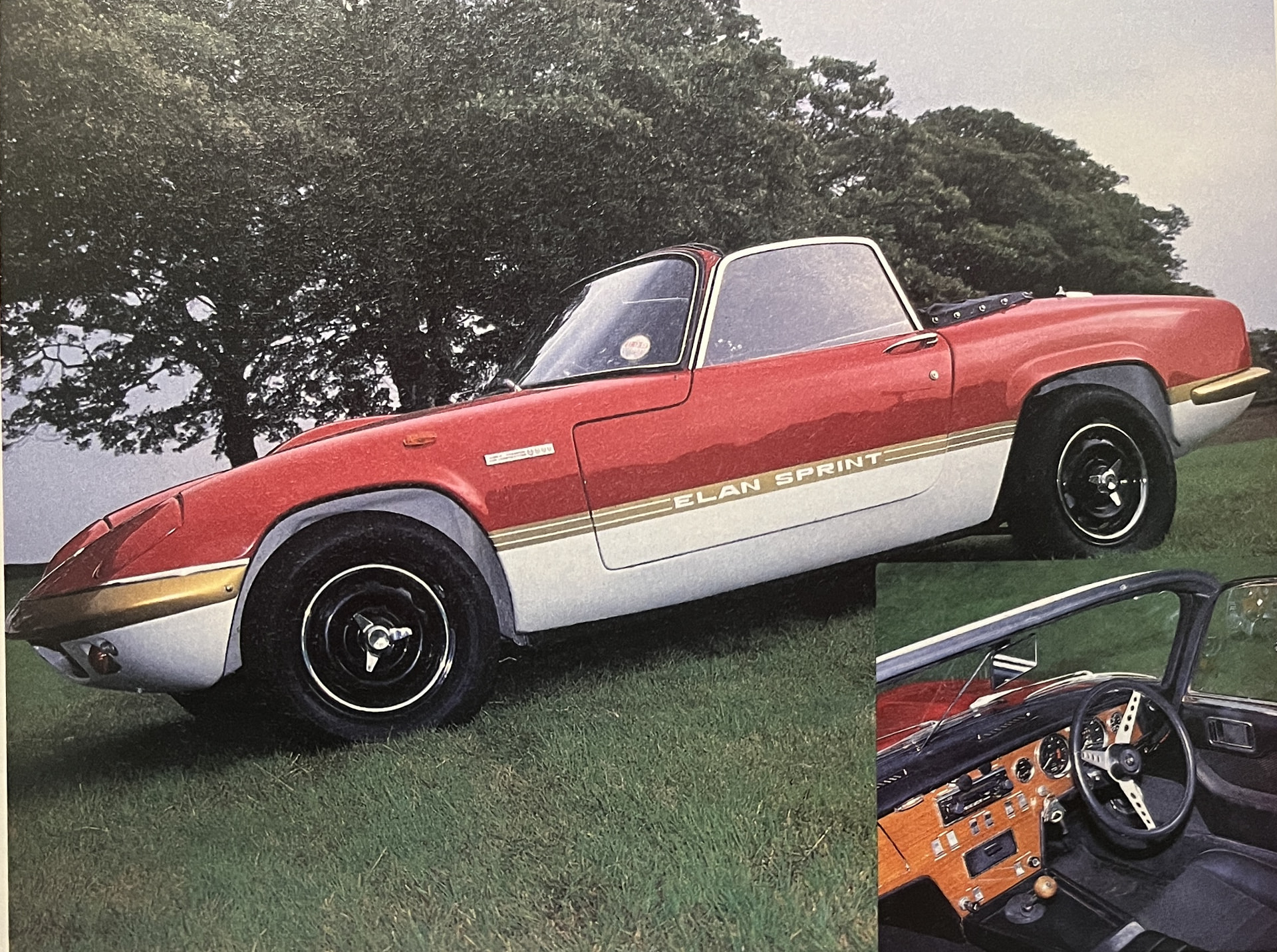
An unusual angle to view the Elan Sprint. Compare the Sprint’s dash (inset) with that of the Plus 2 further on.
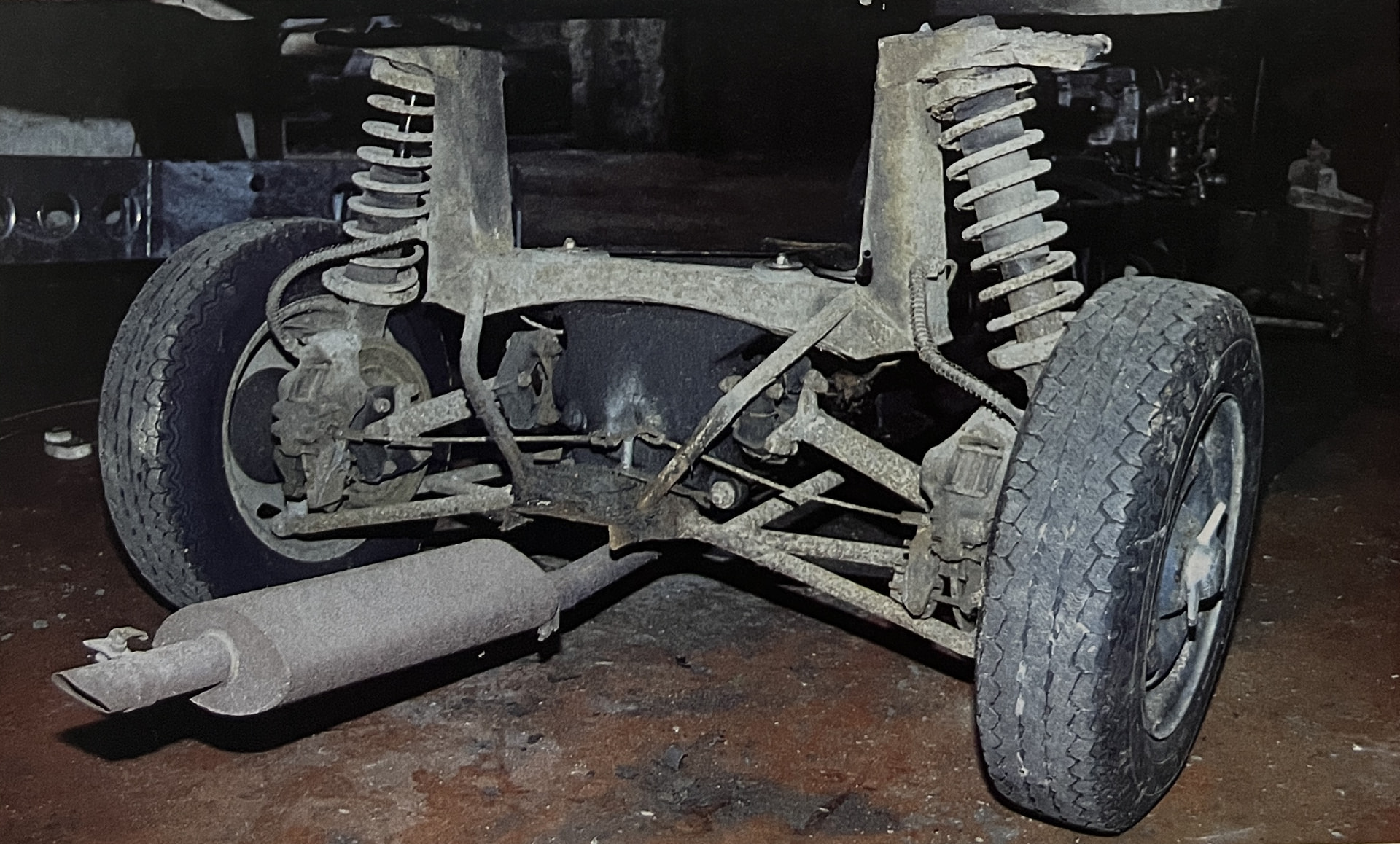
The famous Lotus “Wishbone” chassis. This set up still sets standards today and must be one of Chapman’s finest achievements.
Our next item for discussion was the infamous wind-up in the drive shafts. All Elans up to the “Sprint” used the Hillman Imp rotorflex or — to give them their common name — “doughnuts”. These, of course, are the main cause of the wind-up phenomenon. The “Elan Sprint” had a modified rotor flex with an extra metal leaf inserted which went a long way to solve the problem. All earlier Elans can be easily modified and are likely to have been using the same rotor flex as that in the “Sprint”.
Some owners have fitted solid driveshafts but these cause harshness and knocking in the universal joint. Stiffer dampers have also been tried but again no improvement is gained over the original Armstrongs. In fact back end breakaway is usually the unwanted result of such modifications.
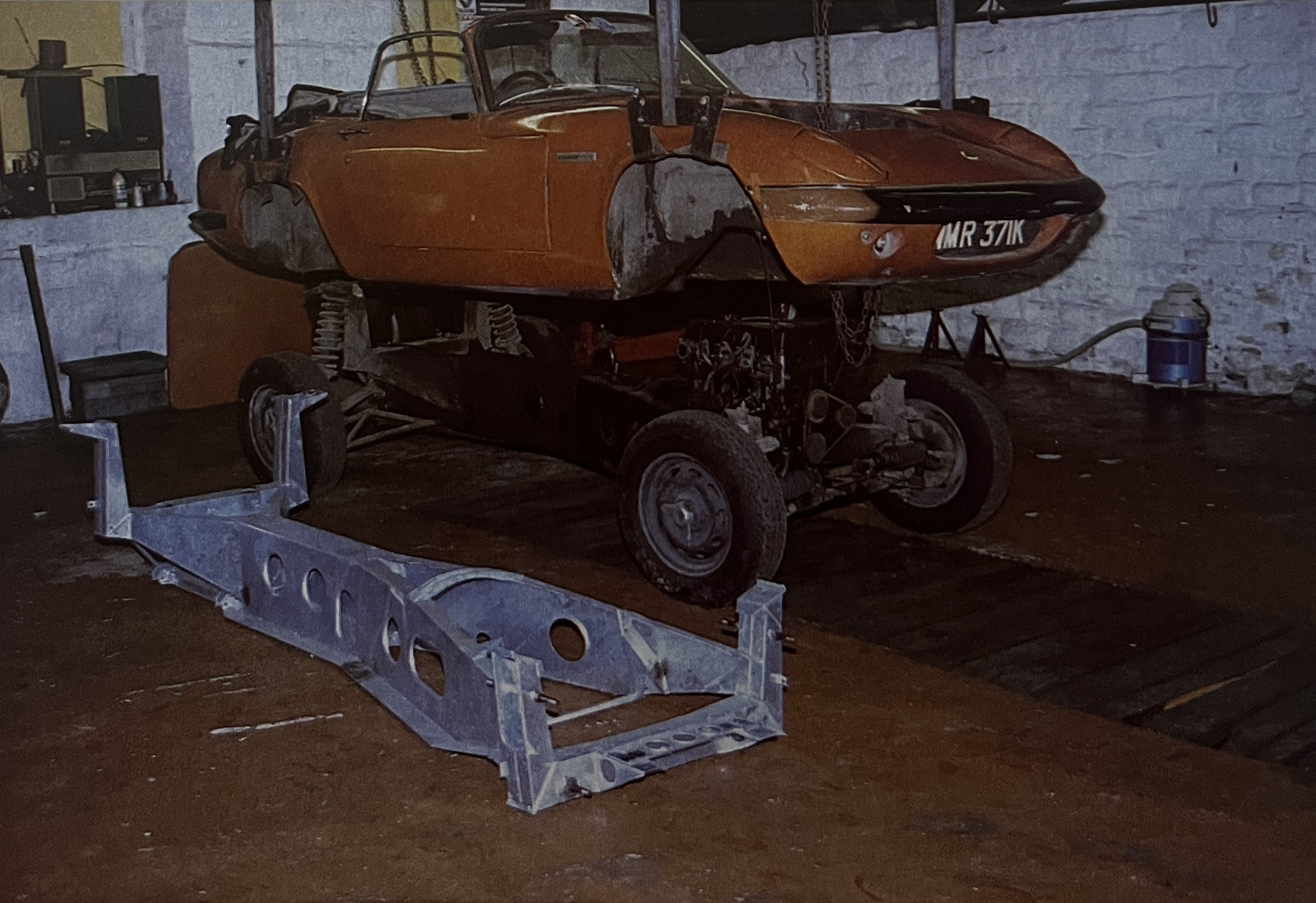
Here we see an Elan body being lifted off its chassis. Its new replacement Lotus chassis is waiting in the foreground to be mated to this car. Note the four turrets, the major areas to rot.
On a performance car like the Elan, tyres are critical. On this subject Chris said that as the original Firestones F100, Goodyear G800 and Dunlop 8P Sport Tyres are no longer available he has found that the Dunlop Elite is now the best choice. This tyre has a soft sidewall which complements the car’s suspension set-up. Michelin and Pirelli tyres do not suit the Elan and are “deadly in the wet” according to Chris.
The standard brake set-up is fine and although the original Girling Servo is no longer available there is a Lockheed replacement, but this does not give quite such a good feel as the original.
The best handling cars, Chris says, use the Lotus chassis and wishbones, standard Armstrong dampers and Dunlop Elite tyres. If Lotus could have found a better way to improve the roadholding and handling they would have done so. He is adamantly against messing with the original factory specification.
At the beginning of this article we mentioned about the engines going off tune. Right through the whole Elan series, the factory changed the make of carb at various times, Webers, Strombergs and Dellaratos being the brands used. The Strombergs apparently are the most difficult of all to set up properly but, once they are, marvellous performance is on hand. The fastest standard Elan ever to go around the factory test track was equipped with Strombergs. “Dellaratos stay in tune the longest and are better carbs than the similar Webers,” says Chris.
The engines themselves unfortunately attract “meddlers,” this factor alone contributing to the car’s bad reputation. For reliability, if this is the right equipment to needed to set the engines up correctly; if this is done and the oil changed regularly and with proper servicing, the engines will remain strong and reliable. Chris also reckons that fitting high lift cams will not improve the Elan engine. The standard “Sprint” specification engine is the best for road use with its big valve heads and improved torque. As with the suspension, he believes that if the engine could have been improved upon by Lotus, it would have been done.
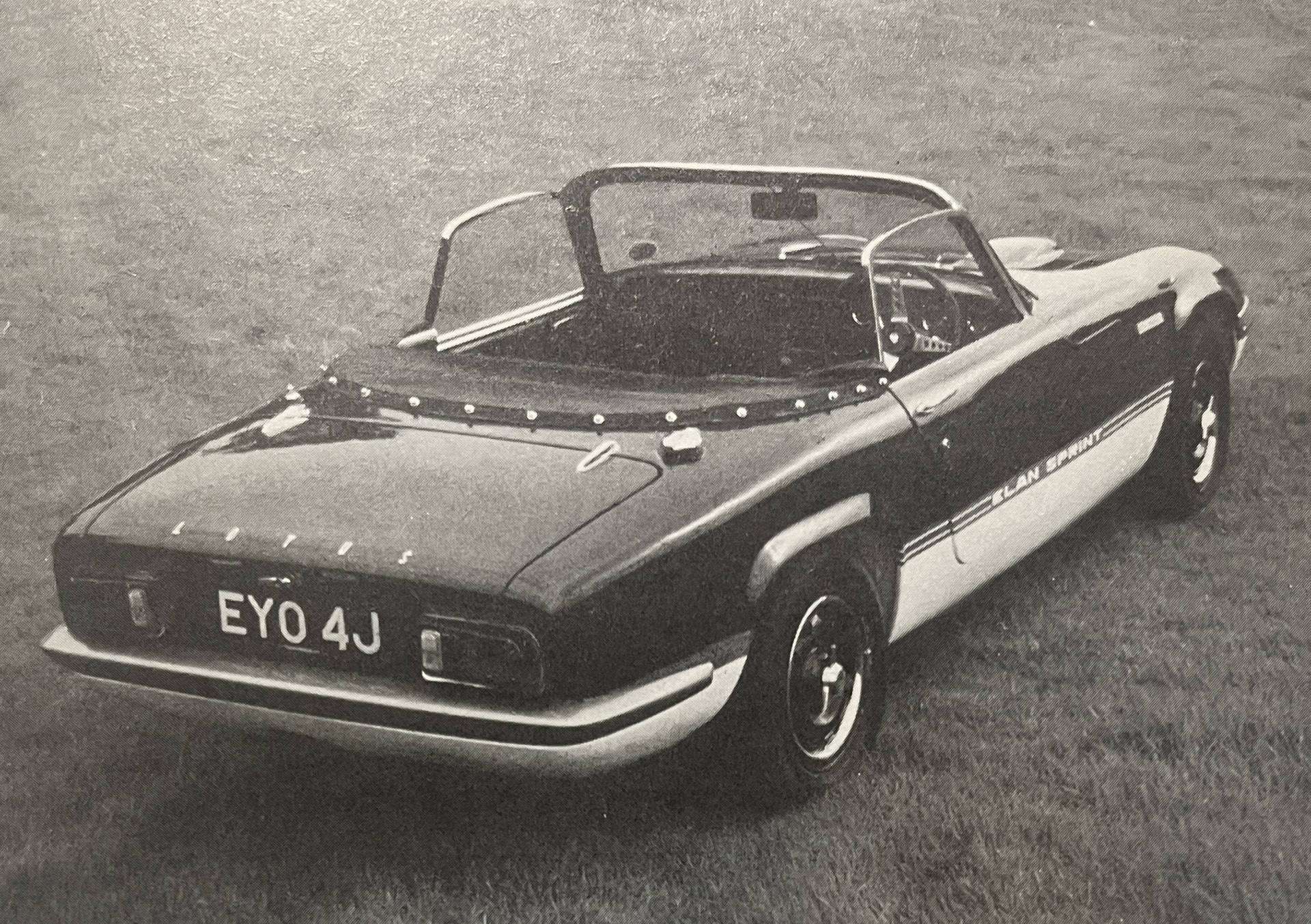
The Elan with the hood down and ready for real “wind in the hair” motoring.
The early cars suffered from electrical problems, and cars being rewired today use modern looms which have much better block connectors and earthing. Pop-up headlamps should not give problems if maintained properly. The late “Plus 2” used a “fail safe” system but watch the solenoid.
The quality of Lotus bodywork is reasonably good but does require an expert in the repair of glassfibre to put right crazing or accidental damage. Chris again does not recommend home repairs to Elan bodywork.
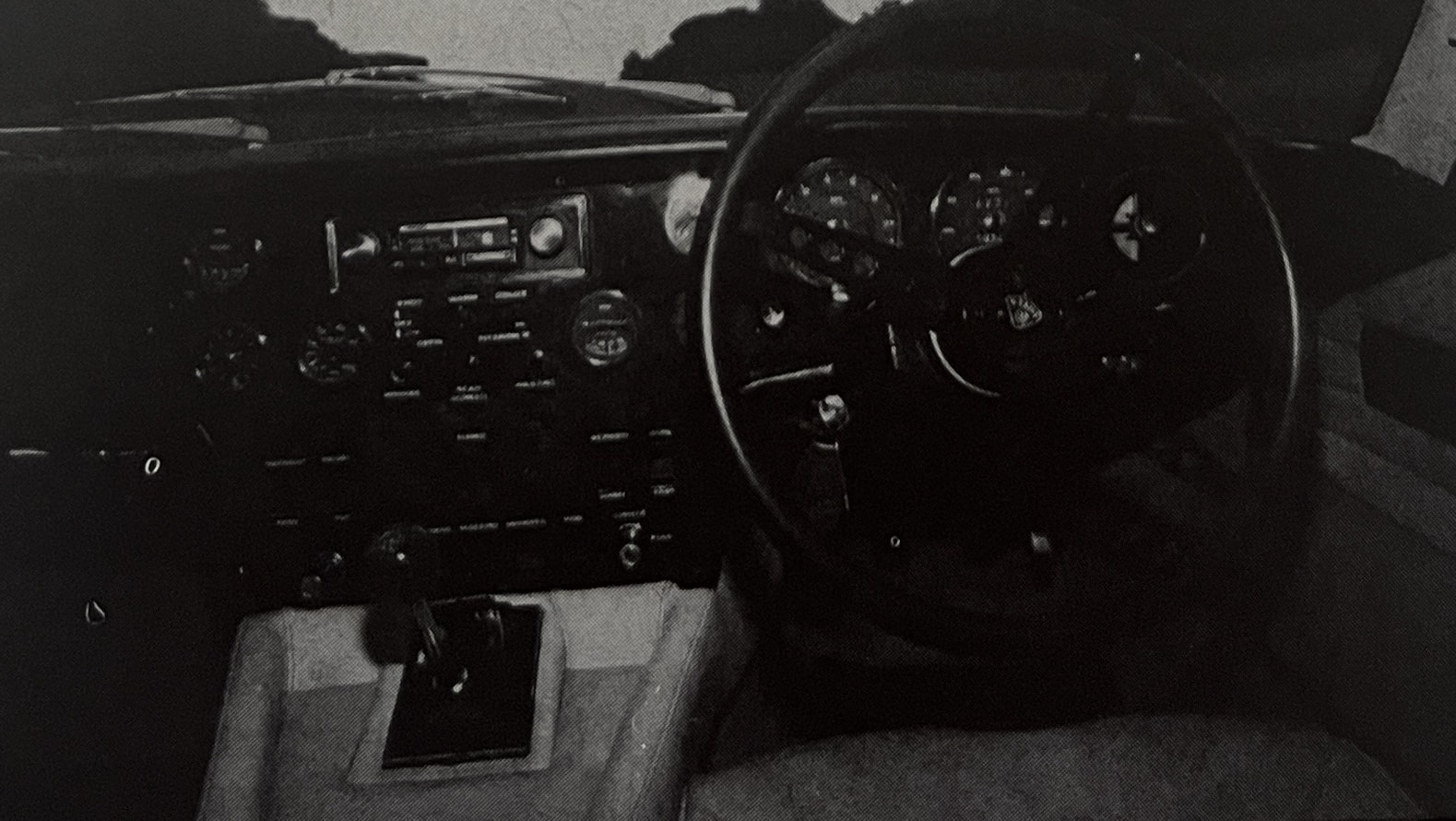
Here we see the comprehensive dash of the Elan with many dials and switches. Note the stubby gear lever. Pop-up headlamps should not give problems if maintained.
With Chris having owned one or more of each of the Elan models our next question was which, in his opinion, was best? Without any hesitation he said the “S3 fixed head”.
Most employees of Lotus in the 60’s and 70’s tend to agree. This model was strongly influenced by Graham Arnold who was sales manager at the time of its introduction, the quality thereafter improving dramatically with the result that the cars didn’t feel so much like “Kit Cars” as they had done before. Also the shells on the Series 3 cars were much heavier and stronger than the S4 and the sprint. The S3 fixed head felt more rigid, too, resulting in a better quality feel to the whole car. This model also had the original round wheel arches which suited the car very well. The later squared-up ones were a marketing ploy and spoiled the car’s looks, according to Graham. Details like the interior toggle switches suit the car whereas the later tumbler types do not. These were rumoured to be sourced from a bankrupt washing machine firm! Graham feels that the four-speed gearbox was also the best with its very precise and positive change. Anyone having experienced both the four and five-speed gearboxes would always come down on the side of the former.
It would seem, possibly more so than with any other car, that the Elan and its brother the Plus 2 require expert servicing to elicit their best. Because the Elans were available as “Kits” it may have bred a philosophy of D.I.Y. servicing which in the majority of cases is detrimental to the car. It surprises many car enthusiasts when they learn that approximately 12,324 Elans and 3,330 Plus 2’s were sold by the Lotus factory making a grand total of over 15,500 in all.
Our next task was to drive an Elan and a Plus 2, to see and feel first hand what they are like to drive today.
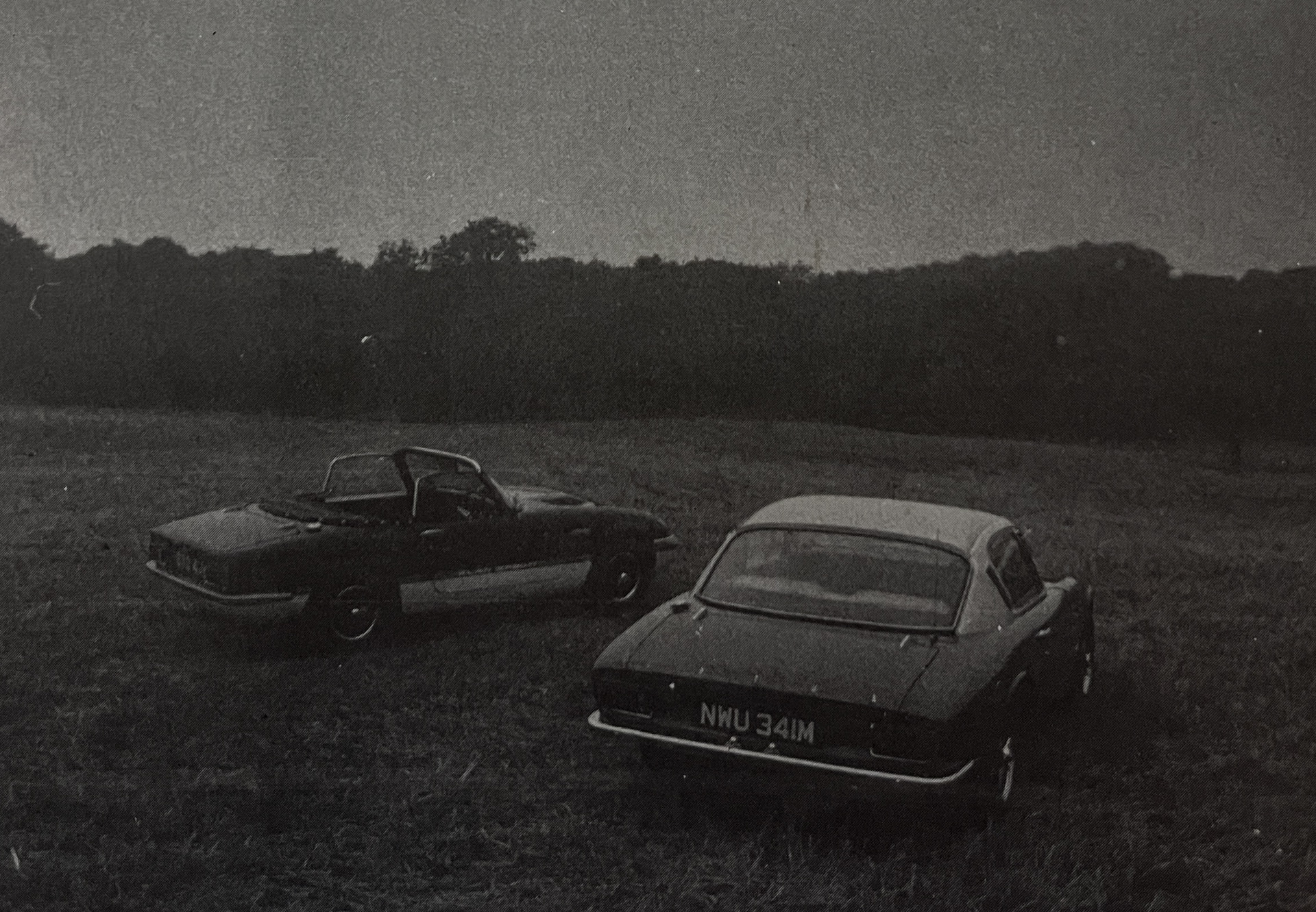
Although brothers under the skin, these are completely different to drive — the Elan Sprint a true sports car, the Plus 2 a true “GT”.
Osteopath Kim Burton kindly loaned us his Elan Sprint for appraisal. This is a well used and properly maintained car with a speedo reading of 76,756 miles. On our initial examination we were impressed with the car’s overall appearance. The only faults that we noticed were that the driver’s door kept sticking and a door panel was loose, both easily rectified. The car started first time and showed no temperament whilst warming up. My immediate reaction to the car was an awareness of its diminutive size. As we drove along, my impression was of it being very low to the ground and, although the cockpit is very small, I was not uncomfortable. Our route at first was along a very narrow, twisty and hilly “B” road which, I might also add, was very bumpy. Not being used to the car, I took it very steady which was just as well because Idid not realise how quick the Elan’s steering is. As I went a little faster I had occasion to flick the car into a bend which was when I found out that this has got to be one of the quickest reacting cars ever made. As I drove off the “B” road out into the main road the ride was noticeably better once the pot holes disappeared. Although I did not endeavor to drive the car at top speed, I could tell that it was fast, darned fast, in fact.
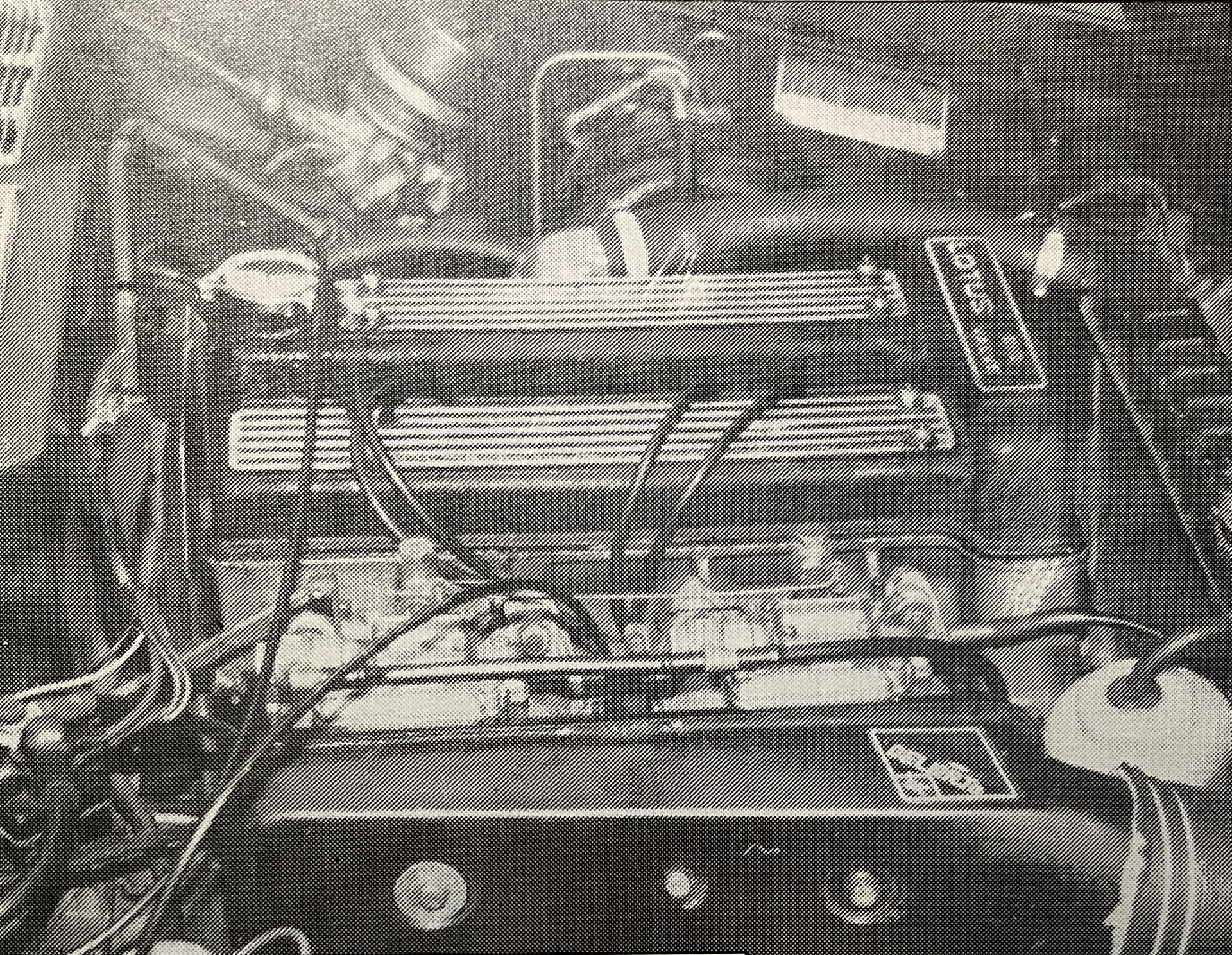
The Lotus engine seen here in big valve form. This engine will give fabulous performance if looked after properly. It also works best if not modified for more power. The Elan Sprint (inset) will easily top 120 m.p.h.
On returning from my short run in the “Sprint”, we set out in an Elan Plus 2-130. This car is the property of dental surgeon Simon Lidster who uses the car every day and has done so for several years. The Plus 2 is also in fine condition and both cars are representative of what Elans should be like if looked after properly. The Plus 2 is a completely different animal to the Sprint. It is much bigger inside, much wider and longer outside. My other immediate impression was how heavy the clutch in the Plus 2 felt compared to the Sprint. To me it also seemed much quieter and slightly slower and the steering was less sharp. After travelling exactly the same route as in the Sprint my immediate impressions were as follows: The Elan Sprint is definitely an enthusiast’s car and even today has few rivals in all-round ability. It is, to many, the ultimate small sports car. The Plus 2 on the other hand is very much a small GT. It is much more civilised than the Sprint and could easily be used every day. Both cars hold up well and I would be proud to have either in my stable.
Many thanks to Chris Foulds for his time in helping us to prepare this article and to Kim Burton and Simon Lidster for letting me loose with their cars.
Copyright by Old Car, Vol. 1 No. 2, December 1988
COPYRIGHT NOTICE: This article is reproduced for non-commercial historical preservation purposes only. Copyright remains with the original publisher. If you are the rights holder and have questions or concerns about this content, please visit our Copyright and Historical Preservation Policy and contact us. We will respond within 24 business hours and will remove or restrict the content promptly upon a valid request.