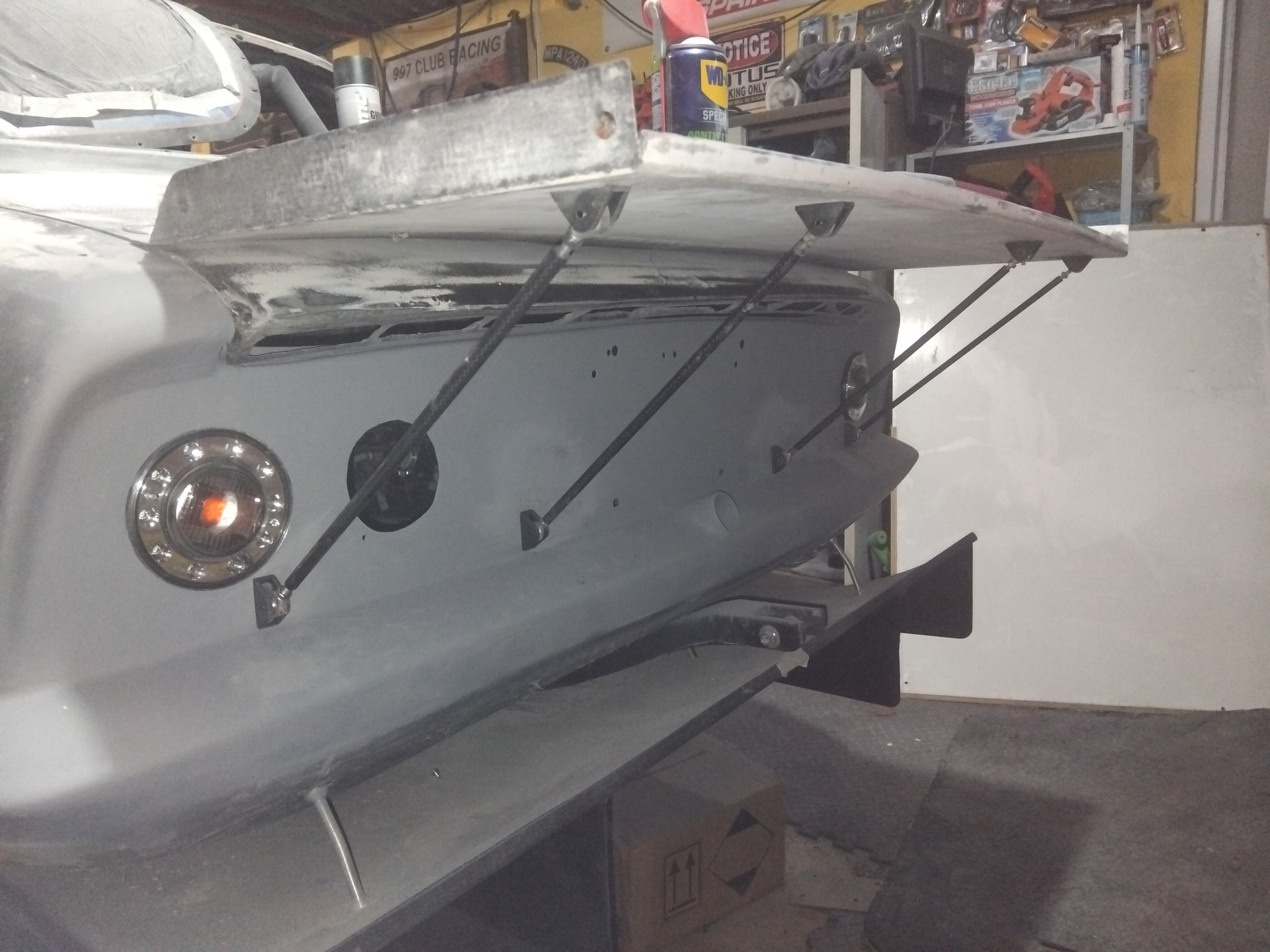
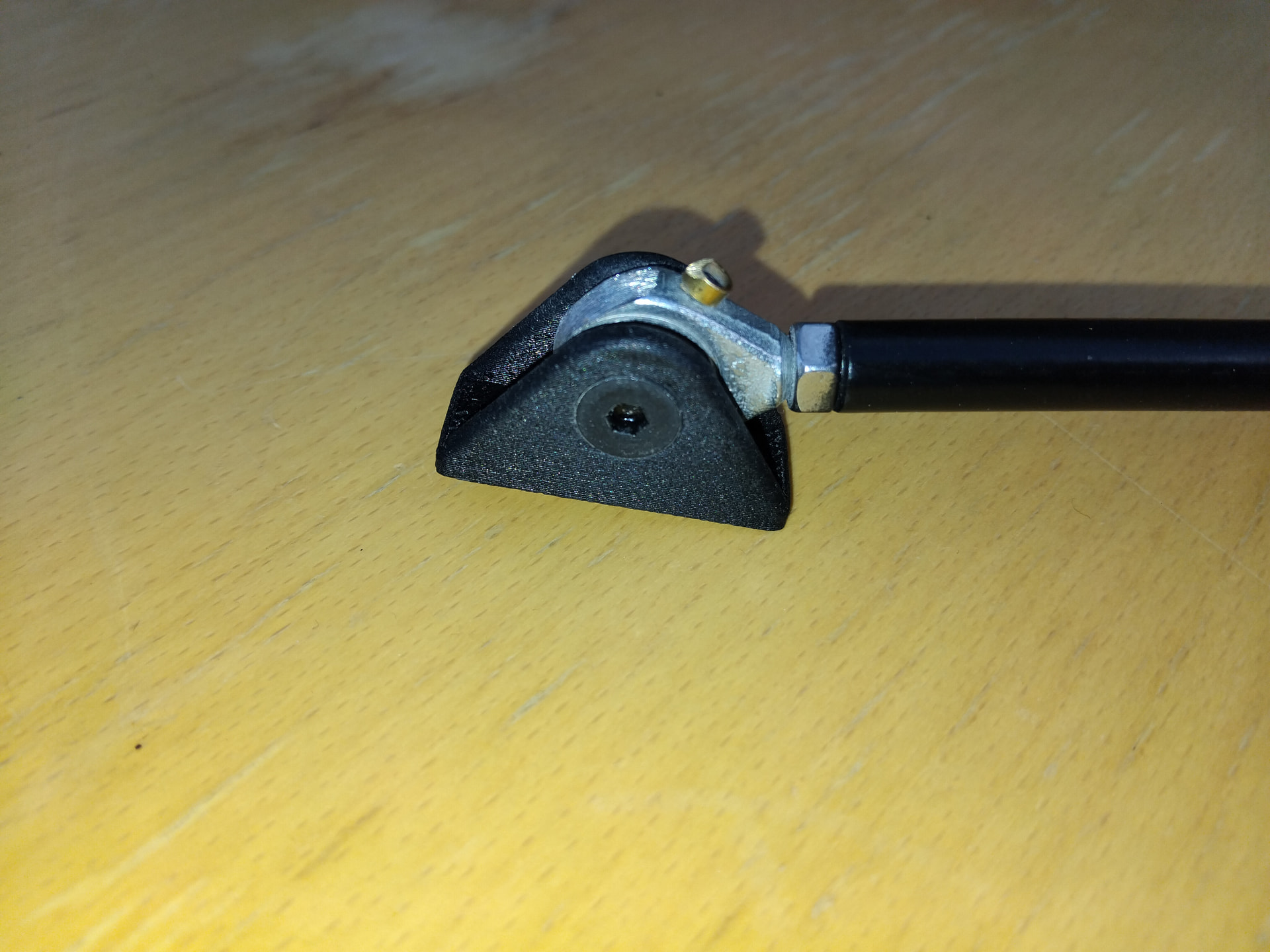
First fit sans end panels using latest 3D printed brackets. Looks OK but I have noticed that the rod ends are sticking out of the carbon rods rather more than I like, so I am going to move the top ones in a tad, approx a bracket length.
If you want a definition of OCD/analism, I have recessed the bolt heads into the brackets so they look a little neater and threaded the other side to save the weight of 8 nuts
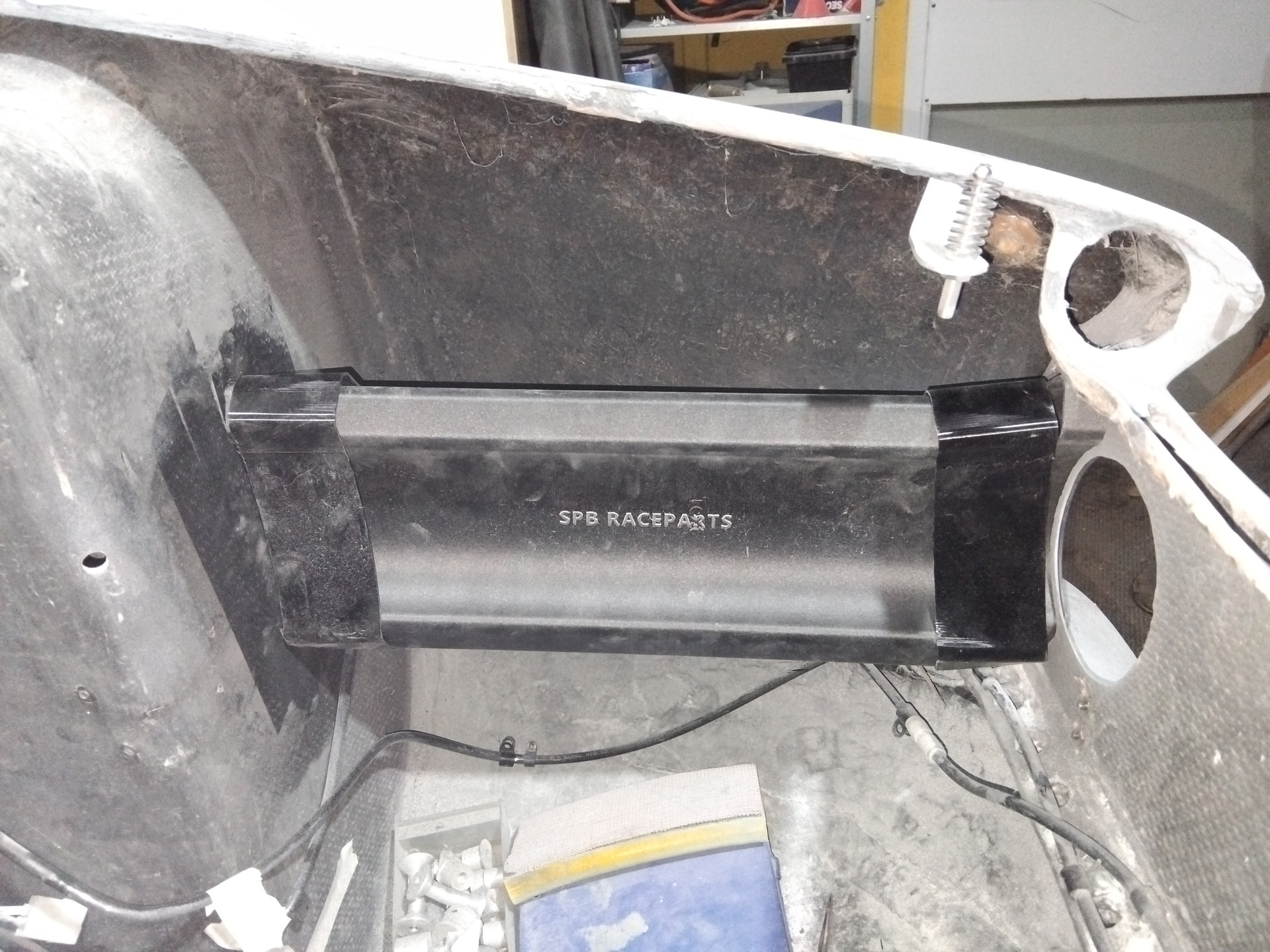
I know that a lot of you will be hugely disappointed, but I have decided not to make a video of the rear wheel well duct installation, so you will just have to make do with a photo
The idea behind this duct is to harvest some of the high pressure air in the wheel well and redirect it to the rear of the car where the pressure is lower.
The theory behind ducting high-pressure air away from vehicle wheel wells—particularly rear ones—is centered on pressure management to reduce aerodynamic drag, minimize lift, and stabilize airflow.
As wheels rotate, they act like air pumps, causing turbulent air to stack up inside the wheelhouse, creating a high-pressure zone. Ducting this air away allows it to escape, solving several aerodynamic issues.
I am restricted as to the size of the duct due to the location of the rear light cluster but have made it as big as I realistically can. This is a dry fit. Once the adhesive arrives I will be securing the connection bands.
If anyone is remotely interested, here is a more detailed explanation of the theory and benifits
Reduction of Aerodynamic Drag
Dirty Air Management: The rotating wheels and tires create a chaotic, turbulent mess known as “dirty air”.
Wake Smoothing: This trapped high-pressure air tends to spill out and disrupt the smooth flow around the car, increasing wake turbulence.
The Solution: Vents or ducts behind the wheel provide a smoother path for this dirty air to reintegrate into the air traveling down the side of the car, reducing drag.
Elimination of Lift (Pressure Differential Control)
Buoyant Forces: High pressure inside the wheel well pushes up on the fender, creating lift—a similar principle to how airplane wings work.
Reduced Traction: This upward force reduces the contact pressure between the tire and the road, leading to handling problems at high speeds.
The Solution: Releasing this trapped air through louvers, vents, or ducts decreases the pressure inside the arch, lowering lift.
Brake and Component Cooling
Heat Removal: High-performance cars often use brake ducts that feed air onto the rotors. This air has nowhere to go after hitting the rotors, further increasing pressure and temperature in the wheel well.
Thermal Management: Ducting this hot, high-pressure air out helps manage heat soak and maintains optimal operating temperatures for brakes and tires.
Improving Wake Quality
Filling the Wake: By forcing air from the rear fender into the central, low-speed section of the car’s wake, engineers can reduce recirculation loops, further lowering drag and improving overall stability.
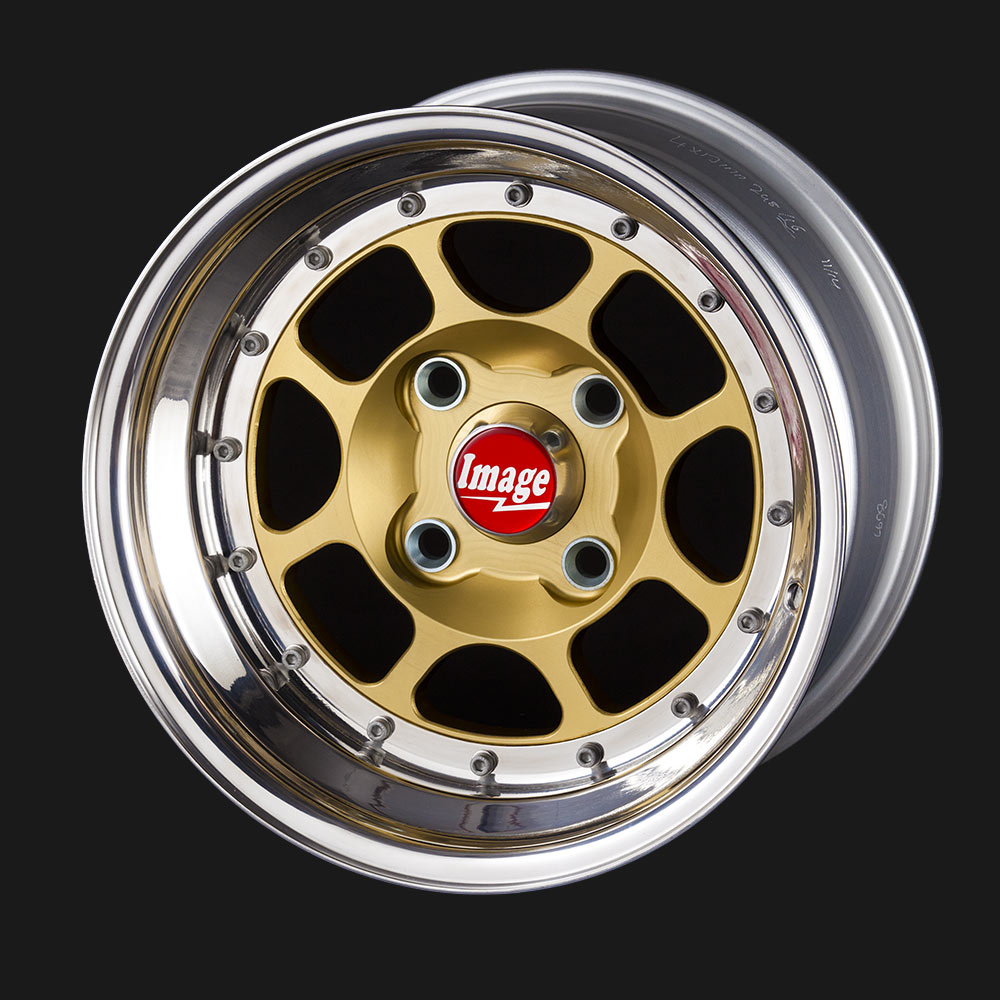
Now that I have confirmed that 15" Image Wheels will fit I have, finally, decided on style and width. However, still trying to decide on tyres. It is now between Michelin TB5s and Nankang AR-1s, both E-marked. My favourite is the TB5s but they will cost £2400 for 4, whilst the AR-1s will cost less less than £700. Hmmmm
Some vendors like tire rack provide weights by the particular tire and size along with the full dimensional info. If not, one can inquire direct to the manufacturer.
Americans use awesome for everything slightly good. However, I doubt Americans even realise they are doing it. This isn’t a derisory comment, just a gentle tease as we Brits are also guilty of having favourite phrases and words
Just FYI: the AR-1 ánd the TB5F/TB5R are both e-marked and road legal in the UK.
From, again, the web:
Tyres in Great Britain must comply with UKCA (UK Conformity Assessed) marking regulations, which replaced CE marking, though CE marks are still recognized due to extended transitional arrangements.
For instance when a tyre was introduced before January 2021, but also other exceptions.
DOT codes are used for identification and tracking, not safety compliance, while tyres must meet specific UK legal standards for tread depth and age.
Key Regulatory Details for UK Tyres:
UKCA Marking: Mandatory since 1 January 2021 for placing new tyres on the market in Great Britain (England, Wales, and Scotland), representing conformity with UK legislation.
CE Recognition:Due to continued recognition policies, products meeting EU requirements (including CE marking) can continue to be placed on the GB market.
DOT Code: This is a US-based Tire Identification Number (TIN) for identifying manufacturer, plant, and production date, not a UK regulatory safety mark.
Thanks Sam. Yes, I have been through all of this and had many an argument with racers insisting DOT tyres (or should I say tires ) are legal in the UK. If they were I would have many more interesting choices
I contacted DVLA re the legality of the TB5 tyre, as my MOT station said that they would fail it due to the lack of tread on the edges. DVLA replied that they are legal as the slick part of the tyre was classed my Michelin as part of the side wall! However, DVLA recommended that I laminate a copy of their reply and keep it in the car. I am so tempted to spend a fortune just so that I can show this letter to the police when stopped for bald tyres
Anyway a good idea of the DVLA concerning to carry a laminated copy of their letter íf you choose for the TB5! Btw: The AR-1 is road legal too, as intro was before 2021 ánd there is CE approval ánd from the Nankang site: “The AR-1 has achieved EU tyre labelling giving it MSA List 1B approval.”
Another false dawn re my tyre search. A friend recommended Pro Street Radial as they do a 275/15 with both a 50 and 60% sidewall profile and specially formulated for drag racing. Their site states that their tyres are, and I quote:
“Designed to deliver consistent straight-line traction, stable behaviour at speed, and controlled road usability through a proven radial racing compound.”
In answer to a FAQ on the site:
Can I drive on pro street radials on the road as well as at events?
Yes. Many pro street radials are treadwear rated and road-legal for controlled road use, allowing cars to be driven to and from drag or roll racing events. They are designed with compound and construction characteristics that provide traction on both road and track.
Which is not actually true. Rather misleading.
When I queried this with them their reply was honest:
Hi Steve,
E/CE marking is a very grey area but technically, yes they are not legal for road use in the UK. This is the same as M.T or Hoosier or any of the other USA based brands that are typically used here for these applications.



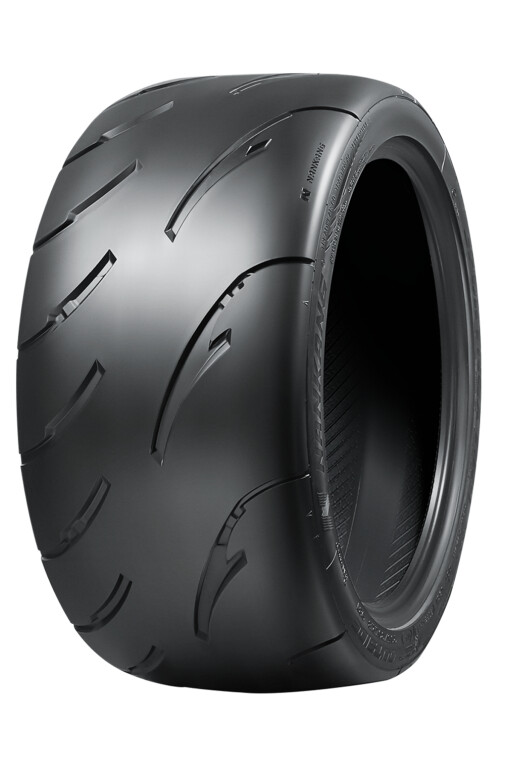
 : the AR-1!
